Mountain papaya
Vasconcellea pubescens · Caricaceae family
Mountain papaya has become part of the Dieng Plateau's own food identity far from its South American origins. There, fruit preparations connect farms, small businesses and community celebrations.
Find it near DetroitGet to know it
Mountain papaya has fragrant yellow flesh with a sour edge. This small Andean fruit has found a second home on Java’s Dieng Plateau, where it is called carica and is usually cooked into sweets. Pieces packed in syrup are a local souvenir.
What it is
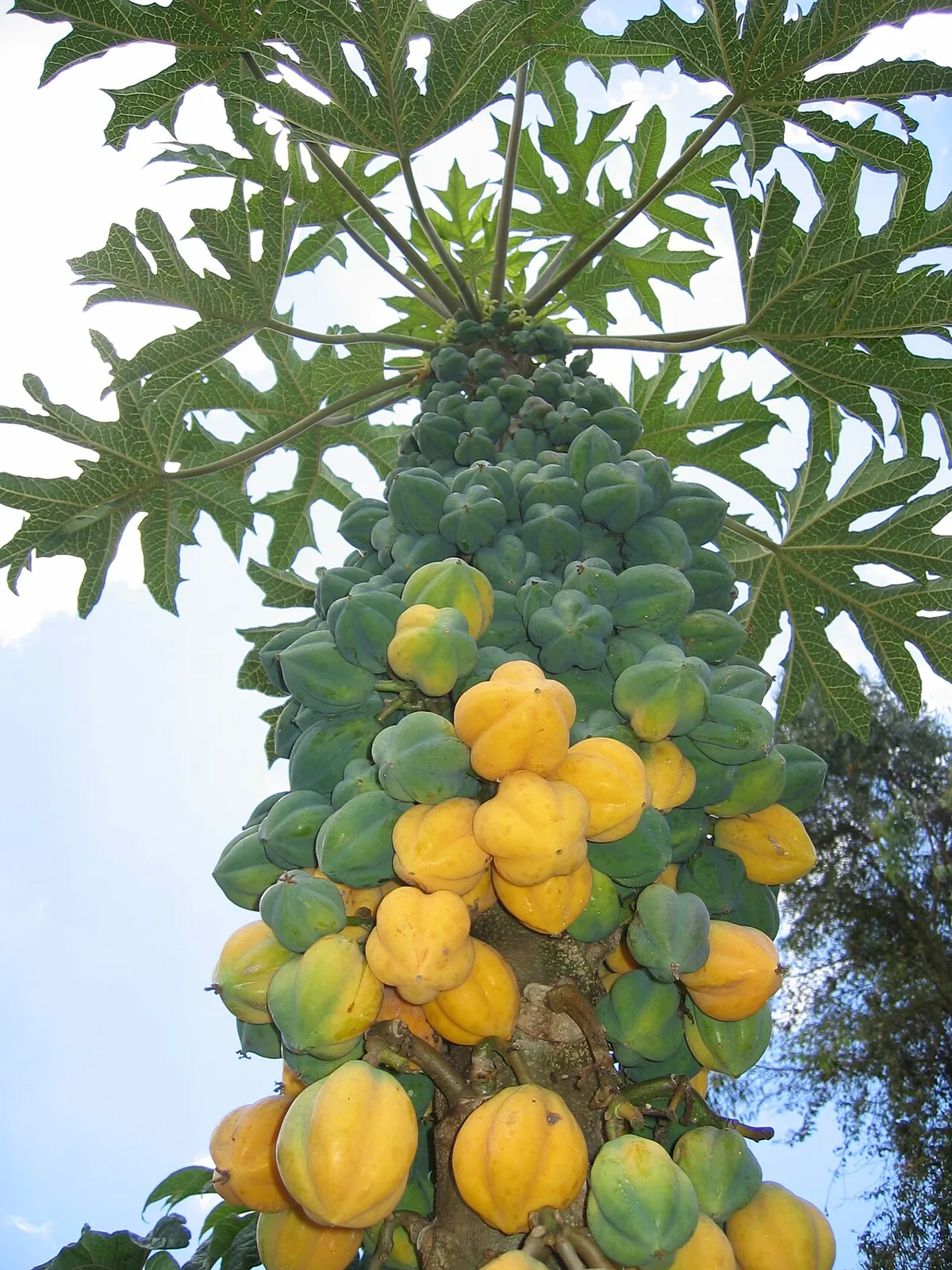
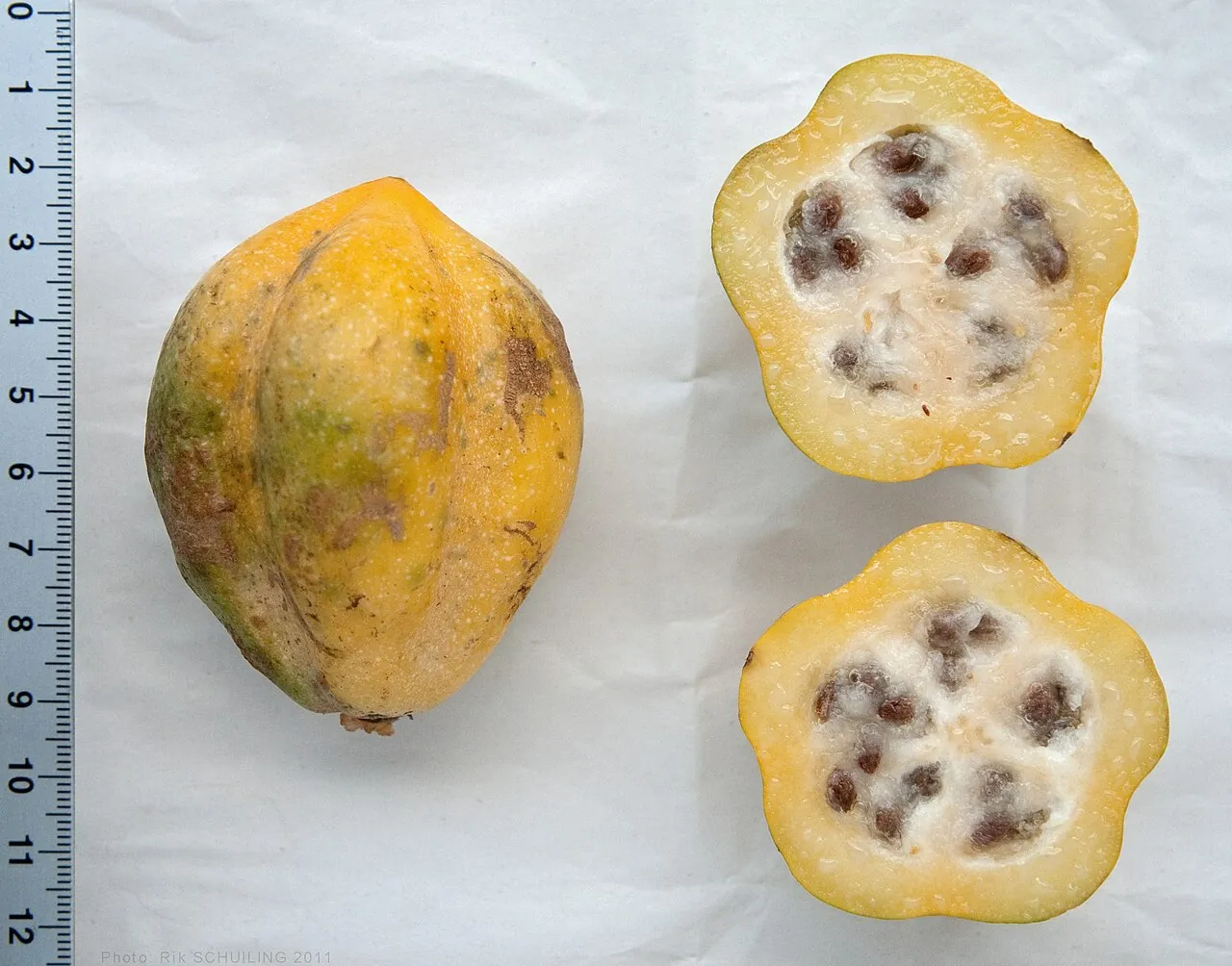
Mountain papaya is Vasconcellea pubescens, a relative of the ordinary papaya. The oblong fruit has five ridges and turns from green to bright yellow as it ripens. It measures about 8–15 cm long (3–6 in) and 5–6 cm across (2–2½ in).
A thin layer of flesh surrounds a seed-filled centre. It is smaller and less succulent than ordinary papaya, but its aroma is stronger.
Where it comes from
Its home is the South American Andes, including Colombia and Ecuador. It reached central Chile before Spanish colonization, and Chile grows it commercially for processed fruit.
The Dutch colonial government brought mountain papaya to Indonesia. It grows only in cool places there, in highlands such as Dieng in Central Java, and Cangar and Bromo Tengger in East Java. In Dieng, the fruit now belongs to the local food culture.
How it's eaten where it grows
Dieng’s manisan carica is fruit in sweet syrup. The peeled fruit is washed, halved and separated from its seeds. The seeds are boiled in water and strained out; the sliced flesh then cooks in that liquid with sugar and a little salt. The seeds help make the syrup, but do not stay in the finished dessert.
In Chile the fruit goes into processed products. Mountain papaya is commonly made into preserves, jam, sweets and nectar.
How it's grown
The plant has a central trunk topped with hand-shaped leaves on long stalks. In Dieng, farmers plant it along field boundaries beside crops such as potatoes and cabbage. They raise new plants from seed or cuttings taken from branches. Plants grown from seed reach fruiting age in 10 to 12 months.
When and where you'll find it
On the Dieng Plateau, carica usually fruits all year, with its greatest abundance in March and April. The prepared fruit is part of the region’s souvenir-shop trade. Wonosobo is home to processors such as Sumbing Segar, which makes carica in syrup in Reco, Kertek. Labels usually call it carica in syrup.
Sources · 5
Get it near Detroit
Sell fruit online? Add your business
What it tastes like
Crisper than a blueberry, as tart as a kiwifruit≈
More about the taste
It's made into sweets, chips, jams and syrups.
It's most often eaten processed — as sweets, chips, jam or syrup — rather than as fresh fruit.
Choose, eat
1ChooseChoose a product labeled with its fruit and preparation
Choose a product labeled with its fruit and preparation. A syrup-packed sweet, a chip and fresh fruit are different foods even when all are sold as carica.
2EatFresh fruit · not seeds, leaves
Eat
Fresh fruitNot eaten
SeedsLeavesFresh fruit and its processed products (sweets, chips, jams, syrups) are what's eaten; the seeds and leaves are not typical food.
Detroit, Michigan
When it’s good here
Season not documented for Michigan.
19 names in 8 languages
- caricaOther name
- فاسكونسيليا زغبيةArabic
Cook it
Strange but trueHistory
If you like Mountain papaya
Tastes alike
Close relatives
Sources
Sources
Mountain papaya · Fruitopia · checked Sep 22, 2026
- commons.wikimedia.org /wiki/File:2011.09-385-158arp_Mountain_papaya(Vasconcellea_pubescens),fr(wh,TS)_Naivasha-Gilgil(Rift_Valley_Prov.),KE_tue13sep2011-1230h.jpg
- journal.unesa.ac.id /index.php/risetbiologi/article/view/34252/12108
- karasantan.id /foods/puding-carica-matcha-624
- putradieng.com /cara-membuat-manisan-carica
- sumbingsegar.com
- wisata.banjarnegarakab.go.id /main/carica-buah-khas-dataran-tinggi-dieng/