Miracle fruit
Also called Miracle berry · Miraculous berrySynsepalum dulcificum · Sapotaceae family
Its most unusual trait is a temporary change in the taste of another food.
Find it near DetroitGet to know it
Miracle fruit is a small red berry from West Africa whose main attraction comes after you eat it. Its white pulp can make a slice of lemon taste sweet. The berry itself has little flavour; a protein called miraculin temporarily changes the tongue’s response to sour foods.
What it is
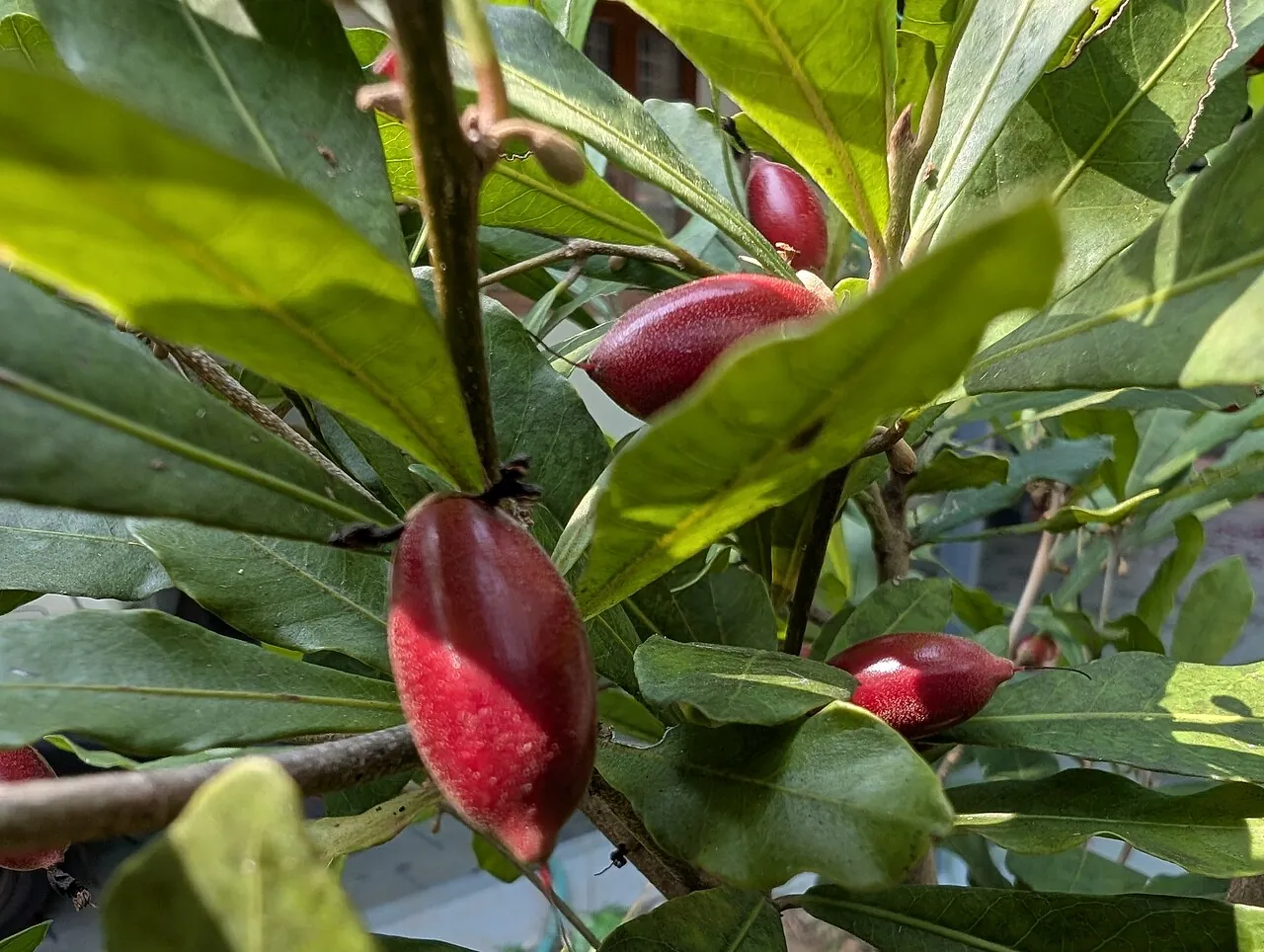
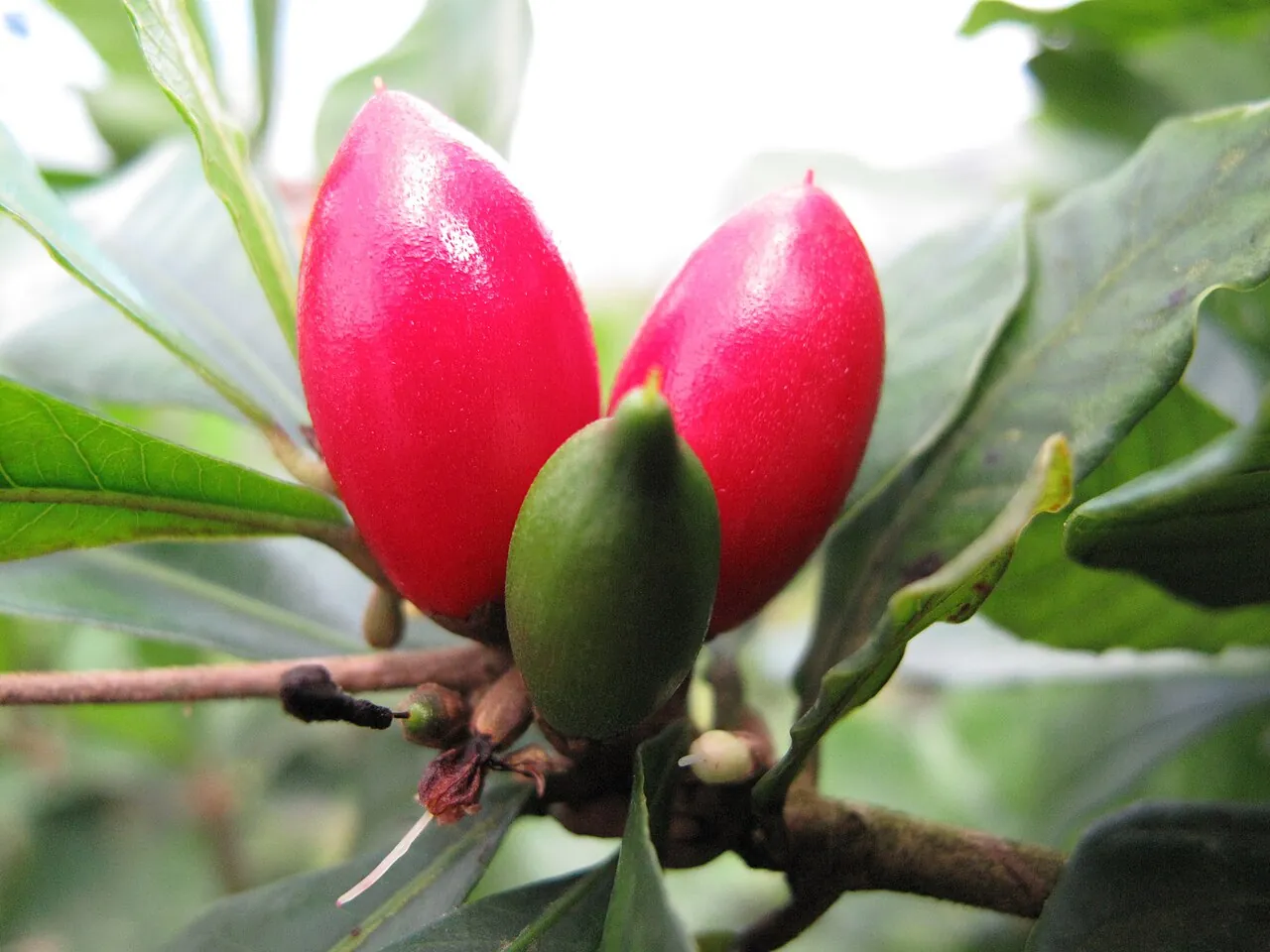
Miracle fruit, Synsepalum dulcificum, is an oval berry about 2–3 cm (¾–1¼ in) long. Green fruit turns scarlet as it ripens. Beneath the red skin, a layer of white pulp wraps around one large seed. The pulp carries miraculin, the protein responsible for the change in taste; the seed takes up much of the berry.
Where it comes from
The shrub comes from tropical West and Central Africa, including Ghana, Benin, Nigeria, Cameroon and the Democratic Republic of Congo. There, mature bushes give two large crops a year, each after a rainy season, with a few fruits hanging all year round.
It is also grown in southern Florida. Miracle Fruit Farm, a family farm in the Redlands southwest of Miami, grows fresh berries and makes fruit products from them.
How it's eaten where it grows
In its African home, the berry has been used to make palm wine taste sweeter. The fruit works in the mouth: its pulp coats the tongue before the sour food or drink follows.
In the US, freeze-dried berry cubes offer the same tasting sequence. A cube dissolves on the tongue before a sour fruit, vinegar dressing or tomato sauce. Citrus still keeps its lemon or lime aroma even as its sour taste gives way to sweetness.
How it's grown
Miracle fruit grows slowly into an evergreen shrub with small, creamy-white flowers. Partial shade and well-drained acidic soil suit it, and it does well in a container. In southern Florida, healthy plants can begin bearing in their third year. The berries turn from green to red as they ripen.
When and where you'll find it
Miracle Fruit Farm produces fruit year-round in the Redlands southwest of Miami, with an online shop and collection at the farm. Miami Fruit offers cubes made by blending Florida-grown berries, pouring them into moulds and freeze-drying them. Fresh berries keep only briefly; freezing and freeze-drying preserve the taste-changing effect for later use.
Get it near Detroit
What it tastes like
As mild as a banana, as sweet as a pear≈
More about the taste
Miraculin in the pulp temporarily changes how acidic foods and drinks taste by interacting with sweetness perception — the other food's acidity hasn't actually changed.
Miraculin temporarily changes sweetness perception in the presence of acidic foods. The berry itself isn't especially flavorful.
Choose, store, eat
1ChooseFully red, including shoulder
Look for
- Fully red, including shoulder
Harvest fruit when it's fully red, including the shoulder; pick frequently to avoid losing overripe fruit.
2StoreFreezer, preserving taste effect
- FreezerPreserving taste effect
Fresh fruit keeps only briefly and is sensitive to heat; freezing or freeze-drying is used to preserve its taste-modifying effect.
3EatWhite pulp · not large seed
Eat
White pulpNot eaten
Large seedThe white pulp holds the taste-modifying protein; the large seed is not part of the edible portion.
Detroit, Michigan
When it’s good hereUsual monthsJust arrivedAt their bestLast chanceAll yearWhere it is in its usual monthsToday, Oct 22Grown hereIn season in your stateShips fromIn season where it grows
3 growing areas, 3 countriesUsual monthsOur estimated monthsToday, Oct 22

- Florida
- New South Wales
- Penang
- You
1 of 2 areas · October
Growing areas by country
- Australia1
- Malaysia1
- United States1
Historically, the fruit has been used with palm wine.
31 names in 14 languages
Cook it
Strange but trueHistoryA myth, and the truthScienceCustoms and cultureFood and drink
If you like Miracle fruit
Tastes alike
Same plant family
Sources

Sources
Miracle fruit · Fruitopia · checked Sep 22, 2026