Langsat
Also called Longkong · LanzonesLansium domesticum · Meliaceae family
A peelable cluster fruit whose names describe several horticultural traditions.
Find it near DetroitGet to know it
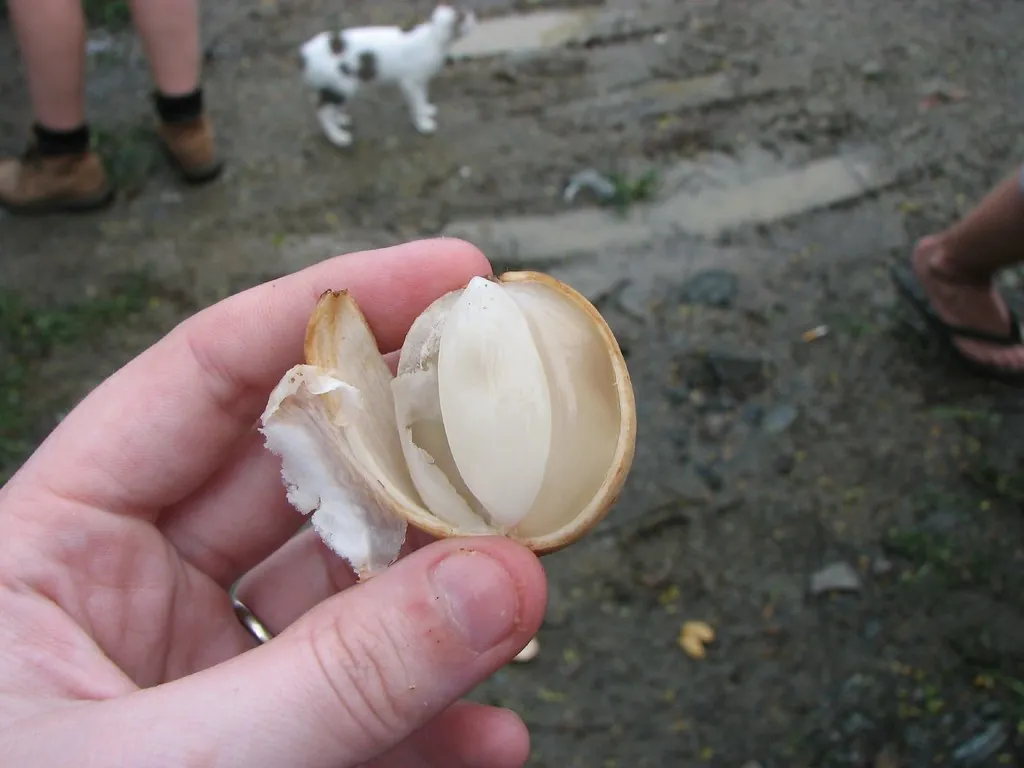
Langsat is a small Southeast Asian fruit that peels into juicy white segments. The longkong type tastes sweet with a grapefruit-like edge, and is almost seedless; other types hide bitter seeds inside the flesh.
What it is
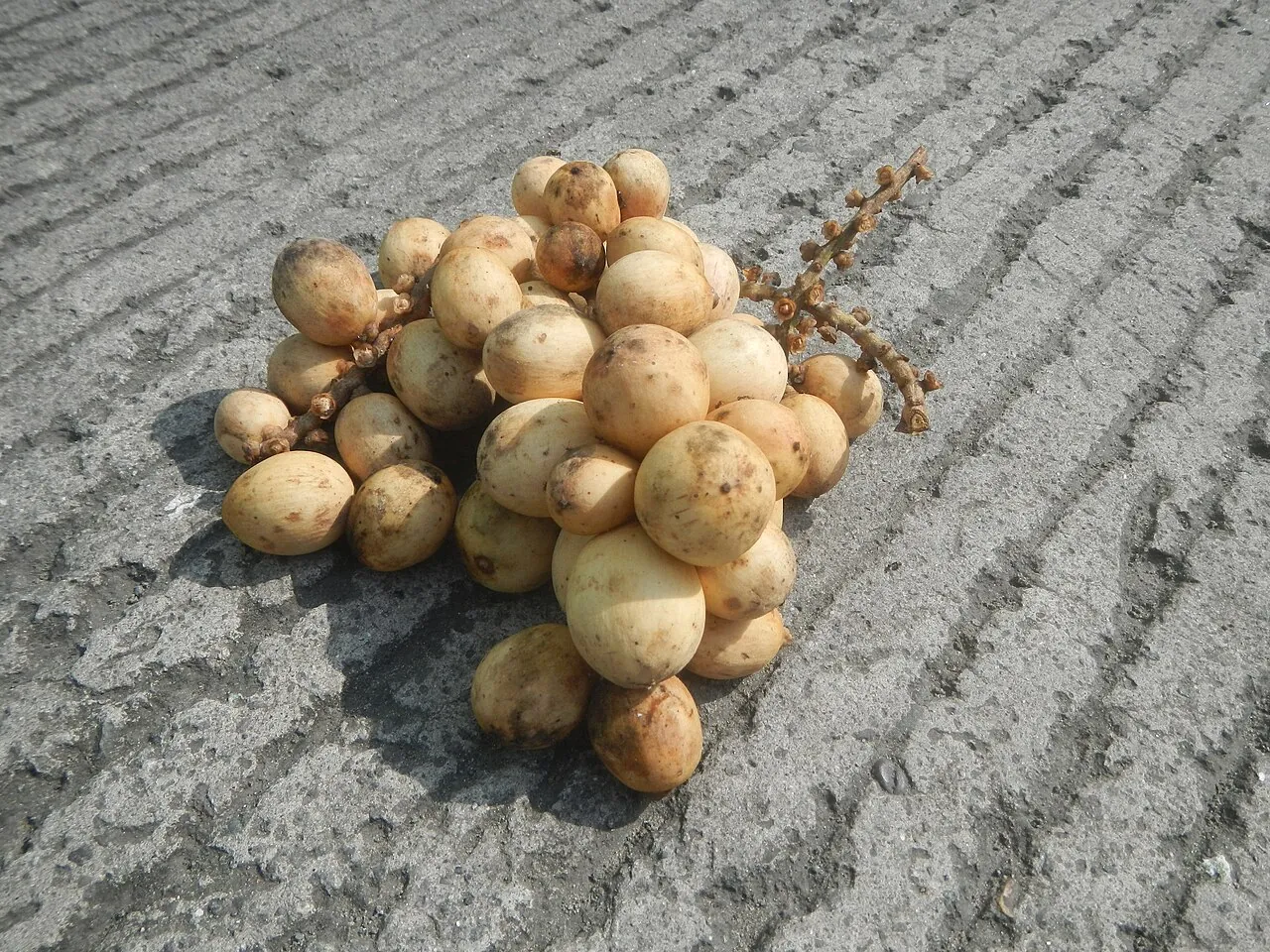
Each fruit is about 2.5–5 cm (1–2 in) across. Under the peel, the white flesh separates into translucent, juicy segments. A seed can taste sharply bitter, and the flesh clinging to it can pick up that bitterness.
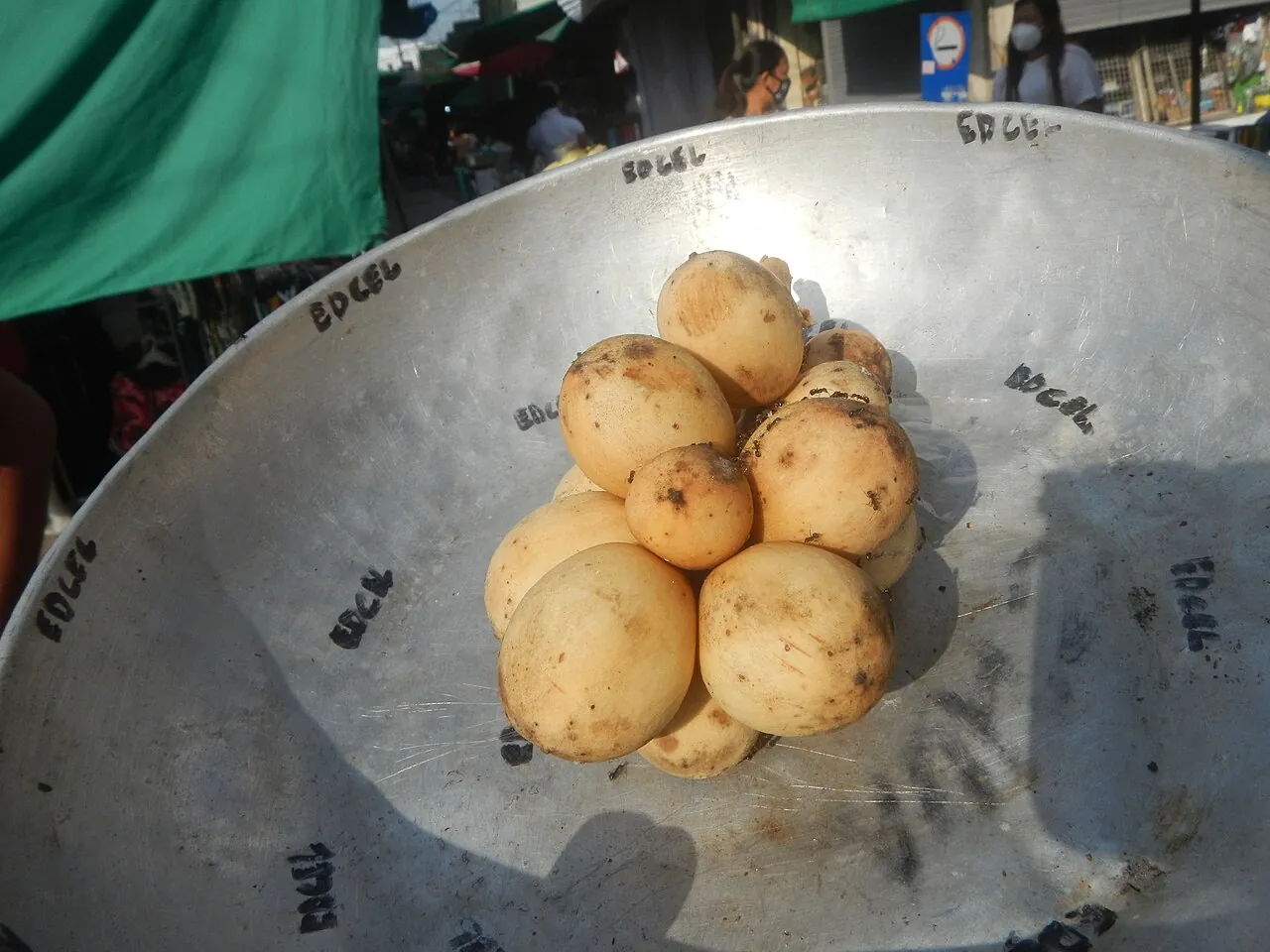
Names on a label help describe the type. Langsat has thin skin with sticky white sap. Duku is rounder, with thicker skin and no sap. Longkong has brittle skin and is almost seedless. Its sweet flesh has a citrus edge, with hints of grapefruit and white grape.
Where it comes from
Langsat comes from Southeast Asia, with a native range spanning Thailand, Malaysia, Indonesia and the Philippines. It also grows in the Nilgiris and other humid parts of southern India. The tree reached Hawaiʻi before 1930, taking this Southeast Asian fruit into the Pacific.
How it's eaten where it grows
In Thailand, longkong can join lychees and other juicy fruit in som chun, a chilled dessert. One preparation soaks the fruit in jasmine-scented syrup with bitter-orange juice and peel. It is served over ice with young ginger, green mango and fried shallots. The sweet fruit shares the bowl with sharp citrus and savoury toppings.
How it's grown
The tree can reach 15 m (49 ft) in cultivation. Small flowers cluster directly on its trunk and older branches. It grows best in humid air and fertile soil that drains well. In the Philippines, langsat shares the shade of coconut plantings. A seed-grown tree can take 12–20 years to produce its first fruit.
When and where you'll find it
In India, the fruit usually ripens from April to September. One specialist online fruit shop in Europe sells Thai-grown fruit as Longkong (Duku Langsat). The skin bruises easily and turns brown at the damaged spots, so the pale peel can acquire darker patches during handling.
Sources · 7
- Camiguin Provincial Tourism Officecamiguin.gov.ph
- Jurassic Fruitjurassicfruit.com
- Morton, Fruits of Warm Climates (1987)hort.purdue.edu
- Singapore National Parks Boardnparks.gov.sg
- University of Hawaiʻi CTAHRctahr.hawaii.edu
- Warich Nathtigoon, Wongnaiwongnai.com
- World Agroforestry, Agroforestree Databaseapps.worldagroforestry.org
Get it near Detroit
What it tastes like
As sweet as a banana, softer than a pear≈
More about the taste
Langsat flesh is aromatic and juicy, with an acid-to-subacid flavor; some cultivated types are sweeter and sometimes seedless. The large seeds can be very bitter, and flesh close to a seed may pick up that bitterness.
Langsat flesh is aromatic and juicy, with an acid-to-subacid flavor; some cultivated types are sweeter and sometimes seedless. The large seeds can be very bitter, and flesh close to a seed may pick up that bitterness.
Choose, eat
1ChooseRind color alone
Ignore
- Rind color alone
Langsat skin ranges from pale yellowish to brownish or pinkish, and types vary in latex, thickness, and seediness.
2EatArils · not seed, rind
Eat
ArilsNot eaten
SeedRindThe peeled arils are eaten fresh or as dessert, and also sold syrup-packed or candied. The seed and rind are not eaten.
Detroit, Michigan
When it’s good hereUsual monthsJust arrivedAt their bestLast chanceAll yearWhere it is in its usual monthsToday, Oct 22Grown hereIn season in your stateShips fromIn season where it grows
8 growing areas, 4 countriesUsual monthsOur estimated monthsToday, Oct 22

- Chanthaburi
- East Java
- Johor
- Nakhon Si Thammarat
- Pahang
- Queensland
- You
0 of 2 areas · October
Growing areas by country
- Malaysia3
- Indonesia2
- Thailand2
- Australia1
Langsat's regional names often move between languages with little change in spelling, so a name on an English-language label is often just the original Malay or Indonesian word, not a different fruit.
7 varieties
- No variety photo yetKongkosan
- Taste
- high
- Feel
- soft
- Juice
- juicy
- Shape
- round
- No variety photo yetDuku Langsat Koris
- Taste
- high
- Shape
- round
- No variety photo yetDuku Langsat Terengganu
- Taste
- high
- No variety photo yetKering
- Taste
- high
- No variety photo yetLA8
- Taste
- high
- No variety photo yetLA9
- Shape
- oval
34 names in 13 languages
- bòn bonVietnamese
- 蘭撒Chinese
Cook it
2 langsat festivalsUsual monthToday, Oct 22
Strange but trueHistoryA myth, and the truthNatureCustoms and culture
If you like Langsat
Tastes alike
Same plant family
Used the same way
Sources
Sources
Langsat · Fruitopia · checked Sep 22, 2026