Lai durian
Also called Durian pulu · Durian merahDurio kutejensis · Malvaceae family
Lai is a distinct Bornean Durio species with a yellow edible aril. Its regional names are a reminder that color words attached to durians do not necessarily describe the same plant part.
Find it near DetroitGet to know it
Lai is a durian relative from Borneo with yellow flesh wrapped around brown seeds inside a spiny shell. Its varieties offer different bites: Lai Kutai is sweet and smooth, with little fibre and a gentle aroma; Lai Mahakam has thick, drier flesh.
What it is
Lai's botanical name is Durio kutejensis. The yellow fruit has five sides and reaches about 20 by 12 cm (8 by 5 in). Each glossy brown seed sits inside a fleshy covering called an aril: this is the part you eat.
Lai Kutai's flesh is bright yellow-orange, sweet and smooth. Lai Mahakam has thick flesh with a drier texture. Both belong to the same species, despite their differences in colour and feel.
Where it comes from
Wild lai grows in the foothills of Borneo's central mountains. In Sarawak it grows on fertile, clay-rich forest soils. People also plant it beyond Borneo, including in Java, for fruit and as a garden tree.
Batuah village, in East Kalimantan's Kutai Kartanegara district, is home to three named varieties: Lai Batuah, Lai Kutai and Lai Mahakam. Growers use budding and grafting to carry these varieties into new orchards.
How it's eaten where it grows
In parts of Kalimantan, lai is called papakin or pekawai. The flesh is eaten fresh and also goes into desserts. Cake papakin is one home-baking example: Utari Ning Hadiyati's sponge cake blends the flesh with coconut milk, then folds it with flour into beaten eggs and sugar before baking.
How it's grown
Lai is an evergreen tree with silvery-gold leaf undersides and red flowers on its older branches. It grows well in fertile clay soil that drains freely. In East Kalimantan, trees can begin bearing fruit after four to five years. Growers pick when the skin starts turning yellow and yellow lines appear along the fruit's segments, then let it ripen for two to three days.
When and where you'll find it
In East Kalimantan, lai usually fruits once a year, from late December through early March. Fresh fruit is sold locally, including in Batuah village. Lai Batuah, Lai Kutai and Lai Mahakam are names from this growing area, useful for putting a name to the different flesh colours and textures.
Get it near Detroit
Sell fruit online? Add your business
What it tastes like
Lai has a fleshy, sweet-smelling yellow aril around the brown seed.
The fleshy yellow aril has a sweet smell, surrounding a glossy brown seed.
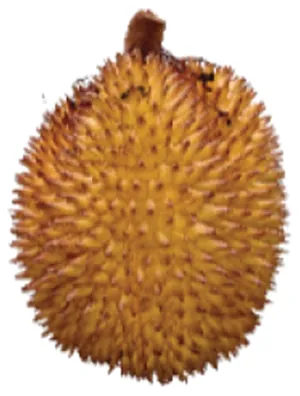
The fruit is a five-angled capsule with soft pyramidal spines and a dirty-yellow exterior.
Choose, ripen, eat
1ChooseGreen turning yellow
Look for
- Green turning yellow
- Yellow line along segments
Look for fruit turning from green toward yellow, with a yellow line along the segment boundaries.
2Ripen2–3 days
2–3 daysLai is usually best eaten two to three days after harvest.
3EatAril
Eat
ArilThe fleshy aril around the seed is the edible part.
More tips
Worth knowing
- Lai has a history as dodol, a sweet fruit preparation, which shapes its prepared aroma; fresh lai tastes and smells different.
Detroit, Michigan
When it’s good here
Season not documented for Michigan.
3 varieties
14 names in 5 languages
- laiOther name
- ドゥリオ・クテイェンシスJapanese
Cook it
Strange but trueNatureWhere the name came fromCustoms and cultureFood and drink
Sources
Photos · 1
Sources
Lai durian · Fruitopia · checked Sep 22, 2026