Kuwini
Also called KwiniMangifera odorata · Anacardiaceae family
A strongly aromatic mango relative whose flesh, fibers and resinous character vary among local forms.
Find it near DetroitGet to know it
Kuwini is a mango relative with a powerful fragrance and juicy, orange-yellow flesh. It tastes sweet and tart, with a sharp resinous edge and plenty of fibre. A ripe fruit can still have greenish skin.
What it is
A kuwini is an oval fruit about 10–13 cm (4–5 in) long and 6–9 cm (2½–3½ in) wide, with a large, fibre-covered stone. Its thick skin contains bitter latex, so it is peeled generously before eating.
The named forms differ in more than colour. In West Java, Kaweni has less fibrous flesh and a milder resinous taste. Bembem has a stronger smell and flavour. Both belong to the same fruit, Mangifera odorata.
Where it comes from
Kuwini is widely grown on Borneo, Sumatra and Java, and also grows in peninsular Thailand, South Sulawesi and the southern Philippines. It may have begun as a cross between the common mango and the horse mango. It has never been found growing wild.
How it's eaten where it grows
In Peranakan cooking around Singapore and Malaysia, sliced kuini goes into sambal buah kuini, a fruit relish for fried fish. Chillies, shallots, belacan shrimp paste and lime juice are pounded into a coarse paste, then mixed with lightly mashed fruit. Pomfret or mackerel goes alongside.
Ripe kuwini is also eaten fresh. Young fruit goes into chutney and salted pickles.
How it's grown
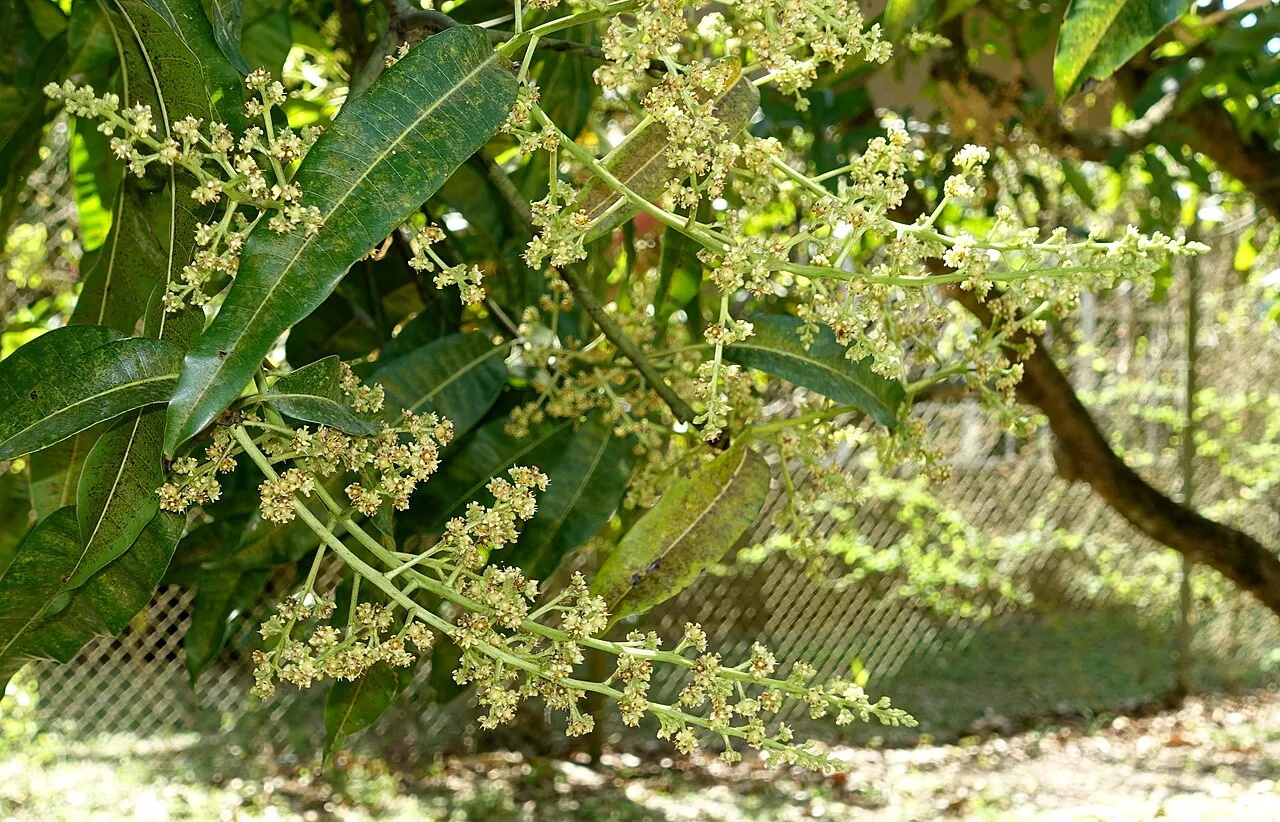
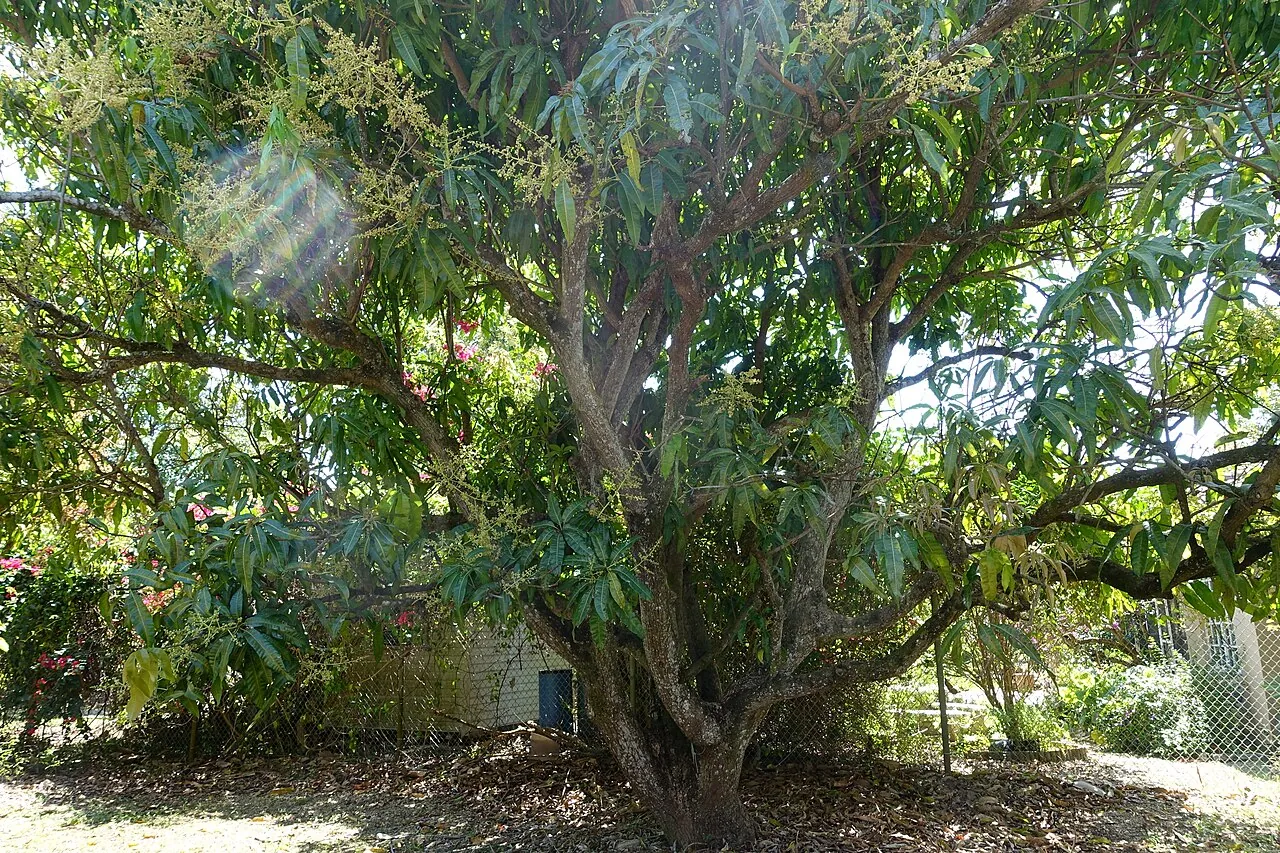
Kuwini grows on trees usually 10–15 m (33–49 ft) tall. It suits wet tropical places without long dry spells, including places too rainy for common mangoes to do well. Growers usually raise it from seed among other trees in home gardens and village orchards. Near Solok in West Sumatra, vegetables and bananas grow beneath the lighter canopy of old kuwini trees.
When and where you'll find it
In West Java, the main kuwini season usually runs from August through November. Fresh whole fruit also travels from Malaysia to Singapore, where it is sold by the kilogram. There it is spelled kuini; kuwini, kweni and mangga kweni are other names for the same fruit.
Get it near Detroit
What it tastes like
As mild as a peach, softer than a pear≈
More about the taste
Kuwini has juicy, orange-yellow flesh with fibers and a sour-sweet, resinous character. Local forms vary: some have a stronger odor, others less fiber or a milder resinous taste.
Kuwini has juicy, orange-yellow flesh with fibers and a sour-sweet, resinous character. Local forms vary: some have a stronger odor, others less fiber or a milder resinous taste.
It's also described as having sweet, juicy orange flesh and a mango-like aroma.
Choose, eat
1ChooseSkin color alone
Ignore
- Skin color alone
Some ripe kuwini turn yellow, while others stay green. Ask about the local form.
2EatFlesh · not peel
Eat
FleshNot eaten
PeelRemove the thick peel before eating, since the skin contains bitter latex; only the flesh is eaten.
More tips
Worth knowing
- Kuwini's local forms differ in fiber, aroma and juiciness; ask the seller for the local name.
Detroit, Michigan
When it’s good hereUsual monthsJust arrivedAt their bestLast chanceAll yearWhere it is in its usual monthsToday, Oct 22Grown hereIn season in your stateShips fromIn season where it grows
1 growing area, 1 countryUsual monthsToday, Oct 22

- Pahang
- You
Kuwini grows in home gardens and mixed orchards in wetter areas, including around Solok in West Sumatra, where vegetables and bananas may grow beneath the trees.
5 varieties
12 names in 8 languages
- kuweniIndonesian
Cook it
Strange but trueScienceFood and drink
If you like Kuwini
Tastes alike
Close relatives
Same plant family
Sources
Sources
Kuwini · Fruitopia · checked Sep 22, 2026