Karonda
Also called Bengal currant · Carandas plum · KarandaCarissa carandas · Apocynaceae family
The intended preparation matters: a pickling fruit and a ripe table selection need different expectations.
Find it near DetroitGet to know it
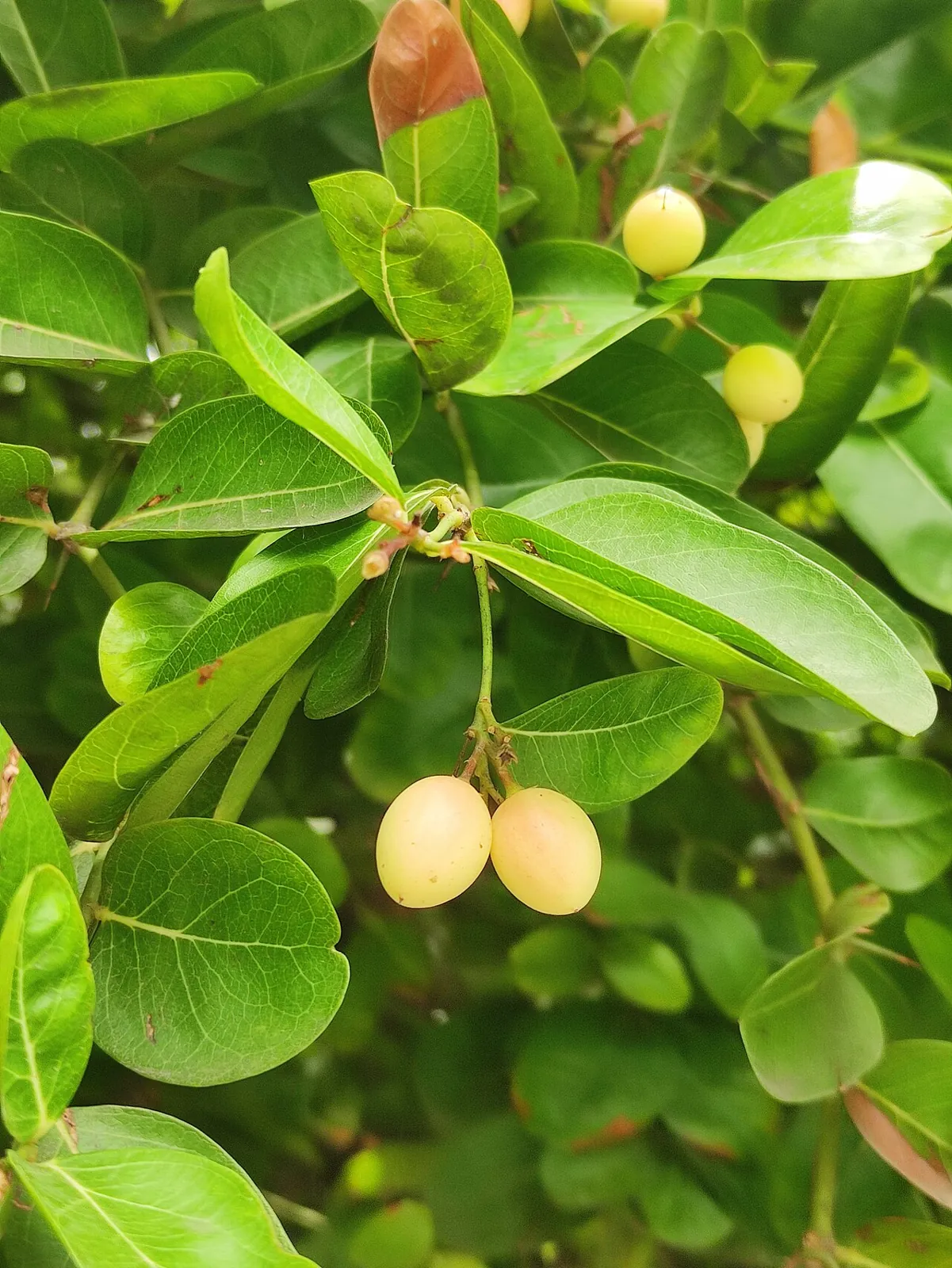
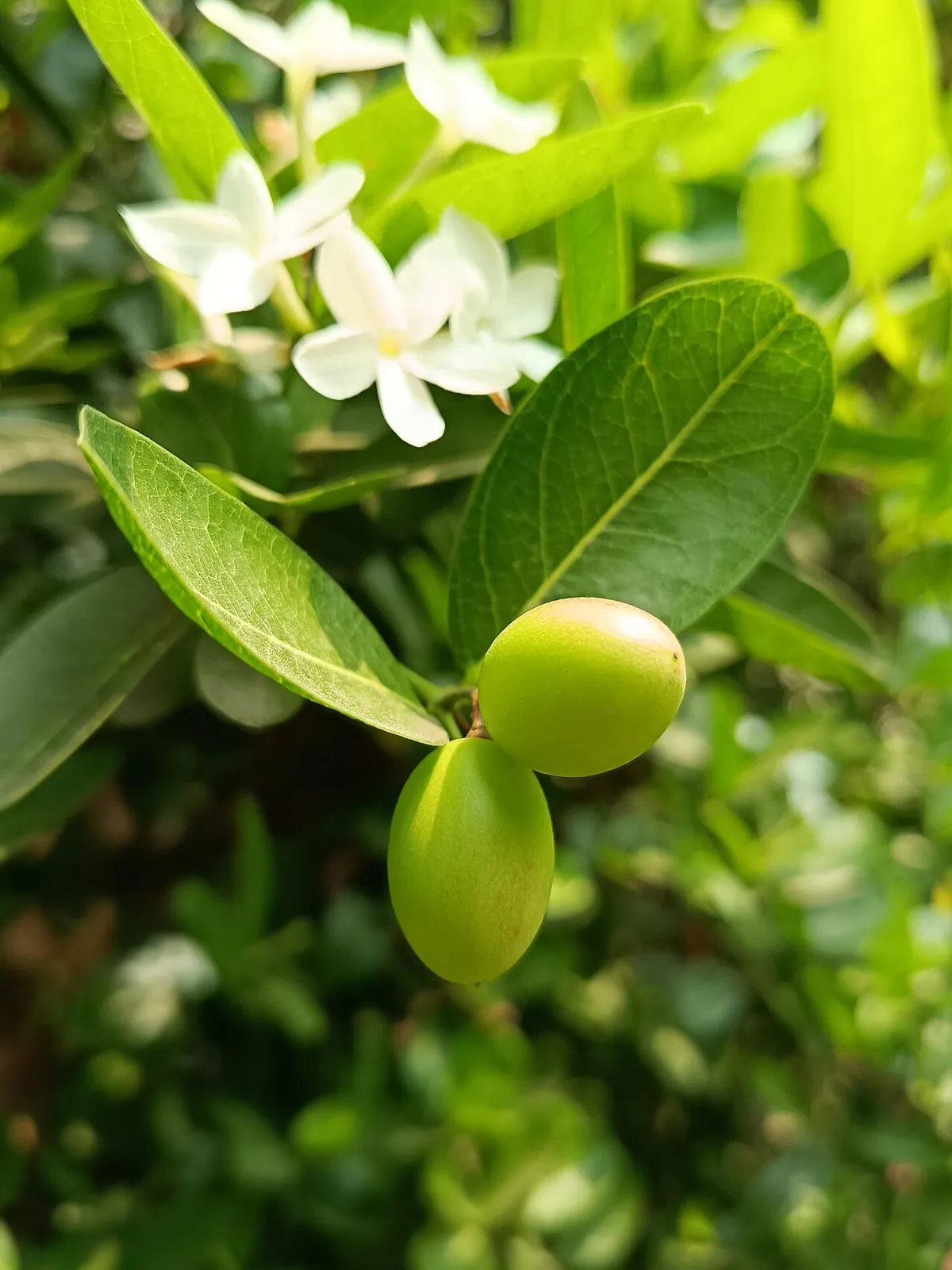
Karonda is a small, tart berry from a thorny shrub, cooked with green chillies in North India or turned into pickles. Its fruit can change from pale white and pink to deep purple-black. Sweeter varieties such as Konkan Bold are also eaten fresh.
What it is
Karonda is Carissa carandas. Its round or oval berries measure about 1.25–2.5 cm (½–1 in) long and grow in little clusters. A thin but tough skin surrounds juicy flesh and several small, flat brown seeds. The fruit holds a milky sap.
Variety matters, and so does ripeness. Pant Suvarna, Pant Sudarshan and Pant Manohar suit pickling. Konkan Bold is a sweeter choice for eating fresh. Unripe fruit is sour enough to pucker your mouth; some berries also have a bitter edge.
Where it comes from
Karonda is native to India, Sri Lanka, Myanmar and Peninsular Malaysia. In India, wild shrubs grow in the Konkan region of Maharashtra, Karnataka, Rajasthan and parts of central India. It is also widely grown in Thailand and East Africa. It serves as both a fruit crop and a living hedge.
How it's eaten where it grows
Across North India, karonde mirch ki sabzi is a monsoon side dish. Halved berries cook with green chillies in mustard oil, with cumin, fenugreek and fennel among the spices. It is more of a condiment than a main dish, served on the side with roti or paratha.
Sour karonda also becomes pickle, while sugar carries it into jam and jelly. Its juice can become a syrup for drinks. Sweet and savoury preparations start with the same small berry, but give its sharpness different company.
How it's grown
A karonda shrub can reach 3–5 m (10–16 ft), with spreading, thorny branches that make a dense hedge. Its leaves stay green through the year. Plants commonly start from seed, and established shrubs can grow on rainfall alone. They tolerate dry conditions, but waterlogged ground does not suit them.
When and where you'll find it
In southern Rajasthan, karonda usually flowers in June and ripens in August and September. In tribal areas, fresh berries go to nearby town markets and to roadside stalls, where sellers display them in bamboo baskets. Pickle, jam, jelly and syrup offer other ways to taste it beyond the fresh berry.
Sources · 7
- Banik, Ghosh and Singh, Acta Horticulturae (2012)chfcau.org.in
- Hina Gujral, Fun FOOD Frolicfunfoodfrolic.com
- ICAR, Indian Horticulture (2023)epubs.icar.org.in
- Morton, Fruits of Warm Climates (1987)hort.purdue.edu
- PROSEA, Plant Resources of South-East Asiaprosea.prota4u.org
- Specialty Producespecialtyproduce.com
- World Flora Onlineworldfloraonline.org
Get it near Detroit
What it tastes like
Karonda ranges from acidic pickling types to sweeter selections suited to eating fresh, such as the Konkan Bold variety.
Karonda ranges from acidic pickling types to sweeter selections suited to eating fresh, such as the Konkan Bold variety.
Choose, eat
1ChooseMature, not ripe: curries, pickles
Look for
- Mature, not ripe: curries, pickles
- Fully ripe: jam
Ignore
- Single color rule
Choose karonda by the dish: fully mature (but not yet ripe) fruit for vegetables, curries, and pickles; fully ripe fruit for color and jam. Color changes differently across varieties.
2EatKaronda is made into chutneys, pickles, jams, syrups, and drinks, with the seeds removed in several preparations
Karonda is made into chutneys, pickles, jams, syrups, and drinks, with the seeds removed in several preparations.
More tips
Worth knowing
- Some karonda varieties are selected for pickling; ask about the variety as well as ripeness.
- Tell the seller whether you want karonda for a pickle, curry or ripe-fruit dish. Fruit chosen for one use isn't necessarily at its best stage for another.
Detroit, Michigan
When it’s good hereUsual monthsJust arrivedAt their bestLast chanceAll yearWhere it is in its usual monthsToday, Oct 22Grown hereIn season in your stateShips fromIn season where it grows
8 varieties
- No variety photo yetKonkan Bold
- Taste
- sweet
- Use
- suitable for fresh table use
- No variety photo yetPant Manohar
- Use
- pickling types
- No variety photo yetPant Sudarshan
- Use
- pickling types
- No variety photo yetPant Suvarna
- Use
- pickling types
- No variety photo yetCHES-K-II-7
- No variety photo yetCHES-K-V-6
29 names in 15 languages
- كاريس كارنداسArabic
Cook it
Strange but trueHistoryFood and drink
Sources
Sources
Karonda · Fruitopia · checked Sep 22, 2026