Grumichama
Also called Brazil cherryEugenia brasiliensis · Myrtaceae family
A delicate Brazilian fruit whose skin and pulp can give quite different impressions.
Find it near DetroitGet to know it
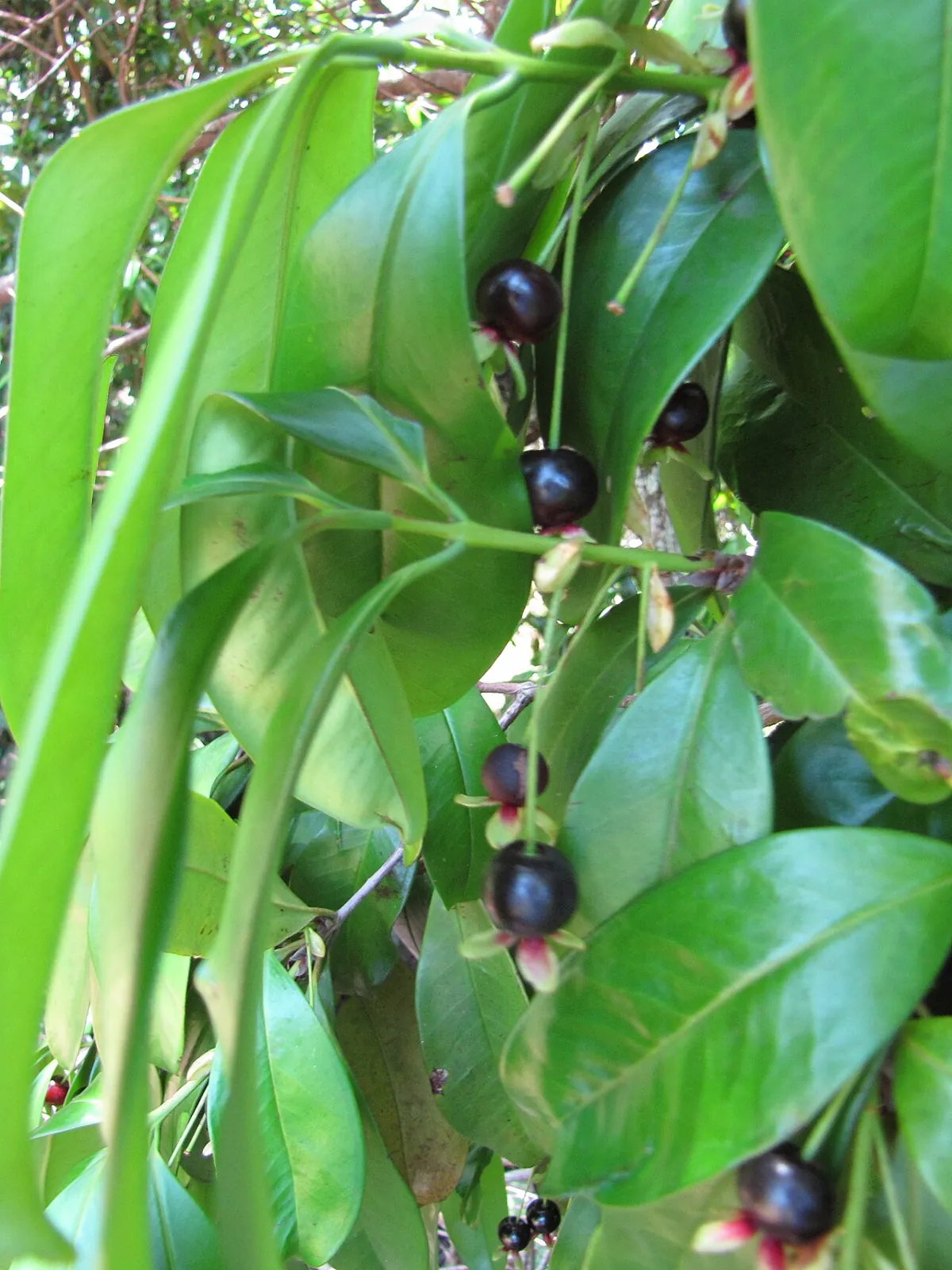
Grumichama is Brazil’s small, dark answer to a cherry: juicy, sweet-tart flesh inside a thin skin, with a faint resinous note. It belongs to the myrtle family. The soft flesh and firmer skin give quite different bites.
What it is
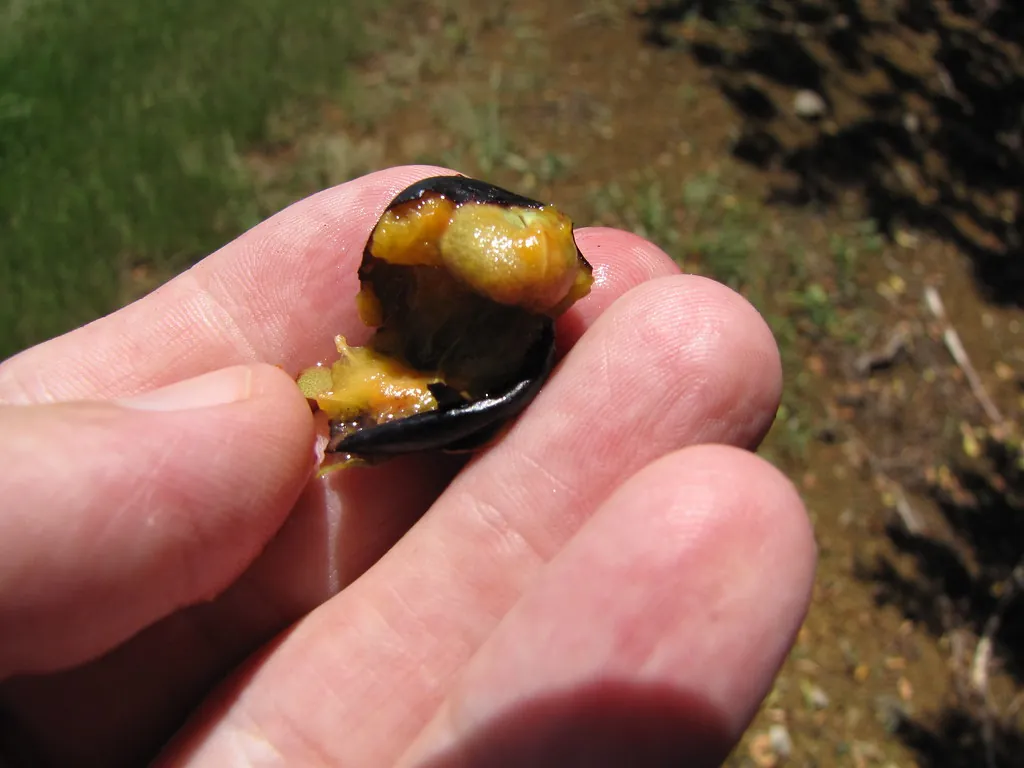
A grumichama measures about 1.25–2 cm (½–¾ in) across. The familiar dark form ripens almost to black, though one variety has yellow fruit. Inside, the red or white pulp is juicy around one to three hard seeds. The skin can leave a slightly dry, puckering feeling against the sweetness of the pulp.
Where it comes from
Grumichama comes from Brazil’s Atlantic Forest, from southern Bahia down to Santa Catarina. It travelled to tropical gardens abroad: a tree grew at Hope Gardens in Jamaica in 1880, and another was planted in Singapore’s botanic gardens in 1888. In Hawaiʻi it was first recorded in 1821 and may have arrived as early as 1791.
How it's eaten where it grows
Fully ripe grumichamas are good to nibble straight from the tree; in Hawaiʻi, half-ripe ones go into pies, jam and jelly. In Brazil, Apremavi's grumixama cheesecake sits on a base of Maria biscuits and butter, topped with fruit pulp cooked down by half with sugar and lemon and poured on once it has cooled.
At Forage Byron Bay in Australia, the fruit becomes a chunky jam with sugar, lemon rind and juice, and cloves. The seeds come out by hand: thumbs open the back of the fruit and pop them out.
How it's grown
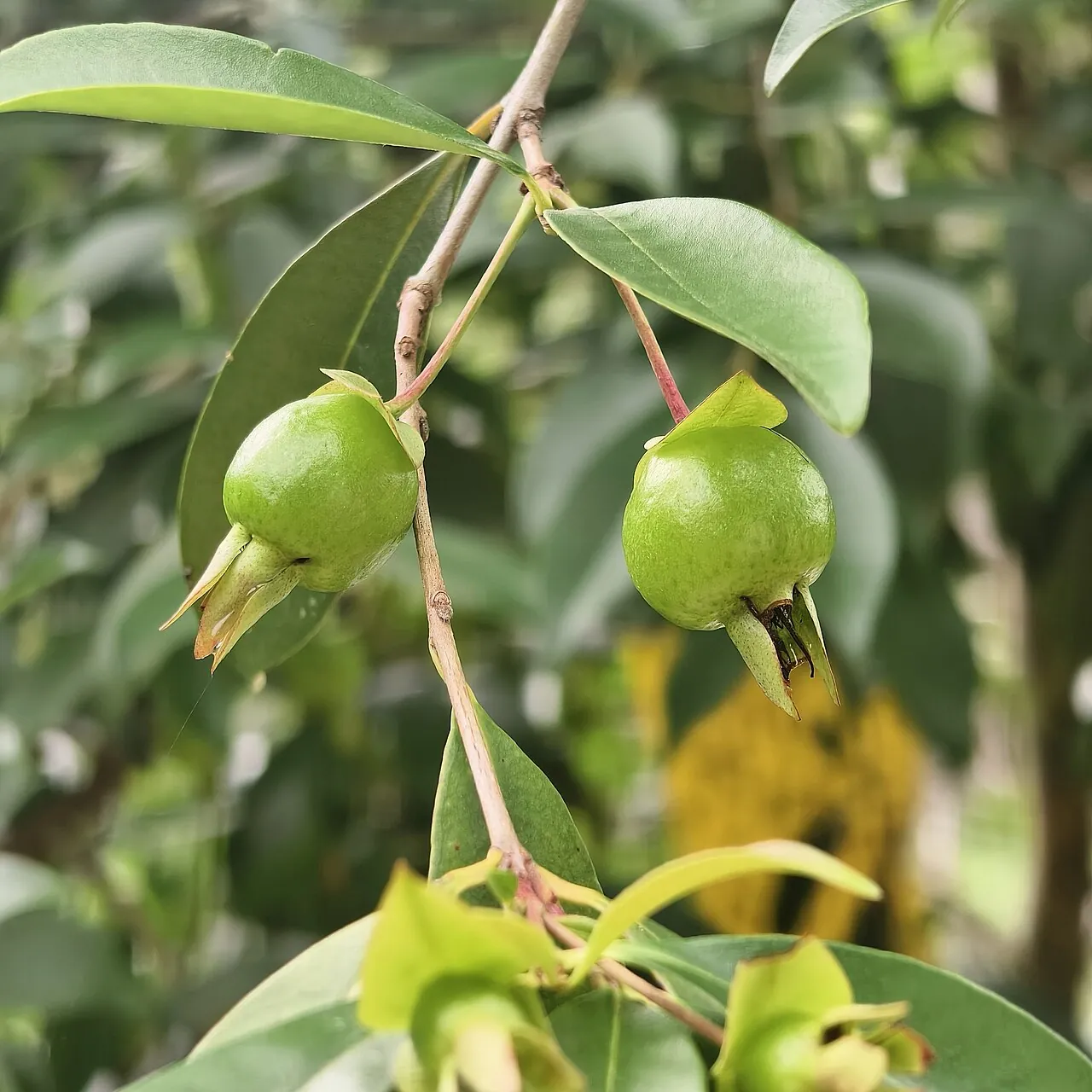
The tree grows best in partial shade, though it fruits in full sun too, and it does best where more than 1,780 mm (70 in) of rain falls a year. Water matters most while it flowers and sets fruit. A seed-grown tree generally starts bearing in its fourth year. Growers keep cultivated trees at 3 m (10 ft) or less so the fruit is easy to pick, and a tree pruned as a hedge still bears plenty.
When and where you'll find it
At Apremavi's Jardim das Florestas in Brazil, grumichama usually fruits in November and December, and a December 2018 crop at Forage Byron Bay in New South Wales ripened almost all at once. In Hawaiʻi, grumichama jelly and syrup turn up at some farmers' markets.
The fresh fruit is best chilled straight after picking: packed and chilled within an hour, it held its quality for 12 days, against 5 days for fruit left out for 5 hours first. The puree can be frozen.
Get it near Detroit
What it tastes like
Crisper than a blueberry, as sweet as a kiwifruit≈
More about the taste
The flesh is soft and sweet inside a firmer skin, with mild astringency.
The pulp is compared to cherry, with a grape-like note; astringency is associated with the skin.
Choose, store, eat
1ChooseFully ripe fruit
Look for
- Fully ripe fruit
In Hawaiʻi, fully ripe fruit is eaten fresh, while less-ripe fruit is used for pies or preserves.
2StoreFreezer, fruit
- FreezerFruit
Pack shallowly and chill promptly — this thin-skinned fruit keeps much better when cooled quickly after picking.
3EatPulp
Eat
PulpPitted fruit is used in baked goods, and the pulp or juice in preserves and syrups. It can also be frozen.
Detroit, Michigan
When it’s good hereUsual monthsJust arrivedAt their bestLast chanceAll yearWhere it is in its usual monthsToday, Oct 22Grown hereIn season in your stateShips fromIn season where it grows
2 growing areas, 2 countriesUsual monthsToday, Oct 22

- New South Wales
- Pará
- You
0 of 2 areas · October
Growing areas by country
- Australia1
- Brazil1
Trees grown from seed vary widely, and Hawaiʻi growers have used selection material from Kona and Puerto Rico.
27 names in 7 languages
- يوجينة برازيليةArabic
Cook it
Strange but trueNaturePeople
If you like Grumichama
Tastes alike
Close relatives
Sources
Sources
Grumichama · Fruitopia · checked Sep 23, 2026