Bog bilberry
Also called Bog blueberry · Alpine bilberry · bog WhortleberryVaccinium uliginosum · Ericaceae family
A northern berry whose harvest depends on both the year and the patch.
Find it near DetroitGet to know it
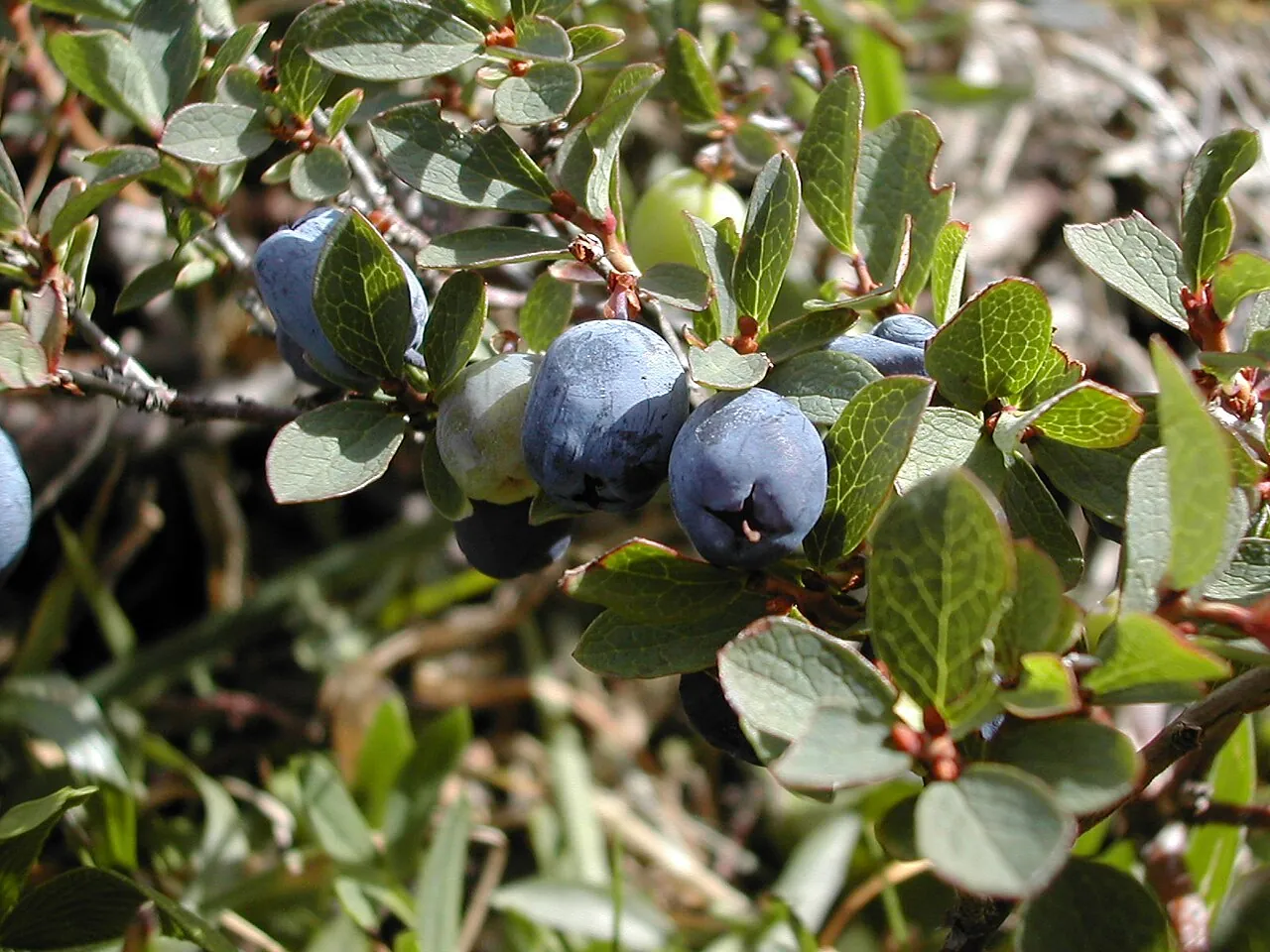
Bog bilberry is a wild northern berry, a close relative of bilberry, with grey-blue waxy skin over almost colourless flesh. The flavour is mild, making it a gentle partner for stronger-tasting berries in porridge, berry soup or juice.
What it is
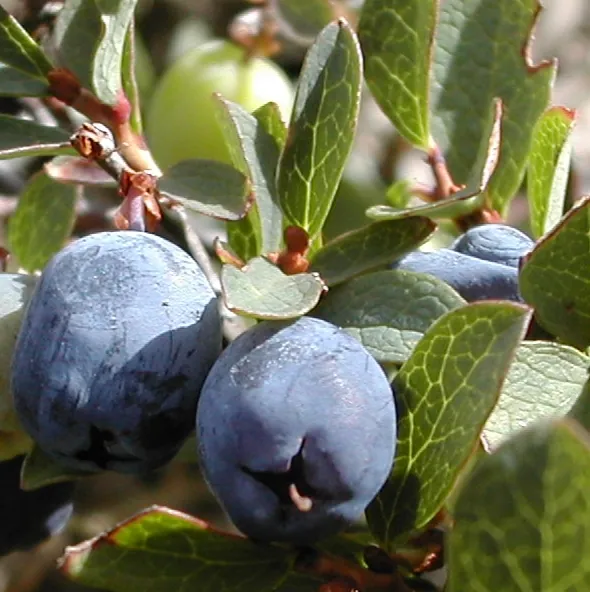
Bog bilberry is Vaccinium uliginosum, a close relative of bilberry. The berries have a fine waxy coating and are round or barrel-shaped, about 0.5–1 cm (0.2–0.4 in) across. Ordinary bilberry has dark flesh that stains; bog bilberry stays pale inside, and it is low in both acid and sugar.
Where it comes from
This is a fruit of the northern world. It grows across Alaska, Canada and Greenland, and reaches south into New England and the northern Great Lakes states. Its range also stretches through Europe and Asia, including Japan.
In Finland it grows across the country, most commonly in Kainuu and Lapland. Bogs, tundra and spruce woods all suit it; its habitats reach from sea level to high mountain ground.
How it's eaten where it grows
In Finland, bog bilberries go into porridge, berry soups, kissel and drinks, often alongside stronger-tasting bilberry or blackcurrant. In Lapland, older meals combined the berries with fish, meat or bark gruel.
Native Alaskan ways of keeping the crop include layering berries with sugar in a barrel or mixing them with seal oil. Lard and vegetable oil are also used.
How it's grown
Bog bilberry is a low, branching shrub, often just 20–40 cm (8–16 in) tall. White or pink flowers grow singly or in small clusters at the tips of its stems. It grows in acidic soil and spreads through underground stems, making mats or loose colonies. Its leaves turn red-purple before falling for winter.
When and where you'll find it
In Finland the picking season is usually August. In Alaska it usually runs from mid-July to September, with berries gathered by hand or with a small berry rake. The harvest also keeps as frozen or dried berries, jam and juice, giving this short summer fruit a place in meals beyond its picking season.
Get it near Detroit
What it tastes like
Bog bilberries are mild-tasting with nearly colorless pulp — pair them with stronger-tasting berries rather than expecting the dark flesh of a true bilberry.
The berries are edible with good flavor, and can remain on the tundra after freezing and drying.
Choose, store, eat
1ChooseDark blue
Look for
- Dark blue
- Fine waxy bloom
Ripe berries are dark blue with a fine waxy bloom. Collect them in a container that won’t crush them.
2StoreCool, collected berries
- CoolCollected berriesDry
Keep collected berries dry and cool before using them fresh, freezing, drying or baking with them.
3EatBerries
Eat
BerriesThe berries go into porridge, kissel, drinks and preserves, often combined with bilberry or blackcurrant for more flavor.
Detroit, Michigan
When it’s good hereUsual monthsJust arrivedAt their bestLast chanceAll yearWhere it is in its usual monthsToday, Oct 22Grown hereIn season in your stateShips fromIn season where it grows
2 growing areas, 1 countryUsual monthsOur estimated monthsToday, Oct 22

- Finland
- Lapland
- You
0 of 1 areas · October
Some years bring a very abundant bog bilberry crop in northwest Alaska, other years little fruit at all.
60 names in 11 languages
- asiavikroot
- 笃斯越橘Chinese
Cook it
Strange but trueHistoryA myth, and the truthWhere the name came fromA record
Sources
Sources
Bog bilberry · Fruitopia · checked Sep 23, 2026