Loquat
Also called Japanese plum · Japanese medlar · Chinese plumEriobotrya japonica · Rosaceae family
A spring fruit with small pomes, coming in varied flesh colors across varieties that rarely appear on a shop label.
Find it near DetroitGet to know it
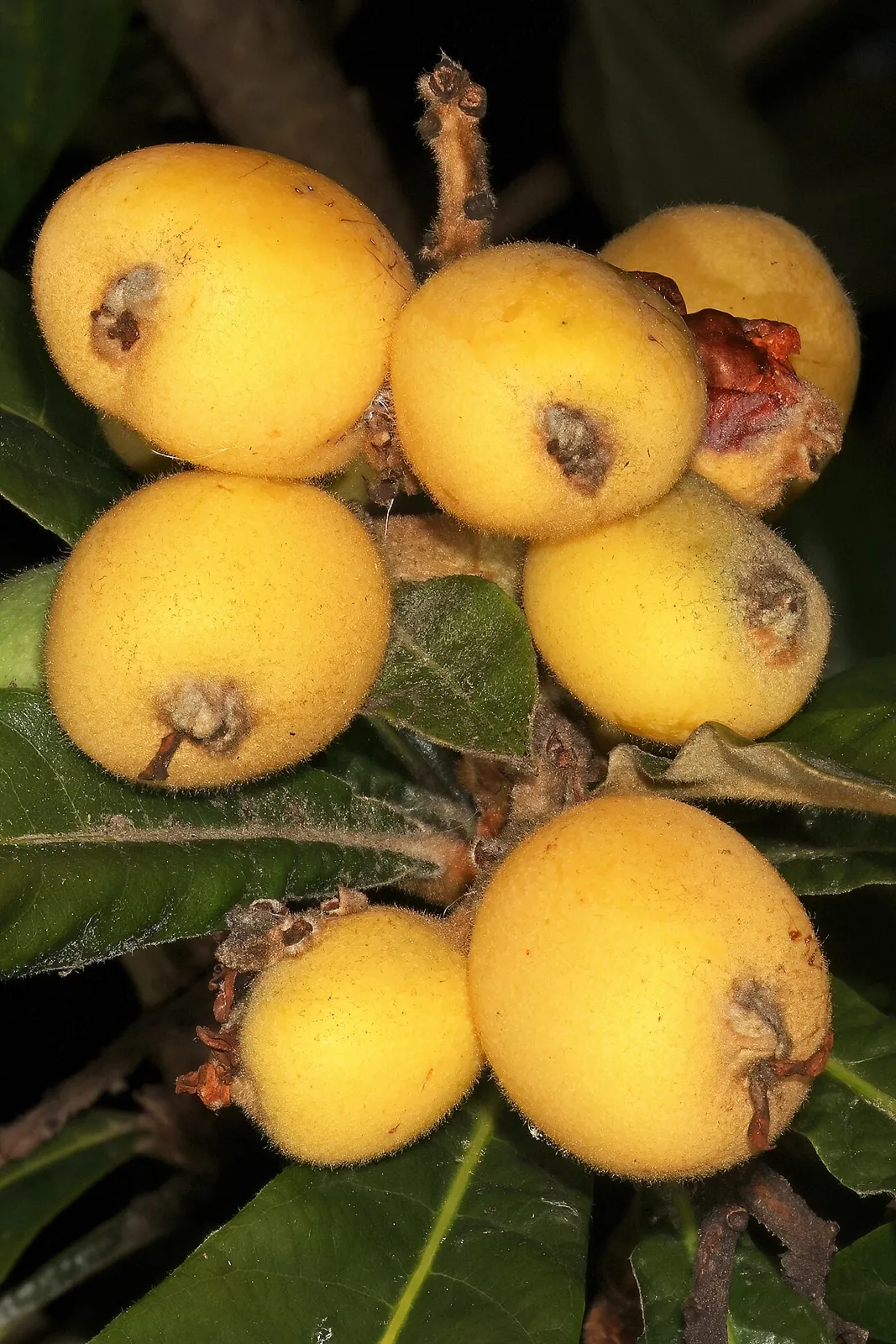
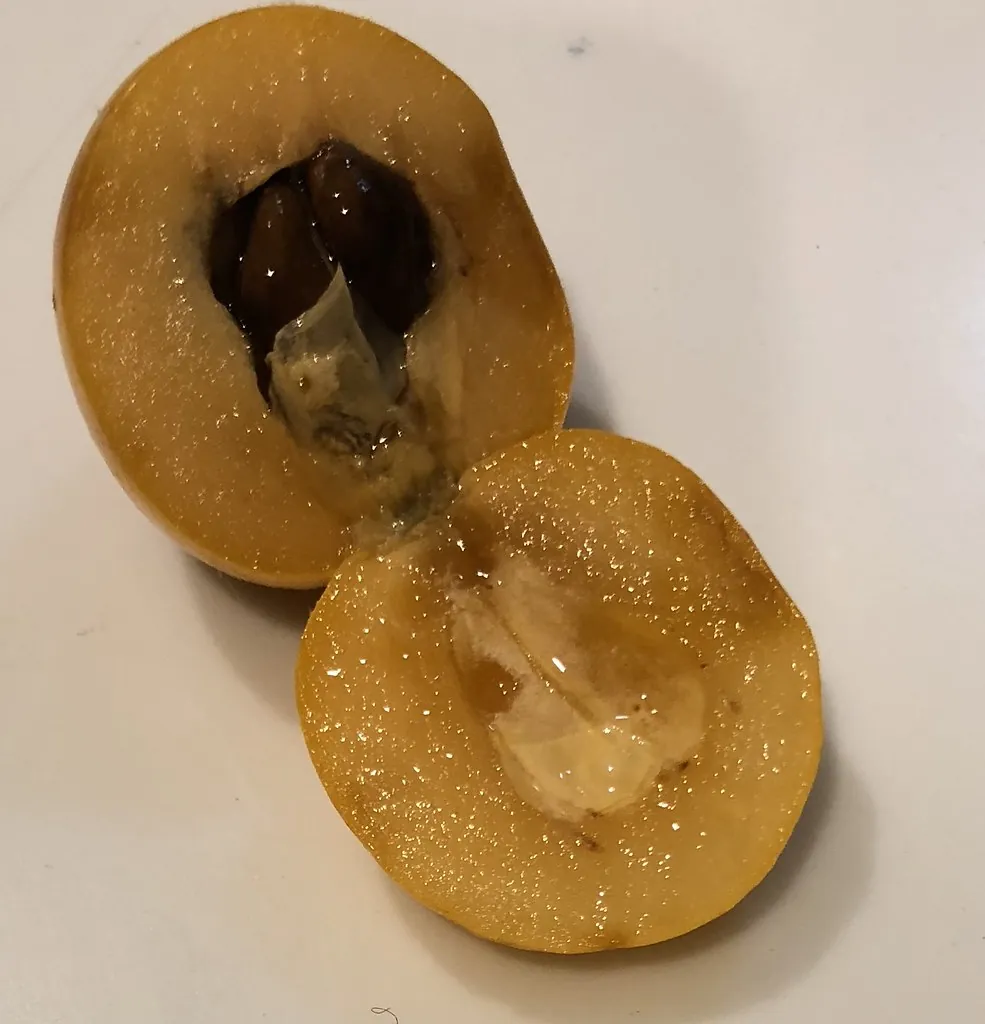
A loquat is a small yellow-to-orange fruit with juicy, sweet-tart flesh and a flavour that can recall apricot, plum and cherry. Split one open to find usually three to five brown seeds, each about 1.5 cm (⅝ in) long. The tree blooms from late autumn through winter, and in Florida the fruit usually ripens from February through May.
What it is
Loquats hang in clusters, each fruit about 2.5–5 cm (1–2 in) long. The skin runs from yellow to orange; inside, the flesh can be white, pale yellow or orange. The flesh is the part to eat; the seeds come out.
The variety changes the bite. Gold Nugget is sweet with an apricot-like flavour. Macbeth has large, yellow-skinned fruit with creamy flesh.
Where it comes from
Despite the name Japanese plum, loquat comes from southeastern China. Today it grows in Japan and India, around the Mediterranean and North Africa, and in Australia, New Zealand and the Americas.
It reached European gardens centuries ago: Paris had loquat trees in 1784, and plants from Canton, China, arrived at Kew in England in 1787.
How it's eaten where it grows
In Gaziantep, Türkiye, loquat becomes yenidünya kebabı. Cooks halve the fruit, remove the seeds and alternate it with balls of minced lamb on skewers. Salt and black pepper season the meat; the fruit and lamb cook over a fire or together in a baking tray.
This May-and-June dish comes with local pide bread, onion and parsley.
How it's grown
The evergreen tree reaches about 4.5–9 m (15–30 ft), with leathery, toothed leaves and scented white flowers. It blooms from late autumn into winter. Cold can kill the flowers or developing fruit even when the tree survives.
A tree grown from seed takes roughly 6–8 years to fruit and does not copy its parent’s variety. Grafted trees can start bearing 1–2 years after planting.
When and where you'll find it
In Florida, the harvest usually runs from February through May. Out of season, Miami Fruit takes preorders for small and large loquat boxes and fills them once the harvest begins. The fruit also travels in cans: Taiwan exports loquats canned in syrup.
Sources · 6
- Gaziantep Metropolitan Municipalityci.gaziantep.bel.tr
- Miami Fruitmiamifruit.org
- Morton, Fruits of Warm Climates (1987)hort.purdue.edu
- NC State Extension Gardener Plant Toolboxplants.ces.ncsu.edu
- Oregon State University Landscape Plantslandscapeplants.oregonstate.edu
- University of Florida IFASask.ifas.ufl.edu
Get it near Detroit
What it tastes like
Crisper than a blueberry, as tart as a kiwifruit≈
More about the taste
Loquat flavor ranges from sweet to sweet-tart, with white, pale-yellow or orange flesh depending on the variety. Champagne is sweet with a spicy character; Wolfe is sweet-tart with spice.
Loquat flavor ranges from sweet to sweet-tart, with white, pale-yellow or orange flesh depending on the variety. Champagne is sweet with a spicy character; Wolfe is sweet-tart with spice.
Choose, store, eat
1ChooseColor nearly or fully developed
Look for
- Color nearly or fully developed
- Yellow to orange
Pick loquats once their color has nearly or fully developed, and taste one for ripeness first. Ready color ranges from yellow to orange depending on the variety.
2StoreFridge, ripe
- FridgeRipePlastic bag
Refrigerate ripe loquats in a plastic bag.
3EatFlesh · not peel, large seeds
Eat
FleshNot eaten
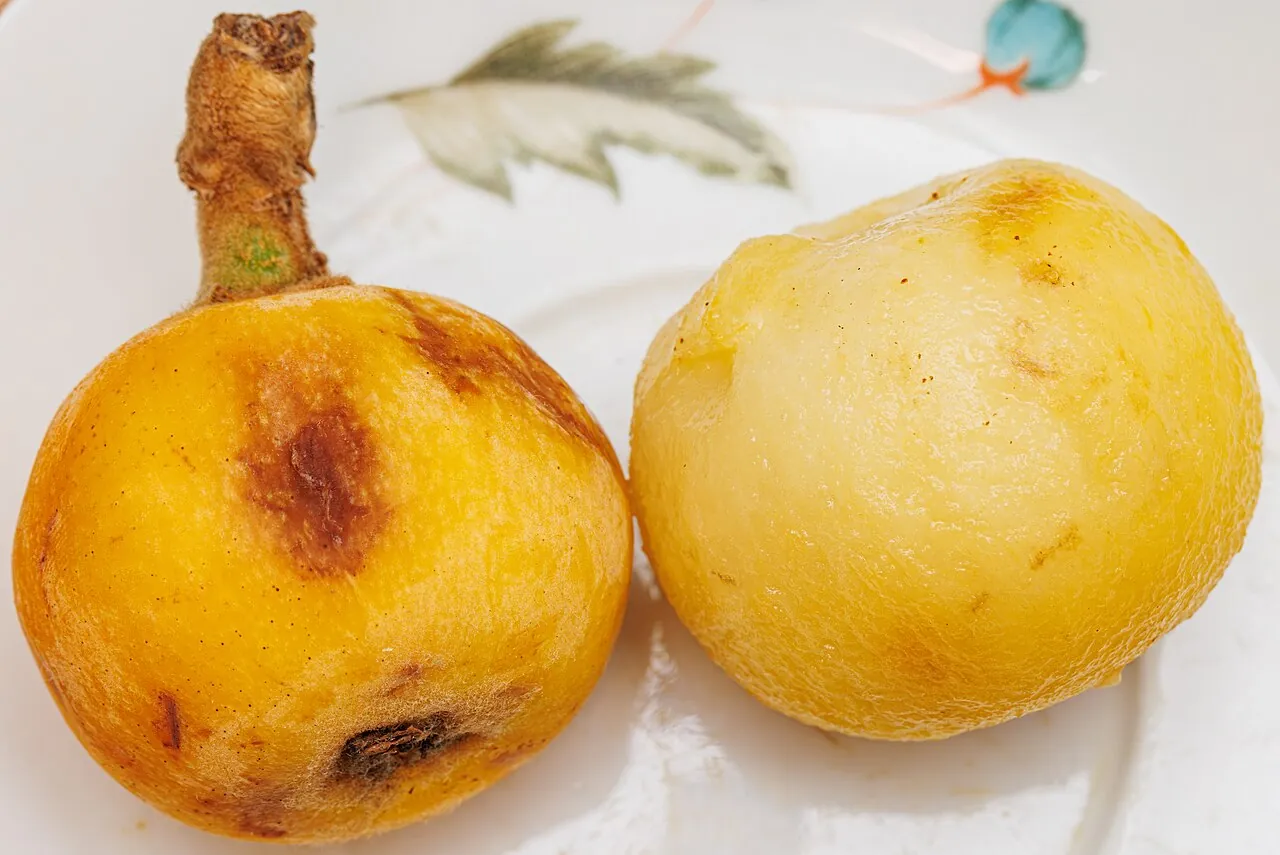
PeelLarge seedsEat loquat flesh without the peel or the large seeds. It also goes into fruit salads, sauces and preserves.
More tips
Worth knowing
- A cut loquat that still looks fine may have already lost some of its original flavor. Use it soon rather than expecting it to keep for ten days.
Detroit, Michigan
When it’s good hereUsual monthsJust arrivedAt their bestLast chanceAll yearWhere it is in its usual monthsToday, Oct 22Grown hereIn season in your stateShips fromIn season where it grows
19 growing areas, 9 countriesUsual monthsOur estimated monthsToday, Oct 22

- Alicante
- Antalya
- Balochistan
- Castellón
- Coquimbo
- Florida
- Fujian
- La Libertad
- O'Higgins
- Santa Cruz de Tenerife
- South Australia
- South Jeolla
- Valparaíso
- Western Australia
- Yunnan
- You
2 of 5 areas · October
Growing areas by country
- Spain7
- Chile3
- Australia2
- China2
- South Korea1
- Peru1
- Pakistan1
- Türkiye1
and 4 more countriesand 1 more country
At Valdosta State, a loquat tree grows on campus as a landscape tree, mapped in a student plant profile.
35 varieties
- No variety photo yet台農2號
- Scent
- 成熟果有微香
- Flavour
- 甜中帶酸,風味極佳
- Juice
- juicy
- Skin
- orange · red
- No variety photo yet台農3號
- Flavour
- 果實味甜多汁、口感細緻
- Juice
- juicy
- Skin
- yellow
- Flesh
- yellow · white
- No variety photo yetHarutayori
- Taste
- medium JP-42
- Tartness
- low JP-42
- Feel
- soft JP-42
- Juice
- juicy JP-42
- No variety photo yetNatsutayori
- Taste
- medium JP-42
- Tartness
- low JP-42
- Feel
- soft JP-42
- Texture
- relatively soft
- No variety photo yet麗月
- Taste
- high JP-42
- Tartness
- high JP-42
- Feel
- soft JP-42
- Flesh
- yellow · white JP-42
- No variety photo yetWolfe
- Taste
- medium US-FL
- Flavour
- sweet-tart, spicy good flavor US-FL
- Feel
- firm
- Juice
- juicy
68 names in 17 languages
- โลควอทThai
Cook it
1 Loquat festivalUsual monthToday, Oct 22
Strange but trueHistoryA myth, and the truthScienceNatureWhere the name came fromCustoms and cultureFood and drink
If you like Loquat
Tastes alike
Used the same way
Nutrition, sources
Nutrition
Loquats, raw · per 100 g
- Carbohydrate
- 12 g
- Fiber
- 1.7 g
- Protein
- 0.4 g
- Fat
- 0.2 g
- Vitamin C
- 1 mg
- Potassium
- 266 mg
Sources
Loquat · Fruitopia · checked Oct 2, 2026