Kei apple
Also called Dingaan’s apricotDovyalis caffra · Salicaceae family
A thorny living fence can also bear fruit. Kei apple combines the practical role of a barrier plant with a yellow-orange crop used fresh and in preserves.
Find it near DetroitGet to know it
Kei apple is a yellow-orange fruit with juicy, sharply acidic flesh and a velvety skin. The thorny plant makes a good living hedge, and Tapi Tapi in Cape Town cooks its pulp into mukokolo jam with brown sugar and a pinch of salt.
What it is
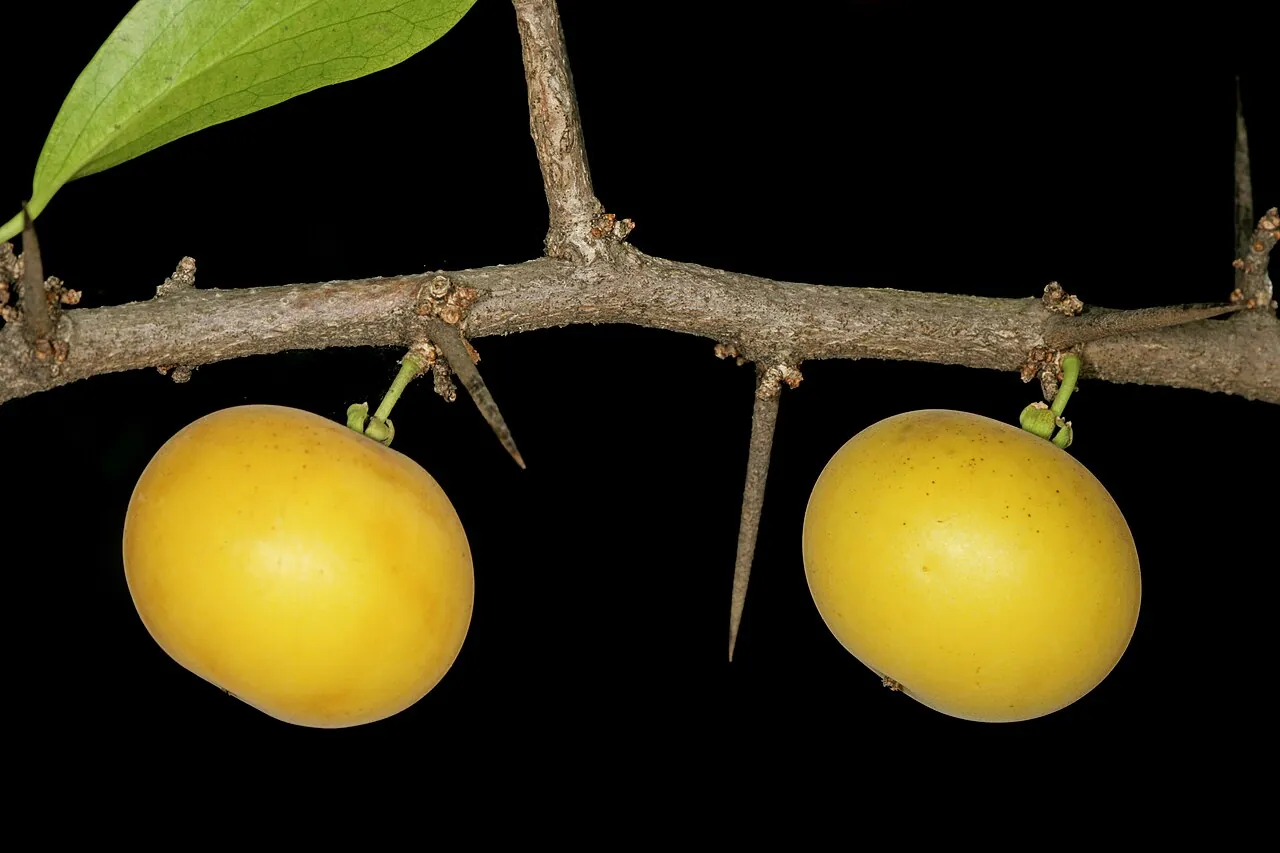
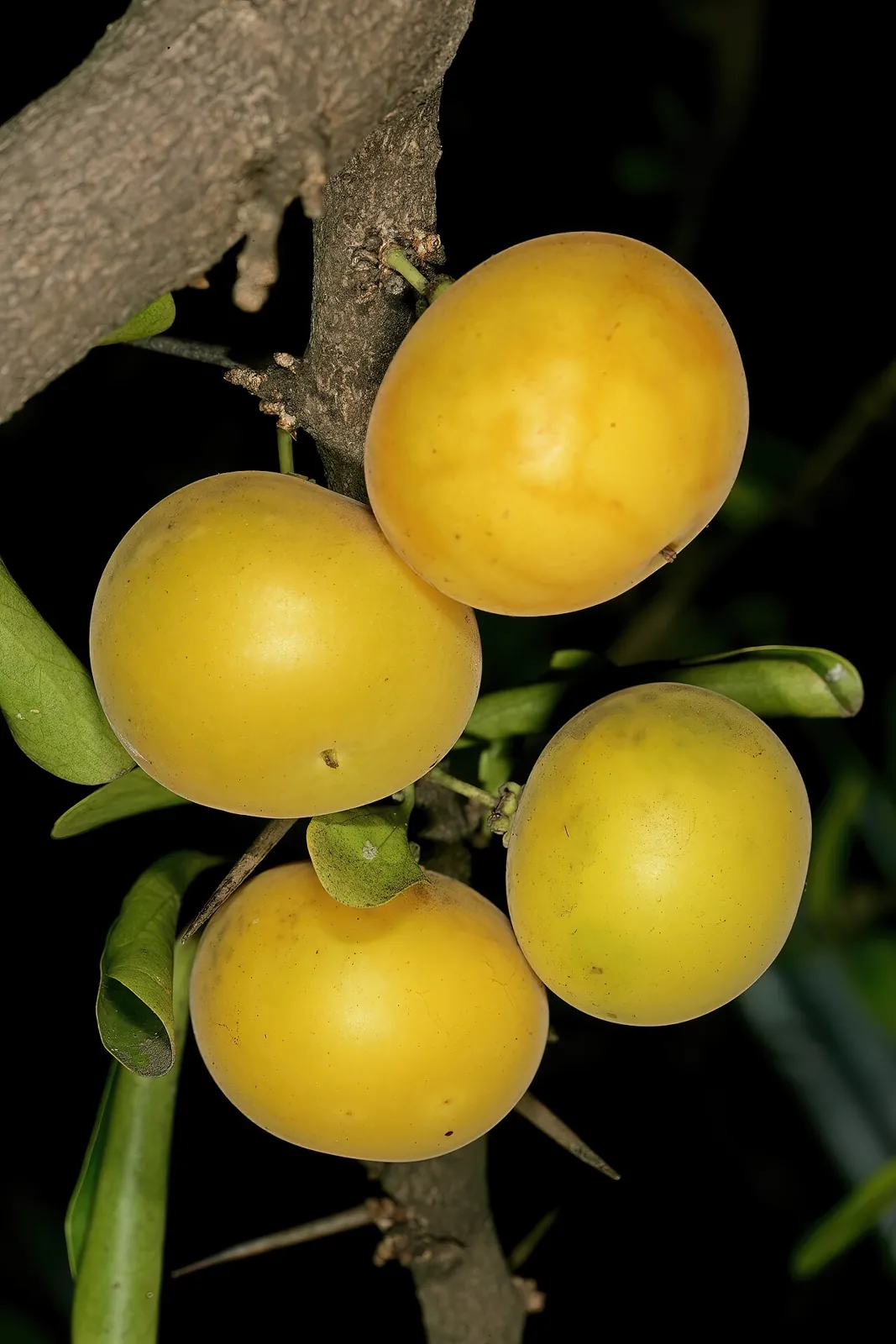
A ripe kei apple is yellow-orange, round and velvety, up to about 6 cm (2.4 in) across. Inside, juicy flesh surrounds two rings of hairy seeds. The sharpness is part of its character: even ripe fruit is acidic. For fresh eating, the fruit is halved and peeled, and the seeds come out. Then it is sprinkled with sugar and left to sit for a few hours before serving.
Where it comes from
Its name comes from the Kei River in South Africa’s Eastern Cape, where the plant grows abundantly. Its native range extends through southern Africa, including Namibia, Botswana, Zimbabwe, Mozambique and Malawi. It reached England in 1838 and later travelled as far as southern California and Florida.
How it's eaten where it grows
Among the Pedi people of South Africa, the juice goes onto pap, a cooked grain porridge. Kei apple is also made into jam. At Tapi Tapi in Cape Town, mukokolo jam starts with fruit pulp strained free of skins and seeds. An equal volume of brown sugar and a pinch of salt go into the pot with it.
How it's grown
Kei apple grows as a thorny tree or shrub and can form a living hedge. Male and female flowers usually grow on separate plants; the females bear the fruit. A tree grown from seed takes about four to five years to begin bearing. It tolerates poor salty soil, coastal wind and sea spray.
When and where you'll find it
In the Mediterranean region and the United States, the fruit usually ripens from August to October. Fruit is picked with a little stalk attached so the skin does not tear. In the kitchen, the harvest can become sugared fresh fruit or a strained jam like Tapi Tapi’s mukokolo. At Steenbok Nature Reserve, kei-apple trees grow beside the wild paths of its Indigenous Gardens.
Sources · 7
- FAO Ecocropecocrop.apps.fao.org
- Soil for Life, Biophilebiophile.co.za
- South African Department of Agriculture, Forestry and Fisheriesnda.gov.za
- Steenbok Nature Reservesteenboknaturereserve.org.za
- Tapi Tapi, Cape Towntapitapi.co.za
- University of Arizona Campus Arboretumapps.cals.arizona.edu
- World Agroforestry, Agroforestree Databaseapps.worldagroforestry.org
Get it near Detroit
What it tastes like
Tarter than a grapefruit, softer than a pear≈
More about the taste
Kei apples have succulent flesh but stay quite acidic even when fully ripe, which is why they're often sugared or made into sauces and preserves rather than eaten plain.
The fruit is fleshy and nearly spherical, turning from green to yellow-orange, with a velvety surface.
Ripe fruit is pleasantly flavored and eaten fresh or made into jelly and jam.
Choose, eat
1ChooseYellow-orange
Look for
- Yellow-orange
Ripe kei apples are yellow-orange.
2EatFlesh · not peel, hairy seeds
Eat
FleshNot eaten
PeelHairy seedsFor fresh eating, remove the peel and the rings of hairy seeds; the flesh can also be cooked into a sauce.
Detroit, Michigan
When it’s good hereUsual monthsJust arrivedAt their bestLast chanceAll yearWhere it is in its usual monthsToday, Oct 22Grown hereIn season in your stateShips fromIn season where it grows
Cook it
Strange but trueHistoryNatureWhere the name came fromCustoms and cultureFood and drink
If you like Kei apple
Tastes alike
Same plant family
Used the same way
Sources
Photos · 2
Sources
Kei apple · Fruitopia · checked Sep 23, 2026