Grape
Also called Wild Grape · Wine grapeVitis vinifera · Vitaceae family
A familiar bunch conceals many different skins, textures and flavors—and a second life as raisins.
Find it near DetroitGet to know it
Grapes are berries that grow in clusters of 15 to 300, around 100 on a typical bunch. They range from thin-skinned, seedless table grapes to the thick-skinned muscadines of the American South. The world's 2025/26 table grape crop is forecast at 30.0 million tonnes, and half of it, 15.0 million tonnes, grows in China.
What it is
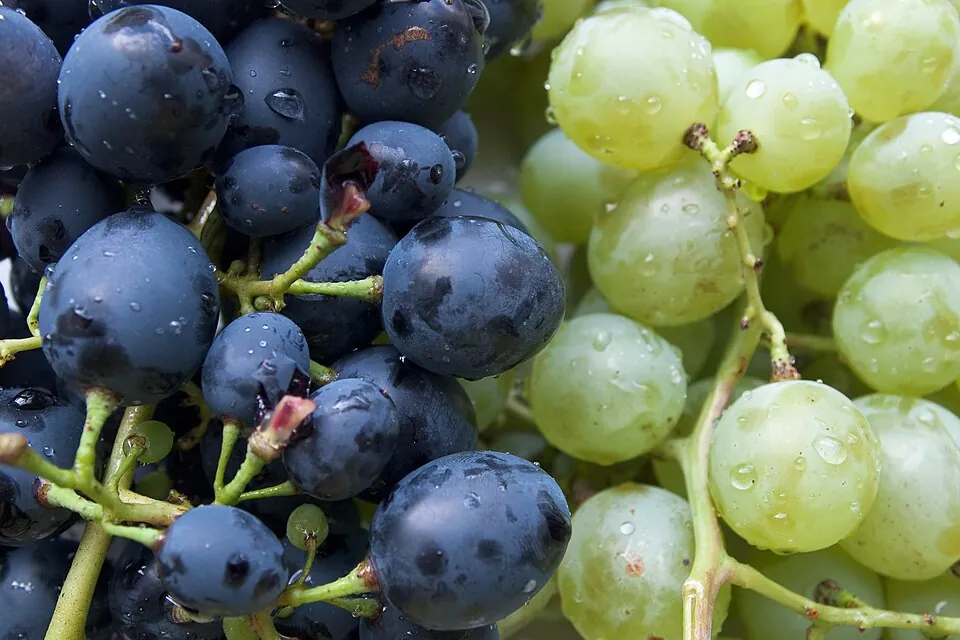
Ripe grapes can be crimson, black, dark blue, yellow, green, orange or pink. Shops sort them into red, black and green, but grapes of one colour can differ in shape, texture and flavour. Table grapes tend to be large and seedless, with thin skin. On a fully ripe grape, the whitish coating called bloom shows more clearly.
Most grapes are varieties of the European grape, Vitis vinifera. The Concord is the most popular of the American grapes. The muscadine, native to the southeastern United States, has thick skin, a bold flavour and a colour from bronze to deep purple. Of all the grapes grown, 71% become wine, 27% are eaten fresh and 2% are dried.
Where it comes from
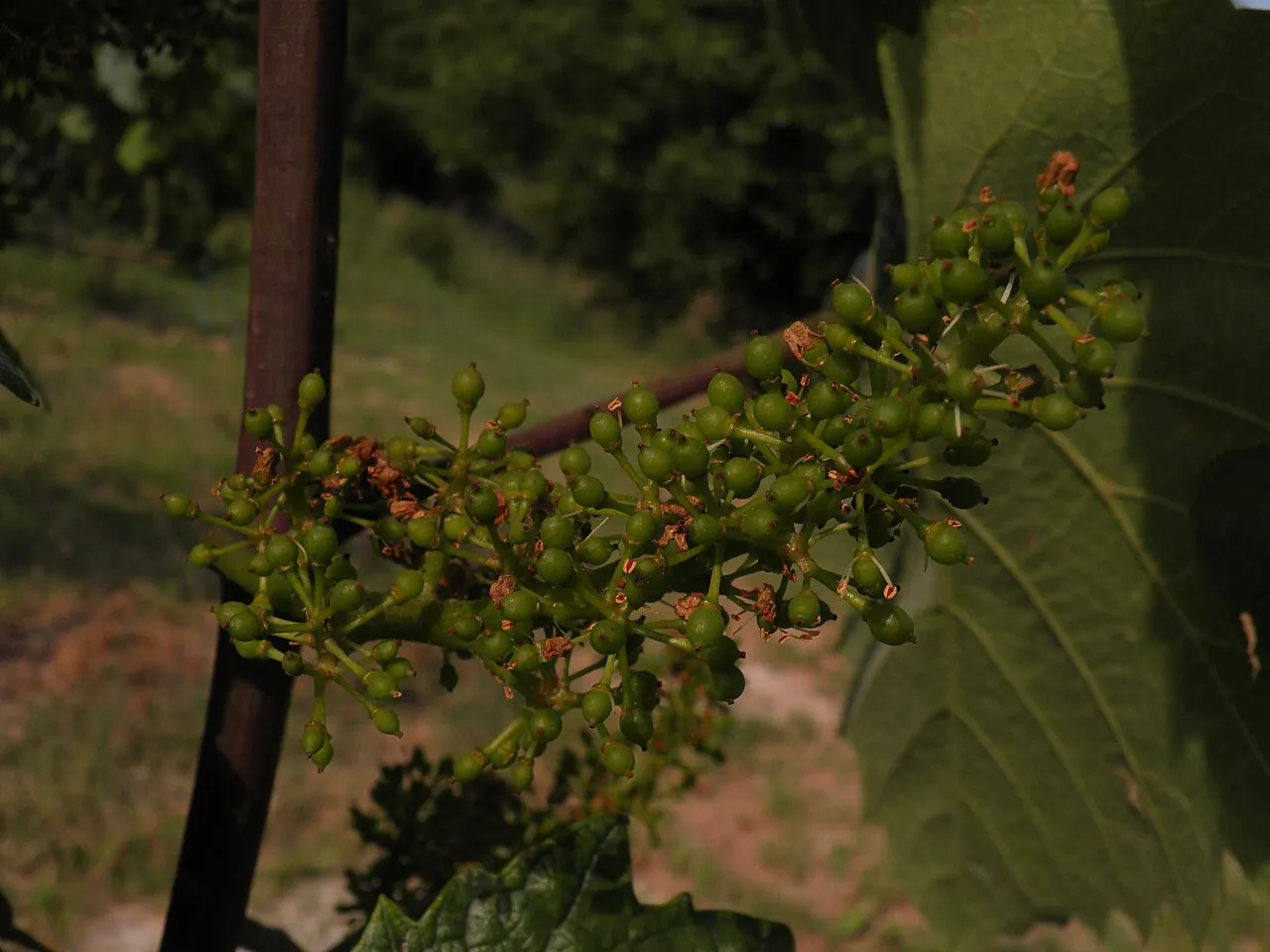
The European grape is native to the Mediterranean and Central Asia. The oldest domesticated grapes found so far come from Gadachrili Gora, in southeastern Georgia, from about 6000 BC. Taming the vine changed its flowers: wild vines grow as separate male and female plants, while farmed vines carry both sexes in one flower. The European grape followed European colonies around the world, reaching North America around the 17th century.
The world's 2025/26 table grape crop is forecast at 30.0 million tonnes, with China's share forecast at 15.0 million tonnes and India's at about 3.2 million. In the United States, 99% of commercial table grapes grow in California.
How it's eaten where it grows
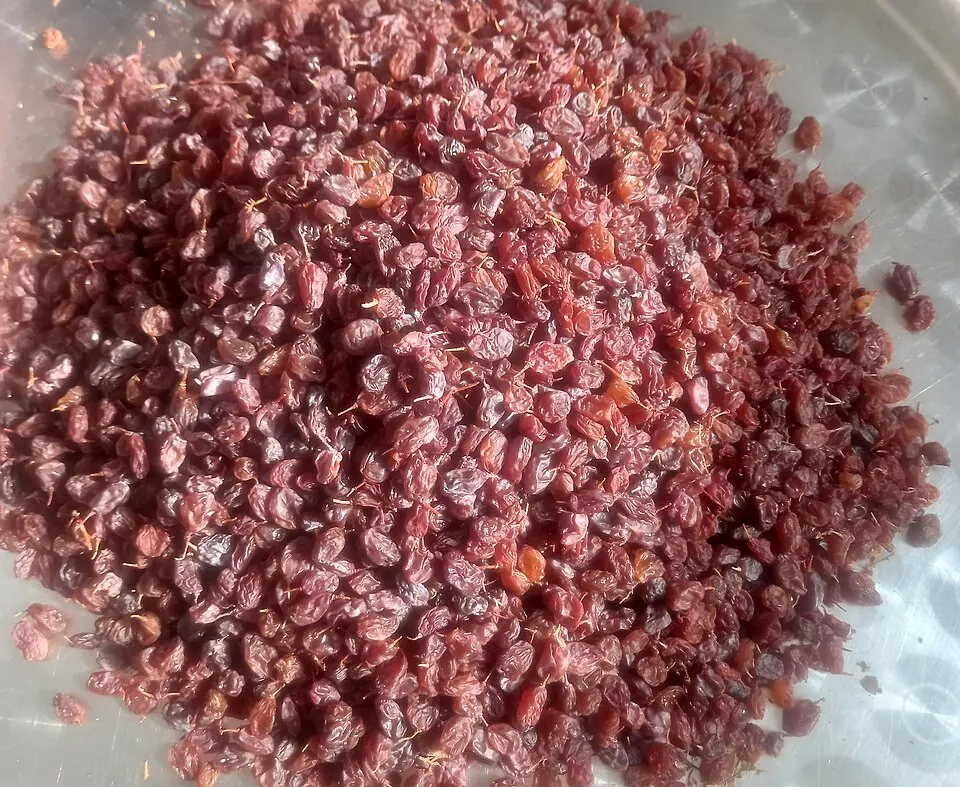
A raisin is any dried grape. A sultana was first a raisin of the Sultana grape, from Turkey, known in the US as Thompson Seedless; a currant is a dried Zante Black Corinth grape. In Turkey's Tekirdağ province, women spend autumn boiling grape juice with clean clay until it thickens into pekmez, a grape molasses spread on bread at breakfast or mixed with sesame paste on cold winter days.
In Georgia, walnuts or hazelnuts are threaded on a string, dipped in thickened grape juice and hung to dry into candle-shaped churchkhela, a snack and a New Year and Christmas sweet. In Spain, people see in the New Year by eating 12 grapes as the clock strikes midnight, one for each chime.
How it's grown
The grape is a vine: left alone, it spreads 15 m (50 ft) or more. Growers train it along wires and prune it every year while it's dormant; in the southeastern United States that falls between late November and late March. A young vine spends its second year building its frame and can carry some fruit in its third. Table grapes need long, dry summers and cool winters. In humid Japan, growers in Yamanashi spread widely spaced vines on Koshu-style trellises.
Grapes stop ripening once they're cut, so they're picked ripe. Most varieties colour up well before their flavour does.
When and where you'll find it
California's grapes come from May through January: the season starts in late spring in the Coachella Valley and moves north to the San Joaquin Valley by mid-July. From December to April, Peru, Chile and South Africa ship their grapes to North America and Europe. In India, Nashik in Maharashtra, called the country's grape capital, harvests from February to April.
In Japan, the Kyoutou region of Yamanashi has grown grapes for at least 800 years. Its farms keep 148 grape varieties, and many welcome visitors.
Sources · 11
- California Table Grape Commissiongrapesfromcalifornia.com
- Cambridge University Botanic Gardenbotanic.cam.ac.uk
- Daily Sabahdailysabah.com
- FAOfao.org
- Purdue Consumer Horticulturepurdue.edu
- Purdue Extension FoodLinkextension.purdue.edu
- Spain.info (Turespaña)spain.info
- University of Georgia Extensionextension.uga.edu
- University of Georgia Viticultureviticulture.uga.edu
- USDA Foreign Agricultural Serviceapps.fas.usda.gov
- Wikipediaen.wikipedia.orgOther pages234
Get it near Detroit
What it tastes like
As sweet as a pear, as mild as a blueberry≈
More about the taste
Texture and flavor vary widely, even within grapes of the same color. Ripe grapes get sweeter as they mature on the vine — color can arrive before flavor does.
Many varieties color before their flavor fully develops. In Concord grapes, a single cluster can contain mature berries alongside hard, sour green ones.
A tasting invitation
Try a seeded grape and a seedless one without assuming that convenience determines flavor. Record skin thickness, how firmly the flesh holds together and whether the aroma is floral, simple or intensely grapey. Variety names make the comparison repeatable.
Choose, ripen, store, eat
1ChooseFirm, plump, smooth
Look for
- Firm, plump, smooth
- Attached to stems
- Tastes sweet
Choose firm, plump, smooth grapes attached well to their stems. When tasting is offered, use sweetness as well as appearance to judge readiness.
2RipenDoesn’t ripen after picking
Doesn’t ripen after pickingGrapes do not continue ripening after being cut from the vine. Select a bunch that already tastes good rather than waiting for sour grapes to sweeten at home.
3StoreFridge, loose, unwashed
- FridgeLoose, unwashed
Store loosely and unwashed in the refrigerator. Remove grapes from their stems and rinse before eating or cooking.
4EatSkin, Flesh · not stems
Eat
SkinFleshNot eaten
StemsThe skin and flesh can be eaten; remove the stems. For seeded grapes, peeling and deseeding is an optional texture refinement.
More tips
A useful detail The pale, whitish coating on a grape is called bloom, and becomes more noticeable as grapes mature.
Worth knowing
- A grape's balance of sweetness and tartness tells you more than its sweetness alone.
Detroit, Michigan
When it’s good hereUsual monthsJust arrivedAt their bestLast chanceAll yearWhere it is in its usual monthsToday, Oct 22Grown hereIn season in your stateShips fromIn season where it grows
88 growing areas, 25 countriesUsual monthsOur estimated monthsToday, Oct 22

- Andhra Pradesh
- Aomori +2
- Aydın
- Baden-Württemberg
- Bahia
- Bari
- Bay of Plenty
- Cáceres
- California
- Chiang Mai
- Coquimbo
- East Java
- Eastern Cape
- Florida
- Fujian
- Hawaii
- Ica
- La Libertad
- Limpopo
- Madeira
- Maule
- Mendoza
- New South Wales
- Northern South Africa
- Pahang
- Shandong
- Washington
- Western Cape
- You
16 of 31 areas · October
Growing areas by country
- United States13
- Spain9
- Australia7
- Brazil6
- South Africa6
- India5
- Argentina4
- Chile4
and 20 more countriesand 17 more countries
In Japan, Koshu-style trellises and widely spaced vines are adaptations to humid growing conditions. Small family farms in the Kyoutou region maintain many fruit varieties, growing grapes for both the table and processing.
1,194 varieties
- No variety photo yetHongju
- Bite
- crisp KR · Original Korean official cultivar description; particular trial location/year not specified.
- Use
- fresh KR · Original Korean official cultivar description; particular trial location/year not specified.
- No variety photo yetSugra63
- Bite
- crunchy
- Feel
- firm
- Juice
- juicy
- No variety photo yetSugrafifty
- Bite
- crisp
- Feel
- Very firm
- Juice
- juicy
- No variety photo yetSugrafiftyfour
- Bite
- crisp
- Feel
- firm
- Juice
- juicy
- No variety photo yetSugrafiftynine
- Bite
- crisp
- Feel
- Very firm
- Juice
- juicy
- No variety photo yetSugrafiftyone
- Bite
- crisp
- Feel
- Very firm
- Juice
- juicy
81 names in 12 languages
Cook it
How to serve it first
Serve a bunch after rinsing, or remove grapes from the stems and halve them for a salad. For a different experience, roast a small portion and compare the softened result with fresh grapes from the same bunch.
9 grape festivalsUsual monthToday, Oct 22
Strange but trueHistoryA myth, and the truthScienceWhere the name came fromCustoms and cultureFood and drinkPeopleA record
If you like Grape
Tastes alike
Close relatives
Nutrition, sources
Nutrition
Grapes, american type (slip skin), raw · per 100 g
- Carbohydrate
- 17 g
- Fiber
- 0.9 g
- Sugars
- 16 g
- Protein
- 0.6 g
- Fat
- 0.4 g
- Vitamin C
- 4 mg
- Potassium
- 191 mg
Photos · 4
Sources
Grape · Fruitopia · checked Sep 21, 2026
- extension.purdue.edu
- grapesfromcalifornia.com
- hogarmania.com
- larsenapplebarn.com
- purdue.edu
- sallysbakingaddiction.com
What we don't know yet
A grape's color doesn't tell you its variety or species.