Elephant apple
Also called Chulta · Indian catmonDillenia indica
A large green fruit whose culinary substance comes from thickened flower parts. Its acidity gives it a natural place in savory cooking as well as preserves.
Find it near DetroitGet to know it
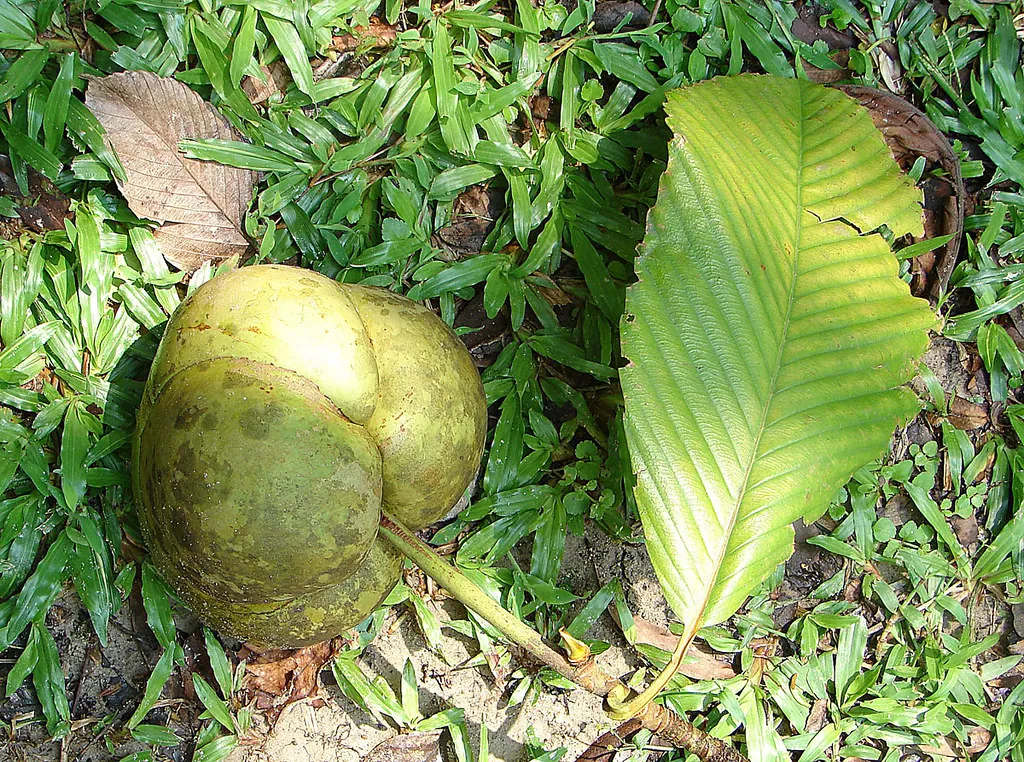
Elephant apple is a large, firm, yellowish-green fruit with a sour bite like an unripe apple. In Assam, pieces sharpen a pot of lentils; in Bengal, they become sweet-and-sour chutney. The thick layers you cook are parts of a flower that have grown fleshy around its centre.
What it is
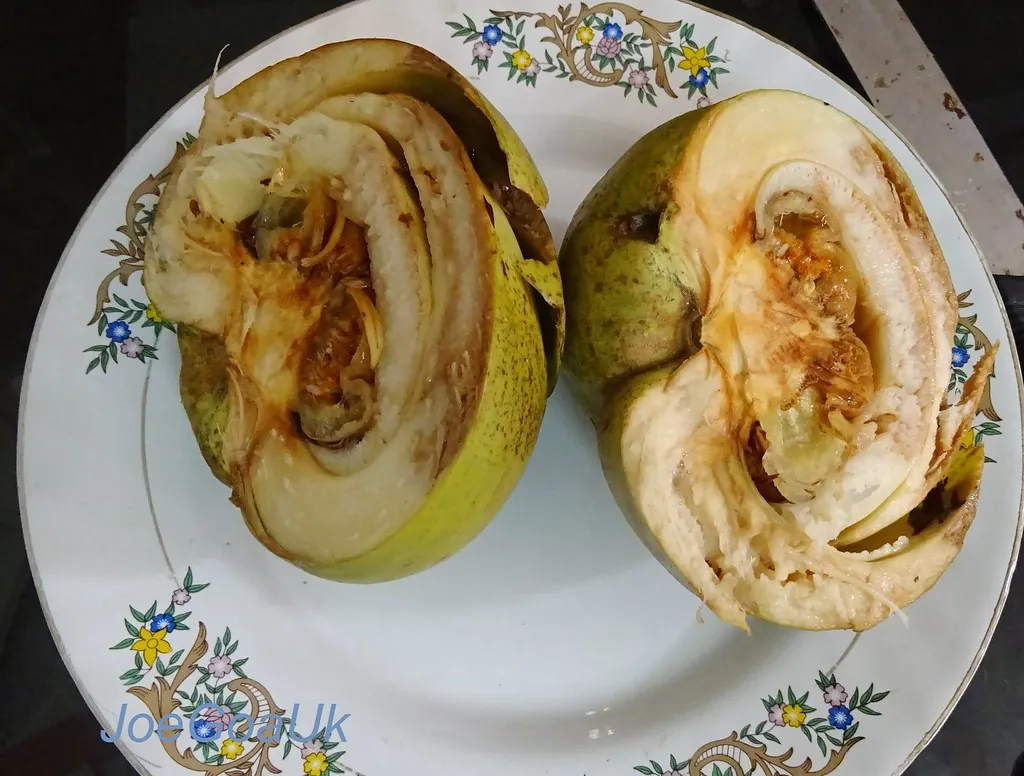
Elephant apple, Dillenia indica, measures about 8–10 cm (3–4 in) across. Its rounded shape comes from thick, overlapping sepals: the green parts that once enclosed the flower. These swell around the true fruit as it develops. The layers have a firm texture and enough acidity to season a savoury dish.
Where it comes from
The tree is native to India, Sri Lanka and southern China, across mainland Southeast Asia to Sumatra, Java and Borneo. Its rippled leaves and large, fragrant white flowers also make it a garden tree through the tropics and subtropics. In Assam the fruit is called ou tenga; in Bengal it is chalta.
How it's eaten where it grows
In Assam, ou tenga dal cooks elephant apple with pink lentils and turmeric. A mustard-oil seasoning brings garlic, fenugreek, mustard seeds and green chilli to the pot. The fruit also goes into fish curries and pickles.
Bengali chaltar chutney can pair the fruit with jolpai, Indian olives. One autumn version of this sweet-and-sour chutney adds fragrant rice for flavour and grated coconut for texture. In Thailand, sliced young elephant apples go into kaeng som, a sweet-and-sour soup, and kaeng ma tad, a spicy elephant-apple soup.
How it's grown
Elephant apple grows beside forest streams and rivers and can become a tree 30 m (98 ft) tall. New plants can start from seed or from air layering, which makes a branch grow roots while it is still attached to the parent tree.
When and where you'll find it
In Bengal, unripe chalta usually reaches markets from early October, ready for chutney. Over the following months it gets sweeter and more fibrous and goes into pickles. Preserved fruit also reaches specialist Bengali food shops: The Bengal Store in Kolkata lists a homemade chalta pickle online.
Sources · 7
- Bong Eatsbongeats.com
- Japan International Research Center for Agricultural Sciencesjircas.go.jp
- Nitin Sekar and Raman Sukumar, Journal of Ecology (2013)wgbis.ces.iisc.ac.in
- Singapore National Parks Boardnparks.gov.sg
- Tasnim Parveen, KHARkharandotherrecipes.wordpress.com
- The Bengal Storethebengalstore.com
- University of Oxford, Plants 400herbaria.plants.ox.ac.uk
Get it near Detroit
What it tastes like
Elephant apple's fleshy sepals taste acidic, often compared to an unripe apple.
The fleshy sepals taste acidic, often compared to an unripe apple.
The fruit looks large and firm, with thick sepals as its most visible feature; its looks don't suggest a sweet dessert fruit.
Choose, eat
1ChooseGreen or light green
Look for
- Green or light green
Ignore
- Turning red
Mature elephant apple is green or light green — it won't turn red or sweet like a dessert apple.
2EatFleshy sepals
Eat
Fleshy sepalsThe enlarged fleshy sepals are the edible part, used in curries and jam; the pulp is also used to wash hair, but that is not a food use.
Detroit, Michigan
When it’s good hereUsual monthsJust arrivedAt their bestLast chanceAll yearWhere it is in its usual monthsToday, Oct 22Grown hereIn season in your stateShips fromIn season where it grows
29 names in 15 languages
- chaltaroot
Cook it
Strange but trueScienceNature
Sources
Sources
Elephant apple · Fruitopia · checked Sep 22, 2026