Brazilian guava
Also called Guinea guavaPsidium guineense · Myrtaceae family
A variable wild guava whose local names and flavor vary enough to reward keeping provenance attached to a tasting.
Find it near DetroitGet to know it
Brazilian guava is a small yellow fruit with pale flesh, hard little seeds and a tart flavour that can suggest strawberries. In Brazil it becomes araçazada, a fruit sweet, as well as juice and ice cream.
What it is
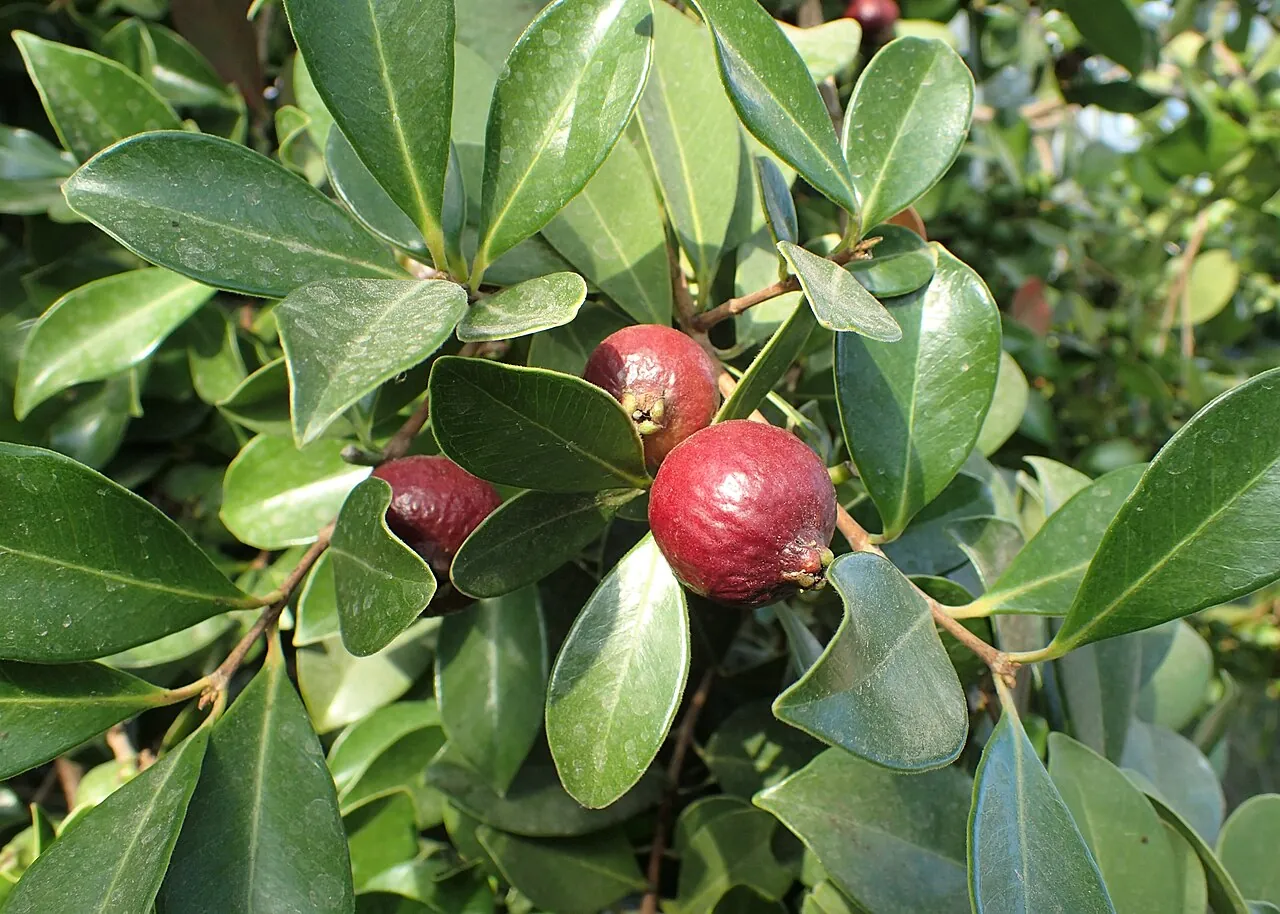
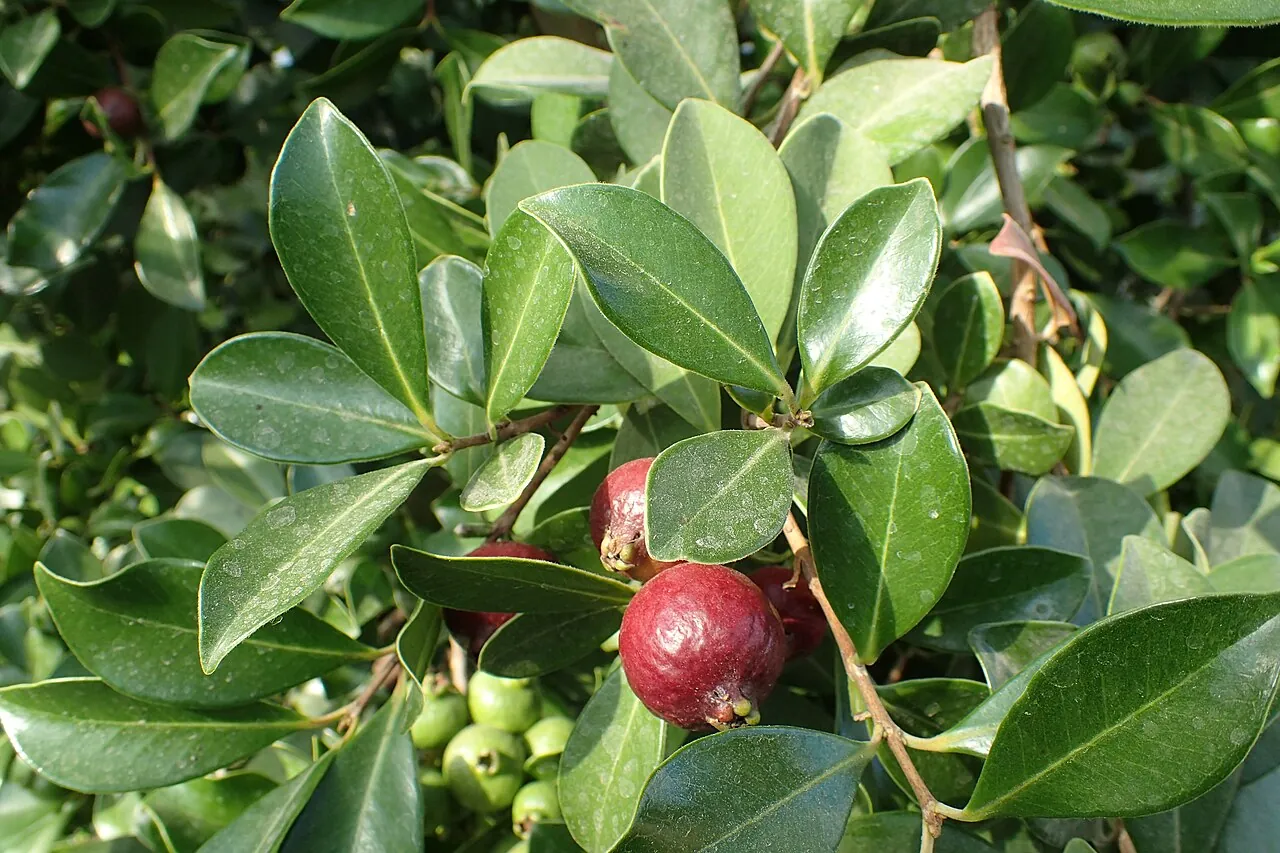
This guava is Psidium guineense, a relative of the common guava in the myrtle family. Its round or pear-shaped fruit measures about 1–2.5 cm (0.4–1 in) across. The yellow skin encloses pale-yellow flesh packed with small, hard seeds.
Its aroma lacks the strong musky note of common guava. The flavour can be gently tart or quite sharp, with a strawberry-like note in some fruit.
Where it comes from
Brazilian guava comes from tropical America, with a native range reaching from Mexico and the Caribbean through Central America to Brazil, Paraguay and Argentina. It grows in thickets and open woods, including rocky hillsides.
It has also travelled beyond the Americas. People grow it in India, Java and some Polynesian islands. Around Agartala in Tripura, northeast India, it has become naturalized and grows wild.
How it's eaten where it grows
In Brazil, araçazada turns the fruit into fruit sweets. Other preparations include compotes, jelly, juice, ice cream and liqueurs, with small family processors making use of the crop. The fruit is also eaten fresh.
A recipe developed in Coclé, Panama, pairs the pulp with pineapple juice in a nectar; another makes jam. Both use fruit from La Pintada, where the fruit is called guayabita sabanera.
How it's grown
The plant usually forms a shrub 1–3 m (3–10 ft) tall, though it can become a small tree. It grows slowly in tropical and warm subtropical climates and can be raised from seed or cuttings. Light, sandy ground suits it poorly. Under irrigation in Petrolina, northeastern Brazil, it keeps its leaves throughout the year.
When and where you'll find it
In Brazil, frozen pulp, jelly and fruit sweets give the harvest a life beyond the fresh fruit. At an irrigated planting in Petrolina, ripe fruit peaked in November–December 2018 and again in March 2020. The bushes flowered through much of the year, with ripe fruit arriving in separate waves.
Get it near Detroit
What it tastes like
The pulp is aromatic, sweet, slightly sour and mucilaginous.
The pulp is aromatic, sweet, slightly sour and mucilaginous, drawing on descriptions in earlier botanical literature.
Taste varies widely, from strawberry-like and acidic to resinous or bitter.
How to buy it
1EatPulp
Eat
PulpThe pulp is eaten fresh or made into drinks, ice cream and liqueurs.
Detroit, Michigan
When it’s good hereUsual monthsJust arrivedAt their bestLast chanceAll yearWhere it is in its usual monthsToday, Oct 22Grown hereIn season in your stateShips fromIn season where it grows
10 names in 5 languages
- Kanungroot
Cook it
Strange but trueScienceWhere the name came from
Sources
Sources
Brazilian guava · Fruitopia · checked Sep 22, 2026