Asian palmyra fruit
Also called Palmyrah · Sugar palm · Toddy palmBorassus flabellifer · Arecaceae family
One palm offers two markedly different fruit foods: tender translucent seed tissue and a stronger-flavored mature pulp.
Find it near DetroitGet to know it
Asian palmyra offers two different fruit foods. Young fruit holds ice apple, or nungu: a soft, translucent jelly. Ripe fruit supplies dense orange-yellow pulp for cakes and steamed sweets, with a stronger flavour that can include bitterness.
What it is
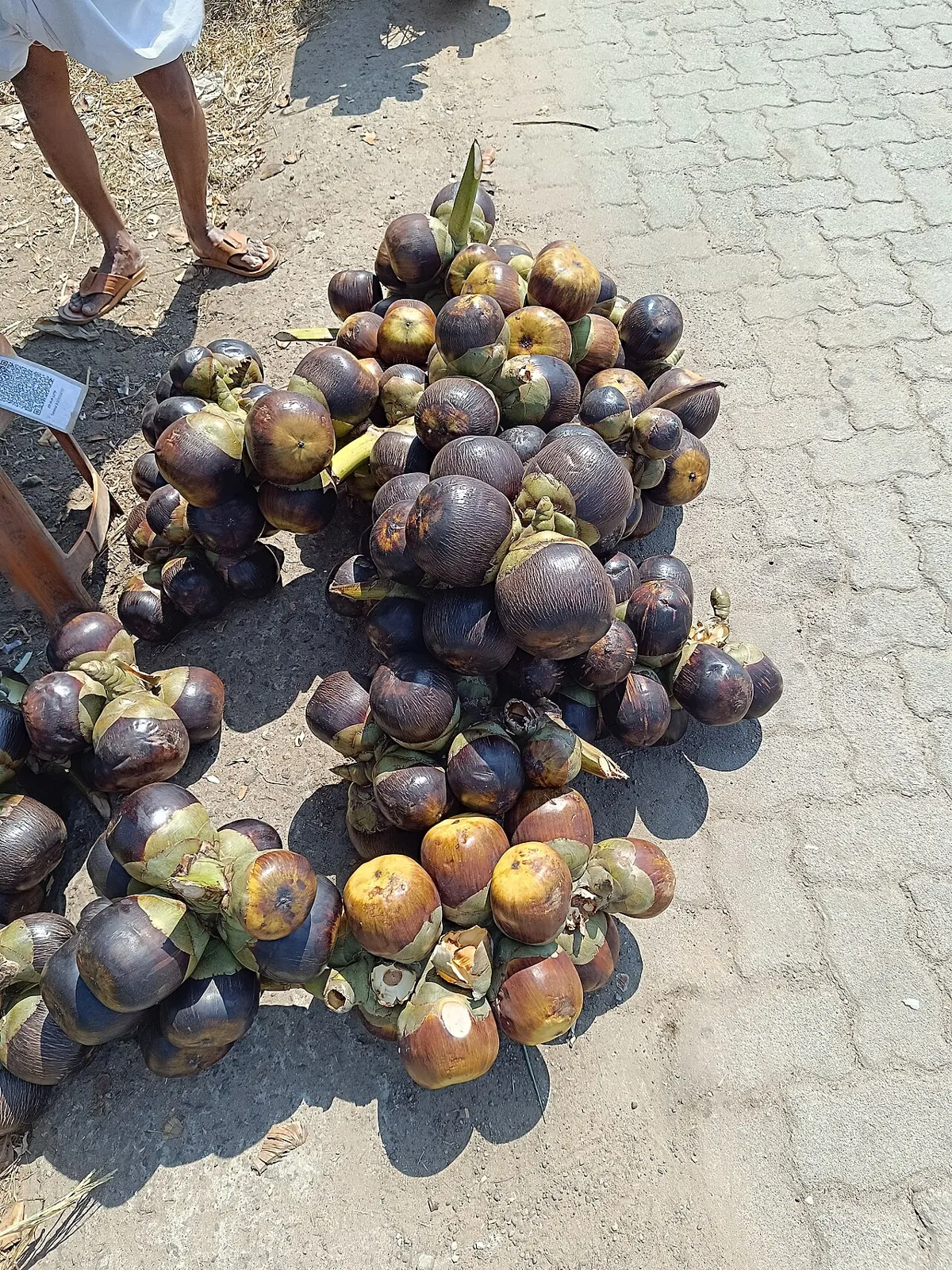
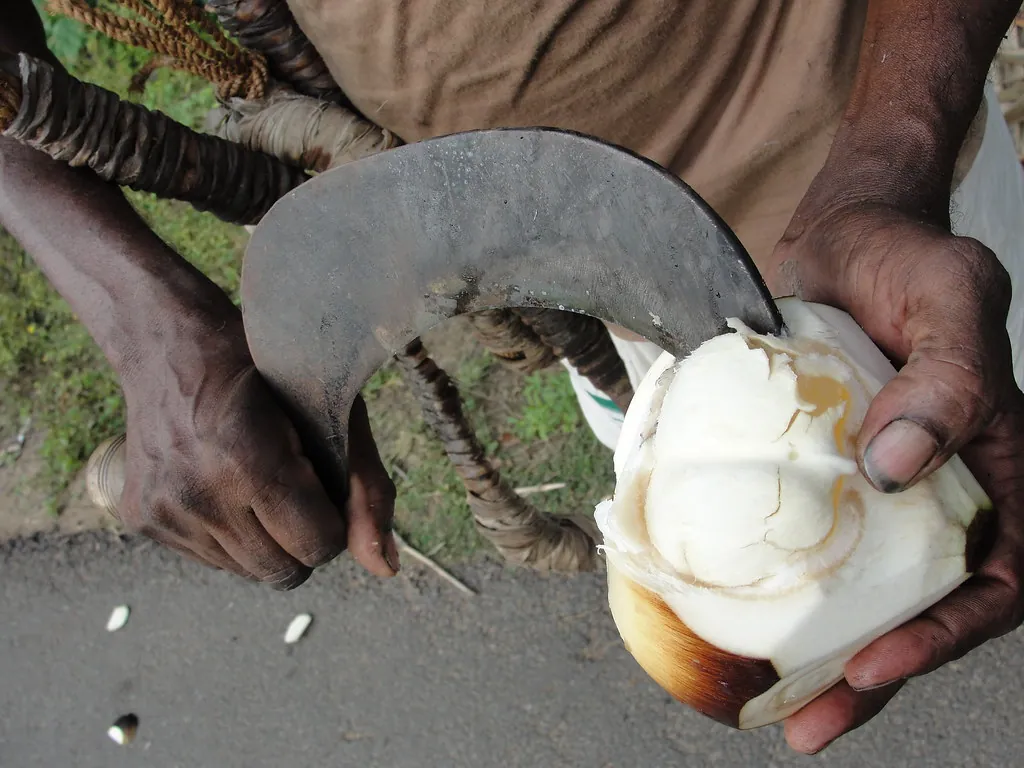
Borassus flabellifer is a fan palm bearing large brown fruit that can reach about 15–20 cm (6–8 in) across. A fruit generally contains two or three kernels. When the fruit is very young, each kernel is hollow and jelly-soft, with a watery liquid inside: this is ice apple.
The mature yellow pulp is a different part of the fruit, surrounding the seeds in a mass of fibres. Cooks separate those fibres from the pulp before making sweets. Its dense texture is quite different from the young kernels’ delicate jelly.
Where it comes from
The palm is native to India, Sri Lanka and the Malay Peninsula, and is woven into food traditions farther east in Cambodia. In Tamil Nadu, where it is the state tree, its young kernels are nongu or nungu; in Bangladesh the fruit is taal, eaten both for its tender young seeds and for its ripe pulp. Each stage has its own place in the kitchen.
How it's eaten where it grows
In Bangladesh, taal er bhapa pitha turns ripe pulp into steamed cakes with rice flour, wheat flour and sugar; the traditional cone-shaped cakes are shaped in jackfruit leaves. In Cambodia, the kernels are eaten fresh or made into a sweet with sticky rice, and the yellow pulp of mature fruit, its tough fibres removed, is mixed with rice starch, wrapped in banana leaf and steamed.
Nungu ice cream uses the younger fruit. Chopped and puréed ice apple is folded into whipped cream with condensed milk and a little milk, then frozen.
How it's grown
Palmyra grows in sun and well-drained soil, tolerating drought once established. Its deep roots make a large palm hard to move. Male and female flowers normally grow on separate trees. In Tamil Nadu, the wait for flowering is about 12–15 years after planting; that is when the trees’ sex becomes visible.
When and where you'll find it
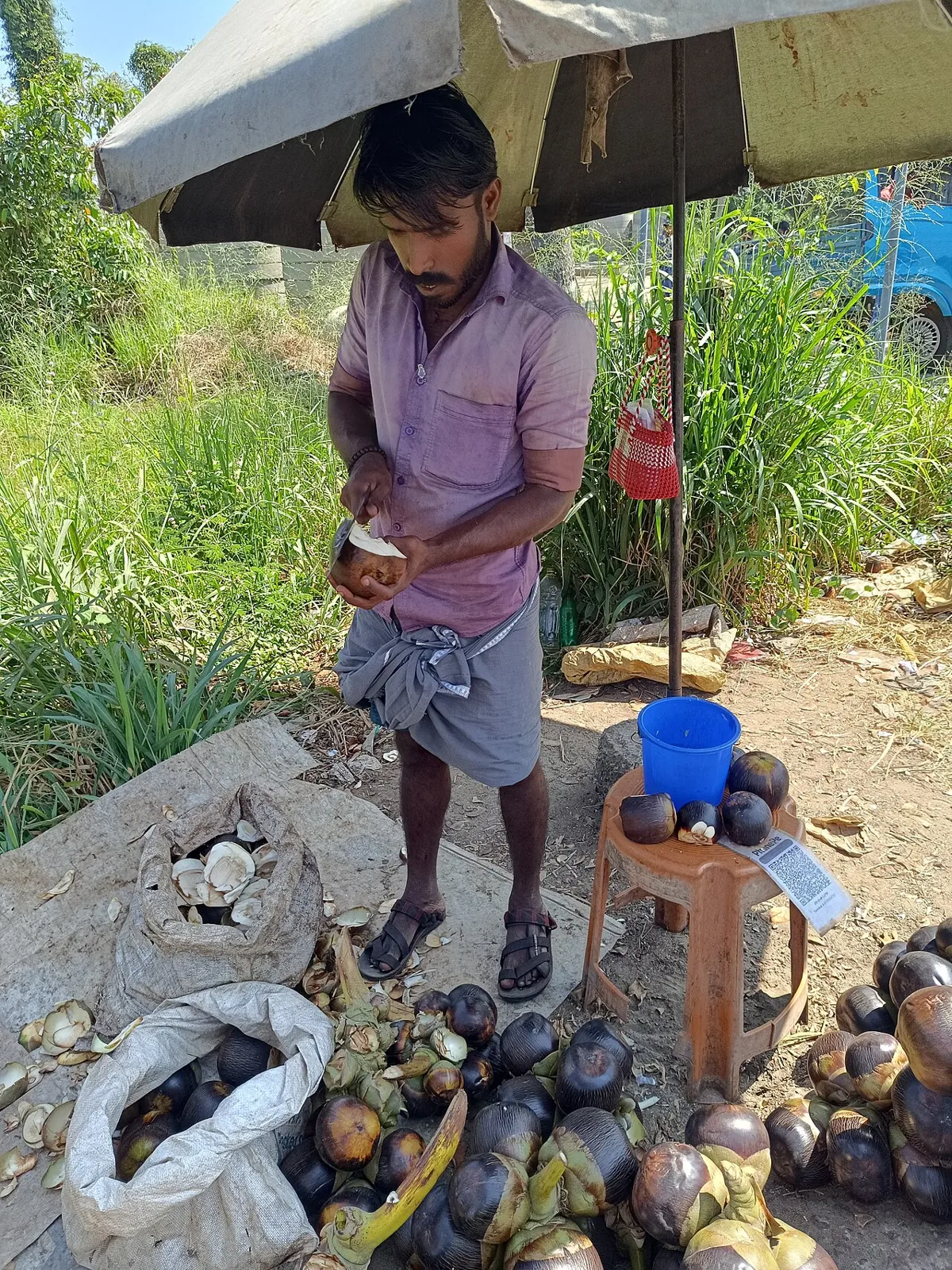
In Chennai, tender nungu usually appears from late April through July. Only a handful of street vendors sell it, near bus stands and residential areas, with fruit coming from Maruvathur, Kanchipuram and Pollachi.
In the US, Miami Fruit lists frozen ice apple in 300 g packets. These are the tender kernels for nungu dishes. The packets stay in the freezer, and the fruit is fully thawed before eating.
Sources · 8
- Khieu Borin, FAO World Animal Reviewfao.org
- Miami Fruitmiamifruit.org
- Missouri Botanical Gardenplantfinder.mobot.org
- newindianexpress.com
- Rao et al., IntechOpen (2021)intechopen.com
- Tamil Nadu Agricultural Universityagritech.tnau.ac.in
- Vegan Bangla, Tuly Sarah Costaveganbangla.com
- Yummy Tummy Aarthiyummytummyaarthi.com
Get it near Detroit
What it tastes like
Tender endosperm (ice apple) is sugary and gelatinous. Mature pulp is dark yellow with a stronger flavor that can include bitterness — the two are very different foods.
Tender endosperm (ice apple) is sugary and gelatinous. Mature pulp is dark yellow with a stronger flavor that can include bitterness — the two are very different foods.
Choose, store, eat
1ChooseSpecify which product you want: tender endosperm from immature fruit, or mature pulp for cooking
Specify which product you want: tender endosperm from immature fruit, or mature pulp for cooking.
2StoreFreezer, frozen ice-apple packets
- FreezerFrozen ice-apple packetsThawed fully before eating
Frozen ice-apple packets should be kept in the freezer and thawed fully before eating.
3EatFresh kernels, Mature yellow pulp · not fibrous material
Eat
Fresh kernelsMature yellow pulpNot eaten
Fibrous materialFresh kernels are eaten or made into sweets. Mature yellow pulp, with the fibrous material removed, is used in steamed food.
Detroit, Michigan
When it’s good hereUsual monthsJust arrivedAt their bestLast chanceAll yearWhere it is in its usual monthsToday, Oct 22Grown hereIn season in your stateShips fromIn season where it grows
61 names in 17 languages
Cook it
Strange but trueHistoryCustoms and culturePeople
Sources
Sources
Asian palmyra fruit · Fruitopia · checked Oct 2, 2026