Achacha
Also called Bolivian bacupariGarcinia humilis · Clusiaceae family
An orange shell opens onto pale, juicy flesh with a sweet–tart balance. Buying it properly mature matters more than waiting for a countertop transformation.
Find it near DetroitGet to know it
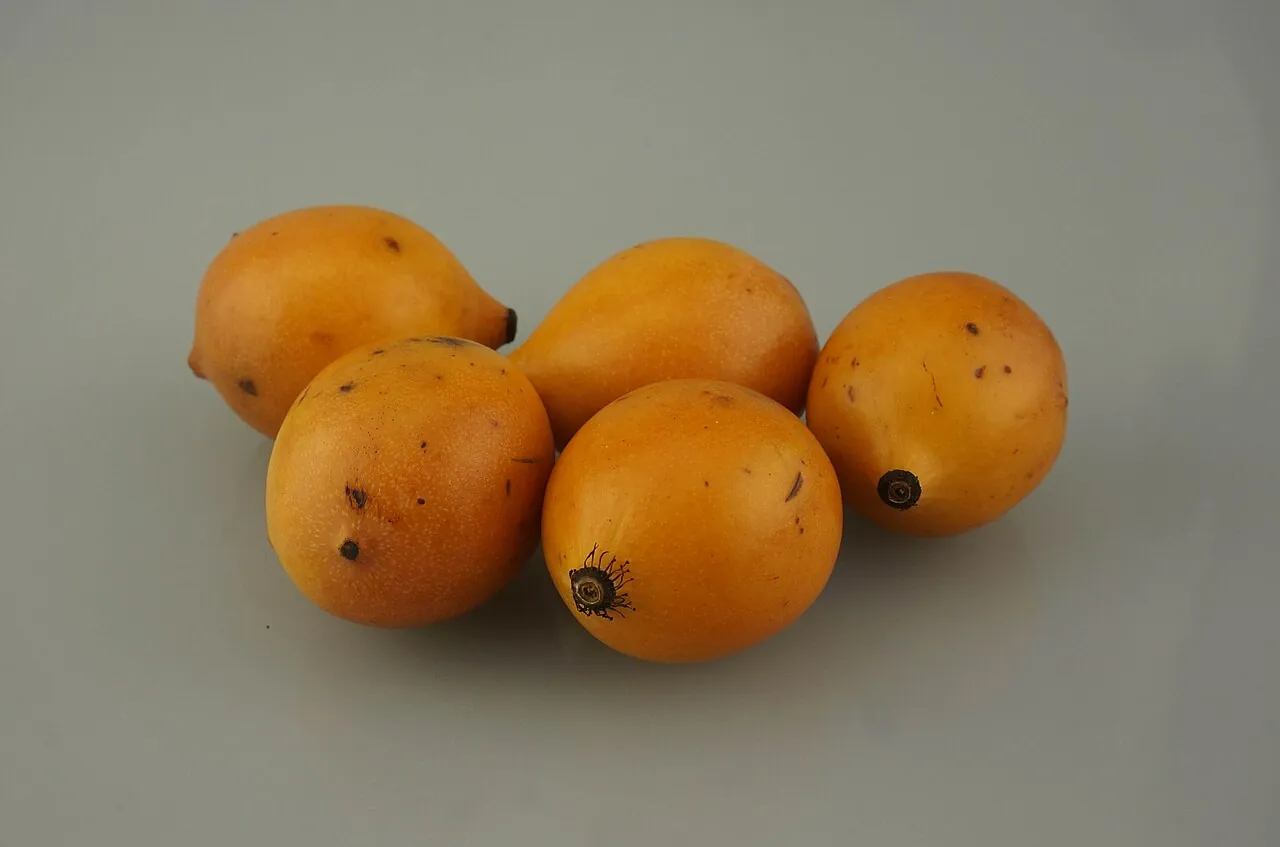
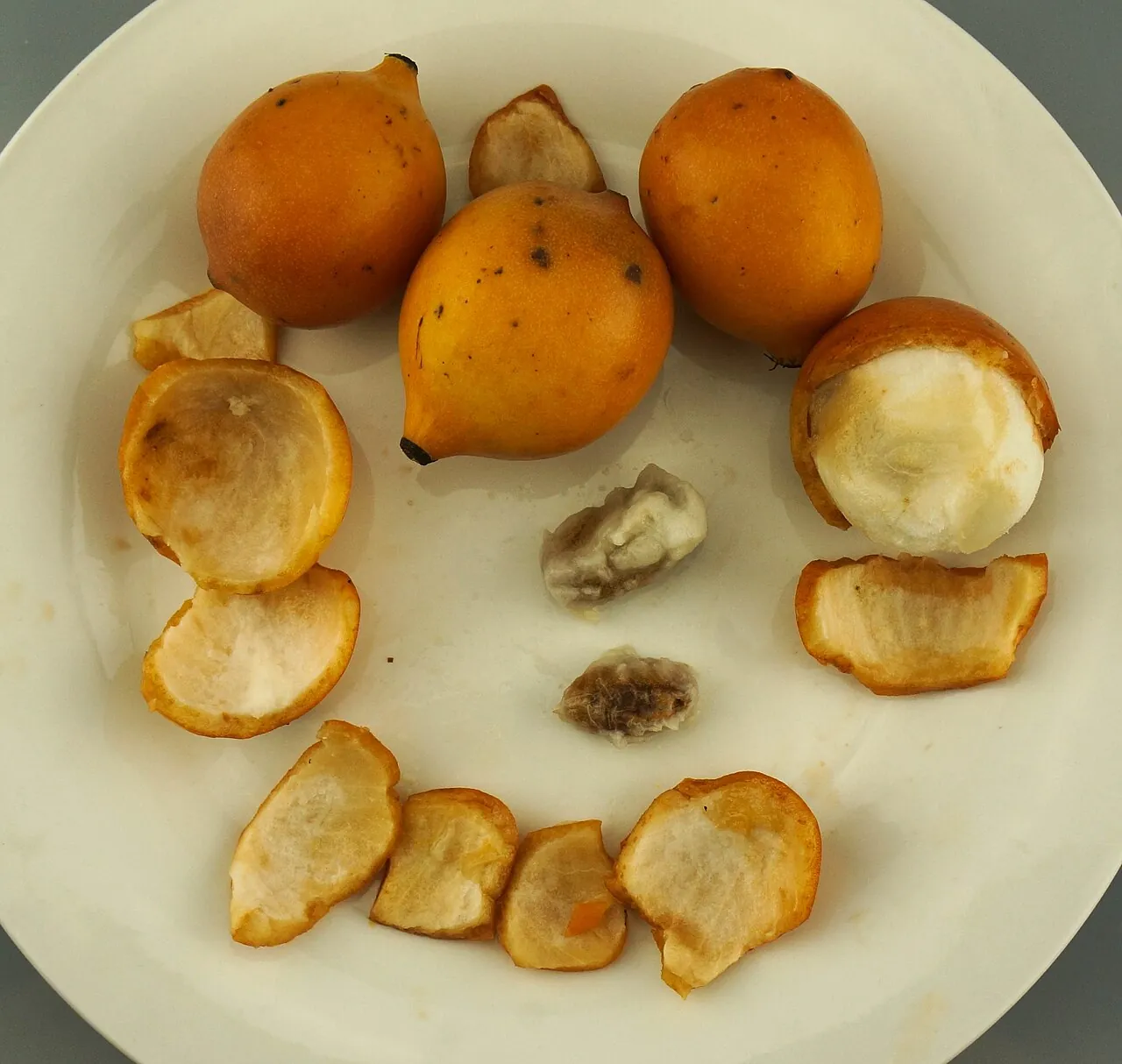
Achacha is an orange fruit from Bolivia with juicy white flesh that balances sweet and tart. A small puncture and a squeeze pop open the shell. Inside, the soft pulp wraps around a large seed.
What it is
An achacha is roughly egg-shaped, about 6 cm (2.4 in) long and 4.6 cm (1.8 in) wide. The thick orange rind comes away cleanly from the white flesh, which you eat off the seed. Usually there is one large seed.
Its botanical name is Garcinia humilis, and it is related to the mangosteen. The appeal is the balance: juicy pulp that is sweet and tart at once.
Where it comes from
Achacha comes from the lowland Amazon of eastern Bolivia. Around Santa Cruz, it is a familiar backyard fruit, eaten at home and sold by vendors at traffic lights.
It has also taken root in North Queensland, Australia. The first commercial plantation there began in 2003 and bore its first fruit in 2009; the Hill family's orchard at Giru, south of Townsville, now has more than 15,000 trees. In the US, Bass Regenerative Farms grows it in Homestead, south Florida.
How it's eaten where it grows
In Bolivia, even the orange shell goes into a drink. Crushed skins steep in water overnight; the water turns orange, then the skins are strained out. Adding sugar syrup makes a cordial.
The Florida growers call the flesh refreshing at room temperature and even better cold or frozen. Opening the shell leaves a little cup around the pulp: the top half comes off first, then the flesh pulls free from the lower half.
How it's grown
Achacha grows slowly, usually from seed, and takes seven to eight years to begin bearing. Young seedlings need shade; established trees can grow in sun or partial shade. The fruit ripens on the tree. Deep orange skin marks full maturity, while pale-orange fruit tastes more acidic.
When and where you'll find it
In south Florida, the usual harvest is May through August. In Australia, the harvest usually runs from late December to late March or early April, and in Sydney the fruit turns up at Harris Farm and the Sydney Fish Markets.
Get it near Detroit
What it tastes like
The pulp is juicy and cottony, with sweetness balanced by mild acidity. The thick peel and large seed give a clear outer-shell and inner-pulp contrast.
The pulp is juicy and cottony, with sweetness balanced by mild acidity. The thick peel and large seed give a clear outer-shell and inner-pulp contrast.
Light-orange fruit is sourer than darker-orange fruit, which has reached full eating maturity.
Choose, ripen, store, eat
1ChooseDeveloped, dark-orange peel
Look for
- Developed, dark-orange peel
Look for developed, dark-orange peel. Yellow or pale-orange fruit can be appreciably more tart.
2RipenDoesn’t ripen after picking
Doesn’t ripen after pickingAchacha is non-climacteric, so it should be harvested after ripening on the tree; an immature-picked fruit won't ripen further like a banana.
3StoreKeep achacha at moderate temperature and humidity: heat speeds deterioration and dry air causes shriveling
Keep achacha at moderate temperature and humidity: heat speeds deterioration and dry air causes shriveling.
4EatPulp · not rind, seed
Eat
PulpNot eaten
RindSeedOpen the rind to expose the pale pulp around the large seed. Eat the pulp; the rind and seed are not eaten fresh.
Detroit, Michigan
When it’s good hereUsual monthsJust arrivedAt their bestLast chanceAll yearWhere it is in its usual monthsToday, Oct 22Grown hereIn season in your stateShips fromIn season where it growsOrderableListed by a seller we checkedThe day a seller was checked
2 growing areas, 2 countriesUsual monthsToday, Oct 22

- New South Wales
- Penang
- You
0 of 2 areas · October
Growing areas by country
- Australia1
- Malaysia1
Once mostly from backyard and wild trees, achacha is now grown commercially in Bolivia and newer producing countries, including orchards and smaller plantings in Hawaii.
11 names in 9 languages
- achachairúroot
- আছাছাBangla
- 阿恰恰Chinese
Cook it
Strange but trueHistoryWhere the name came fromCustoms and cultureA record
Sources
Sources
Achacha · Fruitopia · checked Oct 2, 2026