Wintergreen berry
Also called Teaberry · Checkerberry · Eastern teaberryGaultheria procumbens · Ericaceae family
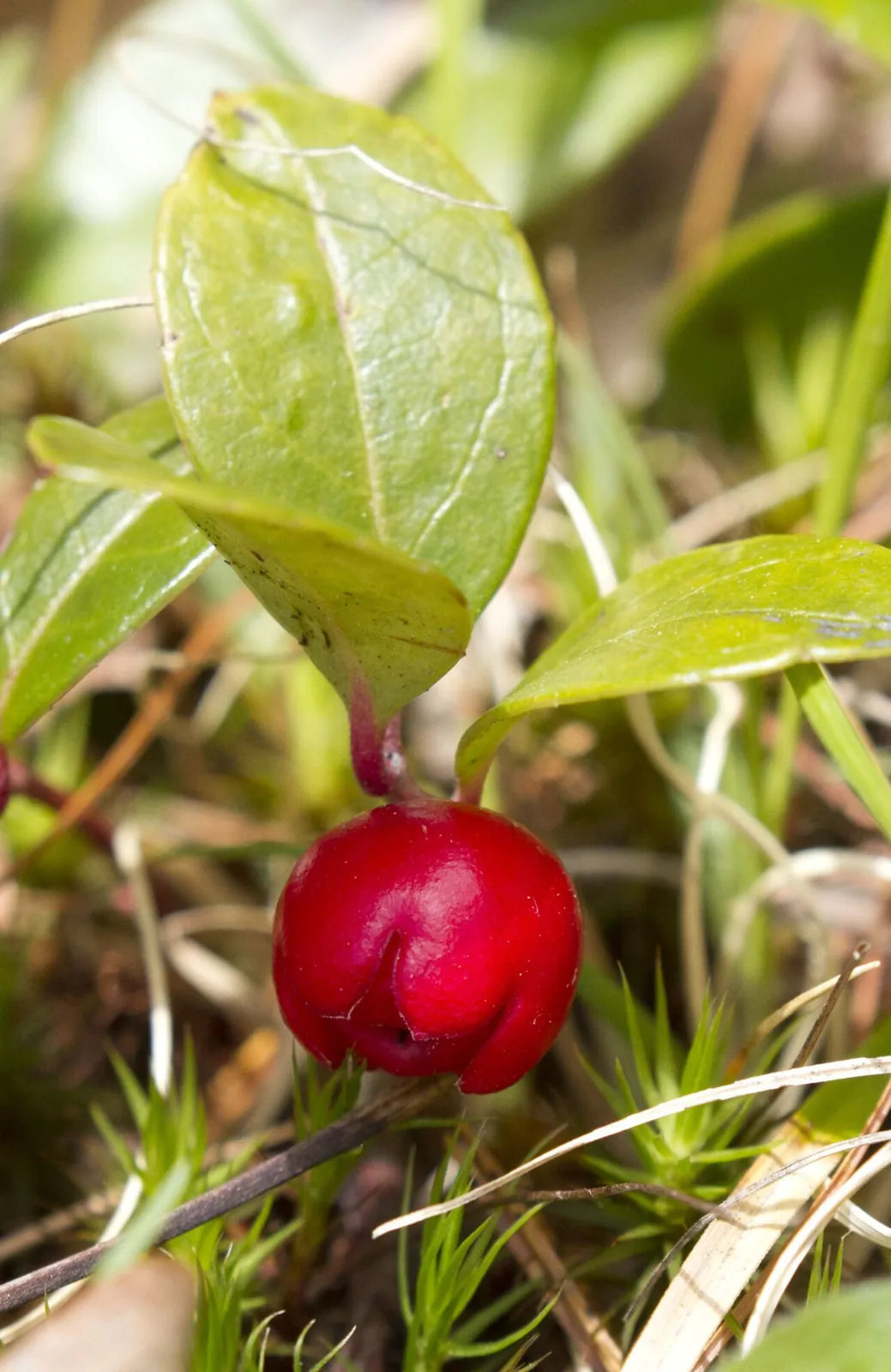
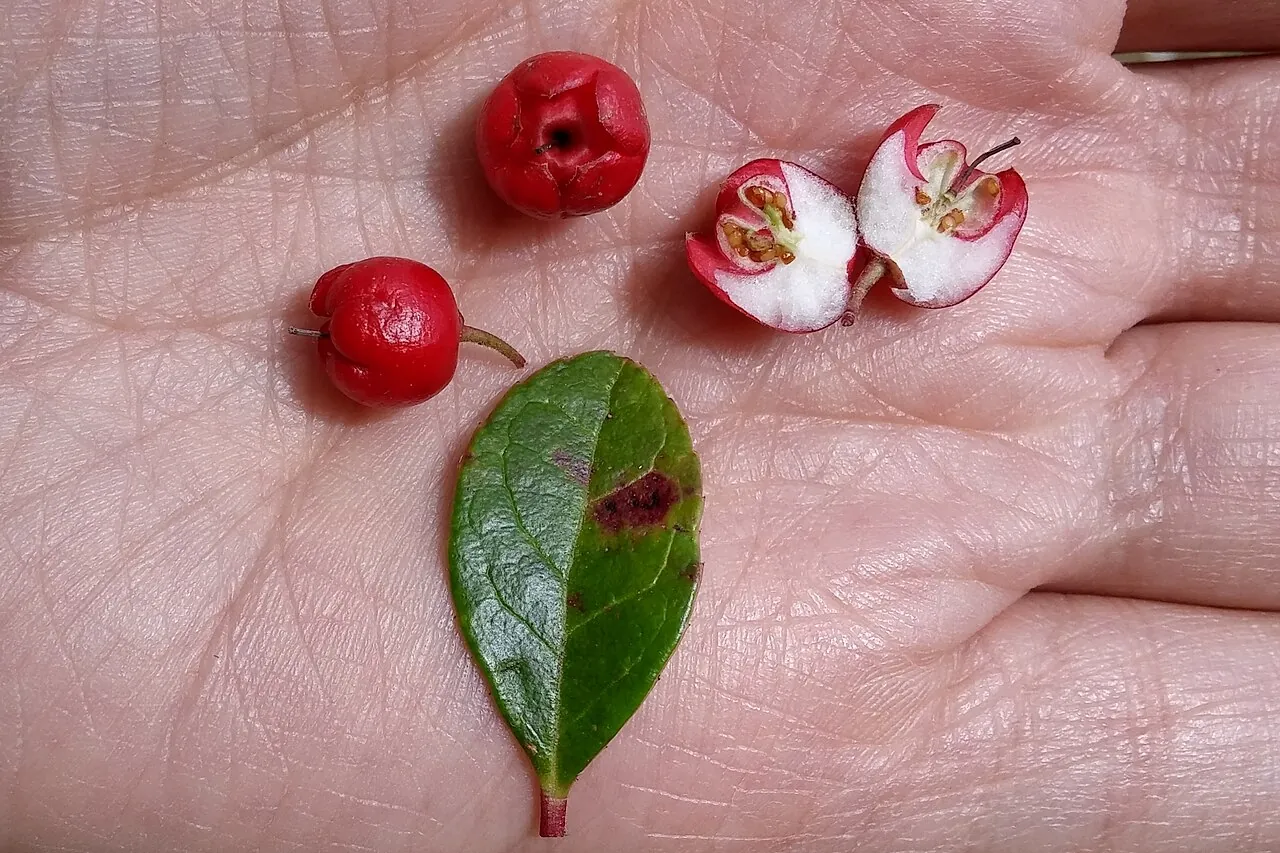
The red “berry” is an edible fleshy calyx wrapped around a dry capsule.
Find it near DetroitGet to know it
Wintergreen berries are little red fruits with a minty wintergreen scent. They grow close to the woodland floor among glossy evergreen leaves, and can remain on the plant through winter. A few berries bring that flavour to a dessert.
What it is
Also called teaberry or checkerberry, wintergreen is Gaultheria procumbens, a member of the heath family alongside blueberries. Its fruit measures about 0.6–0.85 cm (¼–⅓ in) across and ranges from bright red to purplish.
The part you eat is a fleshy flower cup, called a calyx, wrapped around a dry seed capsule. Both the fruit and the glossy, leathery leaves carry the plant’s wintergreen scent.
Where it comes from
Wintergreen is native to Canada and the north-central and eastern United States. It grows widely in northern Minnesota’s conifer woods, including the country around Lake Superior, and in northern Wisconsin. The plant once supplied wintergreen flavouring before synthetic versions took over much of that role.
How it's eaten where it grows
In Pennsylvania, teaberry ice cream is a seasonal favourite. It was first made with wild wintergreen; most versions now get their pink colour and minty taste from food colouring and commercial extract. A homemade version adds minced fresh wintergreen leaves and berries to a custard of egg yolks, milk, cream and sugar, strained before churning.
The fresh berries can go into desserts whole or be sprinkled on raw for a pop of wintergreen flavour. Mixed with strawberries and blueberries, they make a topping for panna cotta.
How it's grown
Wintergreen is a small evergreen shrub: it usually stands about 10–15 cm (4–6 in) high. Shallow underground stems let it spread into patches. It likes acidic soil and grows under the light to moderate shade of hardwood woodland as well as among conifers.
Its white flowers hang like tiny urns. Five joined petals form each flower, and the flower cup, the calyx, becomes the red flesh around the fruit.
When and where you'll find it
The berries appear in summer. In Minnesota and Wisconsin they usually ripen in autumn, turning pinkish red, and can stay on the plant through winter to be picked again in spring.
The low, glossy plant also goes into winter container plantings, where its red fruit lasts for many weeks among the evergreen leaves.
Get it near Detroit
What it tastes like
Crushing the fleshy fruit releases a minty aroma.
Crushing the fleshy fruit releases a minty aroma.
Choose, store, eat
1ChooseThe edible part is the red, fleshy calyx surrounding the fruit
The edible part is the red, fleshy calyx surrounding the fruit.
2StoreThe fruit can stay on the plant, looking good, for weeks
The fruit can stay on the plant, looking good, for weeks.
3EatRed, fleshy calyx
Eat
Red, fleshy calyxFor ice cream, the berries flavor the custard, which is then strained. A product sold as ‘teaberry’ may instead use the leaves or a commercial extract, not the berries.
Detroit, Michigan
When it’s good hereUsual monthsJust arrivedAt their bestLast chanceAll yearWhere it is in its usual monthsToday, Oct 22Grown hereIn season in your stateShips fromIn season where it grows
13 names in 6 languages
- 匍枝白珠Chinese
Cook it
Strange but trueScienceNatureFood and drink
Sources
Photos · 2
Sources
Wintergreen berry · Fruitopia · checked Sep 22, 2026