Wineberry
Also called Wine raspberry · Japanese wineberryRubus phoenicolasius · Rosaceae family
Glossy red fruit and bristly red canes make wineberry memorable, but its food story includes an invasive-plant history.
Find it near DetroitGet to know it
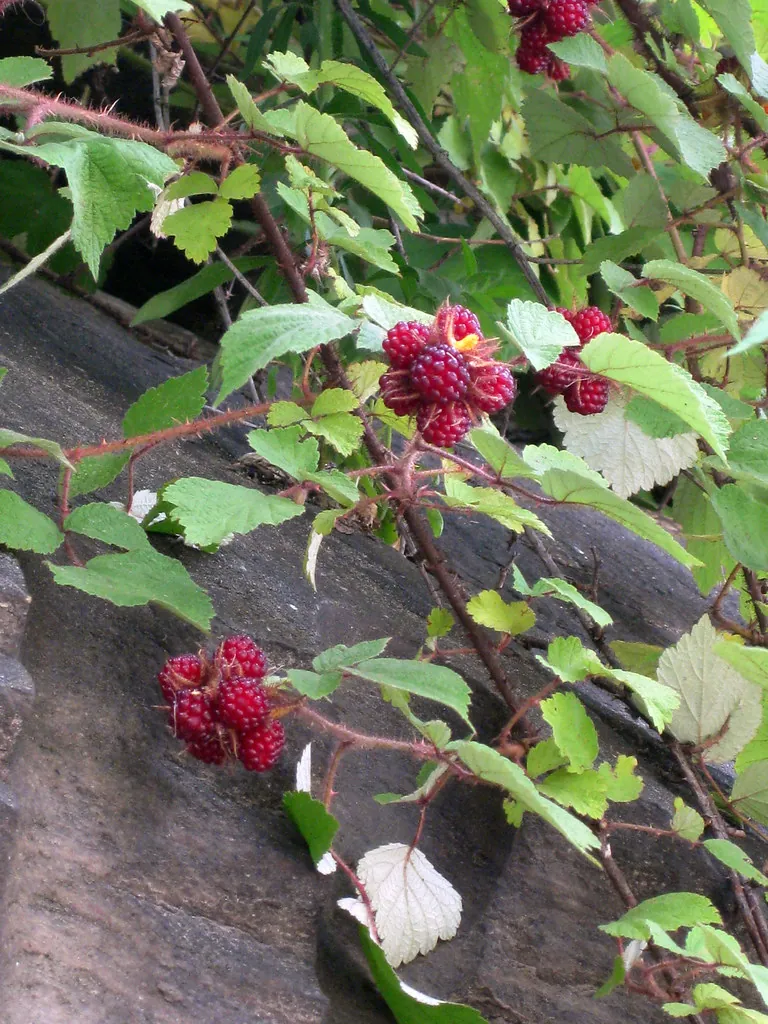
Wineberry is a glossy red raspberry relative with juicy flesh and a sweet-tart bite. Its canes wear a dense coat of red hairs and prickles. A picked fruit leaves its centre behind, making a small hollow cup like a raspberry.
What it is
Wineberry is Rubus phoenicolasius, a member of the rose family. Each fruit is about 1 cm (⅜ in) across, built from small juicy segments with seeds inside. Its shiny red surface and raspberry-like flavour make it recognisable beside the plant’s reddish canes.
The leaf undersides are silvery. When the fruit lifts away, its hollow centre distinguishes it from a blackberry, which keeps a solid core attached. The red hairs on the stems are mixed with prickles.
Where it comes from
Wineberry comes from China, Japan and Korea. It reached the United States in the late nineteenth century as material for raspberry breeding, and has been crossed with both red and black raspberries.
It escaped from gardens and spread through eastern North America, including New England and west to Michigan. In Maryland, its dense thickets compete with native plants. The fruit’s American history is tied to both breeding work and an invasive shrub.
How it's eaten where it grows
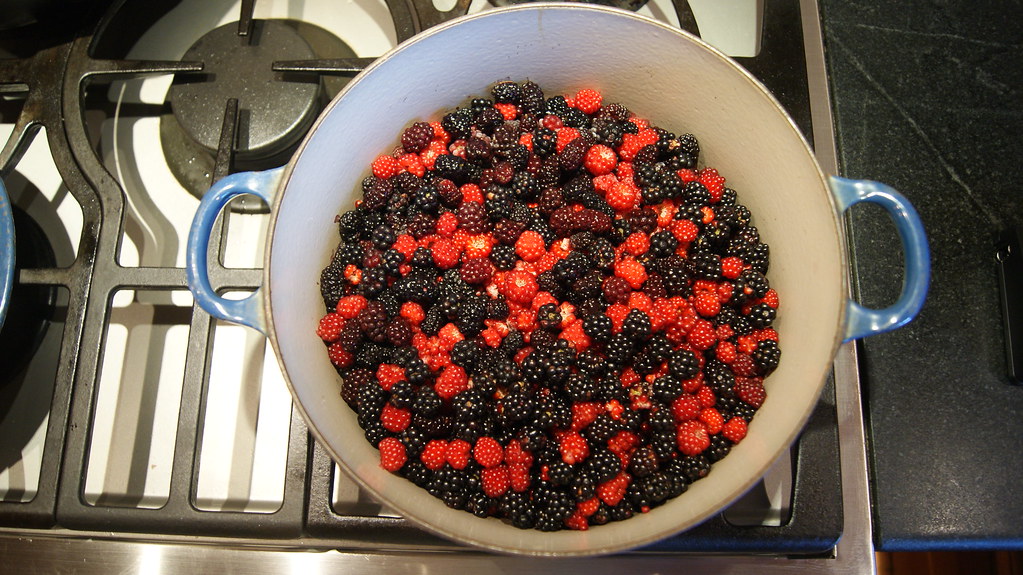
In Maryland, wineberries are eaten fresh and turned into baking ingredients and cocktails. At Scravel Creek Farm in Myersville, berries from the wooded perimeter become wineberry jam.
A wineberry Bavarian gives the fruit another form: strained purée joins an egg-and-milk custard, gelatin and whipped cream, then sets over spongecake or ladyfingers. A thin layer of berry purée finishes the top. The seeds are strained out for the smooth filling.
How it's grown
Wineberry grows as a shrub whose roots live for years while individual canes last two. A first-year cane makes leaves; in its second year, short side branches bear flowers and fruit. That cane gradually dies after fruiting, while new canes take its place.
The arching stems can root when their tips touch the ground. Underground stems spread too, helping one plant form a thicket. Moist soil, woodland edges, paths and fields suit it.
When and where you'll find it
In Maryland, wineberries usually ripen from late June through July. New England’s season usually runs from mid-July to late August.
They are a summer fruit of woodland edges, paths and fields. In Maryland, picking the bright red berries from forests and trails each summer is an increasingly common tradition.
Sources · 6
- Maryland Department of Natural Resourcesnews.maryland.gov
- NC State Extension Gardener Plant Toolboxplants.ces.ncsu.edu
- Scravel Creek Farmscravelcreekfarm.com
- The 3 Foragersthe3foragers.blogspot.com
- University of Maryland Extensionextension.umd.edu
- USDA Forest Service, Fire Effects Information Systemfs.usda.gov
Get it near Detroit
What it tastes like
The fruit is an aggregate of small, juicy drupelets, like a raspberry.
The fruit is an aggregate of small, juicy drupelets, like a raspberry.
Choose, eat
1ChooseSmall, glossy, red
Look for
- Small, glossy, red
- Red hairs and prickles
Ignore
- Red berry alone
Ripe wineberries are small, glossy and red. Look also for the plant's distinctive red hairs and prickles on the canes.
2EatRipe fruit
Eat
Ripe fruitThe ripe fruit is eaten fresh, or cooked into preserves, juices and desserts.
Detroit, Michigan
When it’s good hereUsual monthsJust arrivedAt their bestLast chanceAll yearWhere it is in its usual monthsToday, Oct 22Grown hereIn season in your stateShips fromIn season where it grows
18 names in 7 languages
Cook it
Strange but trueHistoryNature
Sources
Sources
Wineberry · Fruitopia · checked Sep 22, 2026