Tōtara fruit
Also called TōtaraPodocarpus totara · Podocarpaceae family
A tiny red structure on a forest giant opens a different botanical meaning of “fruit.”
Find it near DetroitGet to know it
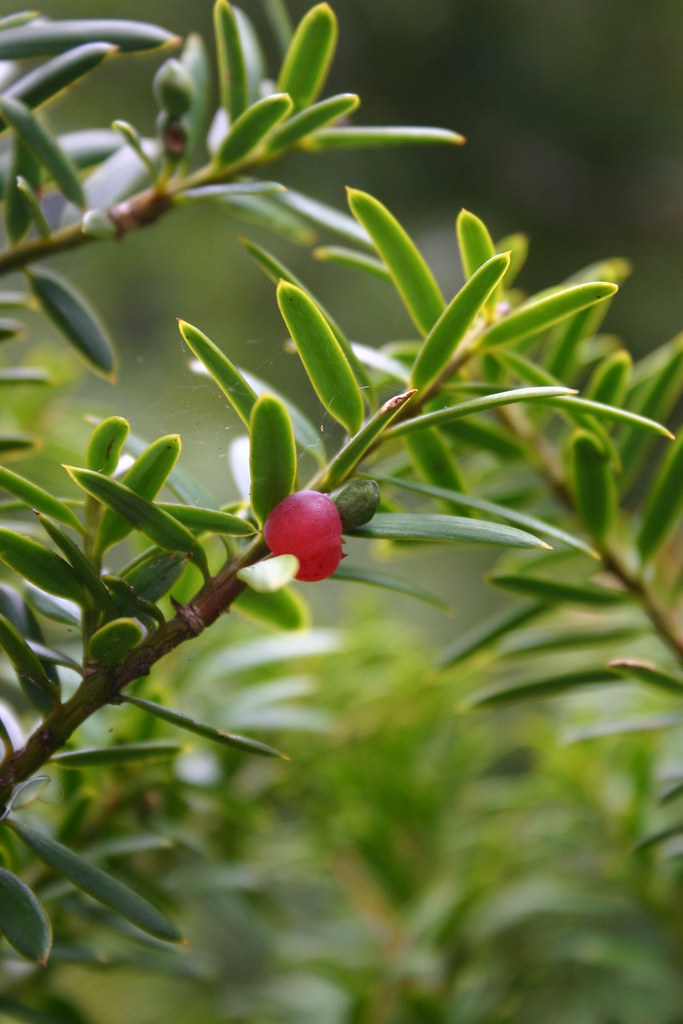
Tōtara offers a tiny, sweet and juicy bite with a faint piney flavour. Its red flesh grows beneath a seed perched on top. This New Zealand forest tree is a conifer, and the berry-like morsel is part of a cone.
What it is
The mature fleshy cone is only about 1–1.5 cm (⅜–⅝ in) long, with one or two seeds above it. The red base is the part eaten. It forms when small scales at the base of the cone join together and swell.
The tree carries stiff, pointed, needle-like leaves, while its bark comes away in long narrow strips. That tiny red base grows on a tall forest tree whose trunk can be 2–3 m (6½–10 ft) across.
Where it comes from
Tōtara is native only to Aotearoa New Zealand. It grows across the North and South Islands, from lowland woods to mountain forest, and is much scarcer on Stewart Island/Rakiura. In Southland it grows close to the coast on almost pure sand, and dominates some coastal woods around Otatara.
How it's eaten where it grows
Tōtara’s red flesh is a traditional Māori food, and the tree also has a place in food storage. Its bark makes vessels for carrying water. In southern New Zealand, outer bark still protects pōhā tītī: kelp bags holding preserved muttonbirds. The tree provides both a small fresh food and material for keeping other foods.
How it's grown
Tōtara is a forest tree up to 30 m (98 ft) tall, with a stout trunk and thick, furrowed bark. Pollen-producing cones and seed-bearing cones grow on separate trees. New plants can be raised from fresh seed or woody cuttings. In the forest, birds eat the berry-like cones and carry the seeds to new places.
When and where you'll find it
In New Zealand, the red, fleshy cones are usually most visible in April and May, although they can occur throughout the year. They take about a year to ripen.
Dunedin Botanic Garden includes tōtara as stop 11 on its Treasures of Tāne trail, a place to see the tree and its red cones. Fruit there stays on the plants so everyone can see it.
Sources · 6
- Dunedin Botanic Garden, Treasures of Tāne traildunedinbotanicgarden.co.nz
- Manaaki Whenua – Landcare Research, Ngā Rauropi Whakaorangarauropiwhakaoranga.landcareresearch.co.nz
- New Zealand Department of Conservationdoc.govt.nz
- New Zealand Plant Conservation Network, P.J. de Langenzpcn.org.nz
- Paitupaitu.co.nz
- University of Auckland, NZ Plantsnzplants.auckland.ac.nz
Get it near Detroit
Sell fruit online? Add your business
What it tastes like
The red, fleshy base below tōtara's seed is sweet and juicy, with a slightly piney taste.
Choose, eat
1ChooseMature, red, fleshy base
Look for
- Mature, red, fleshy base
Look for a mature, red, fleshy base with the seed perched above it.
2EatRed, fleshy base · not seed
Eat
Red, fleshy baseNot eaten
SeedEat only the red, fleshy base below the seed. The green-to-black seed perched on top is a separate structure and not the edible part.
Detroit, Michigan
When it’s good here
Season not documented for Michigan.
10 names in 6 languages
- TōtaraOther name
- 桃柘羅漢松Chinese
- トタラマキJapanese
- معلاقة توتاراArabic
Strange but trueWhere the name came fromCustoms and culture
Sources
Photos · 1
Sources
Tōtara fruit · Fruitopia · checked Sep 22, 2026
- edimentals.com /blog/?p=21647
- flickr.com /photos/50069369@N08/5385589907/
- nzpcn.org.nz /flora/species/podocarpus-totara-var-totara/
- nzplants.auckland.ac.nz /content/nzplants/en/about/seed-plants-non-flowering/native-conifers/podocarpaceae/podocarpus-totara.html
- paitu.co.nz /totara-berries-edible-delight/
- rauropiwhakaoranga.landcareresearch.co.nz /names/fb454c7e-cb0c-4d98-9f97-1e9d14d3a080