Sweetheart
Also known as Sumtare +1
Sumtare · Sweet Heart
A late-season sweet cherry bred in Canada.
Origin · Summerland, B.C.
Taste & texture
- Sweetness
- high
- Scent
- Slight aroma.
- Firmness
- firmvery firm
These named cherries are a good starting point for a side-by-side tasting of sweetness and tartness.
extension guidance · Pacific Northwest, United States; Oregon, Washington and Idaho extension publication.
Read the evidence
A 2007 Pacific Northwest extension guide reports high flavor ratings for Bing, Benton and Sweetheart in consumer studies that also rated them highly for both sweetness and tartness. The guide interprets that combination as a useful flavor balance. It cites an unpublished 2005 study without panel size, sample conditions or a score table.
- Fruit tested
- Fresh-market sweet cherries; exact crop maturity and storage history of any underlying tasting samples are not supplied.
- Varieties compared
- Bing, Benton, Sweetheart
- Use studied
- Understanding cultivar-specific eating and handling qualities.
- Published
- 2007
For Sweetheart, look at the skin as well as firmness. Small depressions can reveal handling damage that a firm feel alone would miss.
extension guidance · Pacific Northwest, United States; Oregon, Washington and Idaho extension publication.
Read the evidence
The 2007 Pacific Northwest guide uses Sweetheart to show why firmness alone does not establish storage quality: the fruit can be very firm yet develop small skin depressions called pitting. Its Sweetheart account also emphasizes careful picking and packing to reduce this damage.
- Fruit tested
- Fresh-market sweet cherries; exact crop maturity and storage history of any underlying tasting samples are not supplied.
- Varieties compared
- Sweetheart
- Use studied
- Understanding cultivar-specific eating and handling qualities.
- Published
- 2007
The sweetest cherry isn't necessarily the biggest.
instrumental study · Pacific Agri-Food Research Centre, Agriculture and Agri-Food Canada, Summerland, British Columbia, Canada · 1998, 1999
Read the evidence
The CFIA comparison table reports soluble solid concentration of 23.0%, 21.0% and 18.0% for 13S2009 (Staccato), Sweetheart and Lapins respectively. Average fruit weights were 11.2 g, 11.8 g and 13.5 g in that same cultivar order; the weight row records 50 fruits per cultivar.
- Fruit tested
- Fruit from trial trees on Colt rootstock; a common harvest-maturity standard and postharvest interval are not stated.
- Varieties compared
- 13S2009, Sweetheart, Lapins
- Use studied
- Understanding cultivar differences in two reported measurements; not a sweetness target or consumer-preference ranking.
Cherry color is a flavor clue within a known variety, but it doesn't identify the variety.
instrumental study · Summerland Research and Development Centre research plots, Okanagan Valley, British Columbia, Canada · 2018, 2019, 2021
Read the evidence
Across the British Columbia study, cherries in the same color class could differ in soluble solids, acidity and dry matter with cultivar and growing year. Dry matter was associated with both soluble solids and acidity, whereas color alone did not capture both dimensions.
- Fruit tested
- Three CTIFL color classes at harvest and after 28 days at 0.5°C; Staccato also tested at 3°C in 2021
- Growing conditions
- Research orchard plots; fruit sorted for size, intact stems and absence of visible defects
- Varieties compared
- Sweetheart, Staccato, Sentennial
- Use studied
- Fresh cherries intended for export-style storage
- Published
- 2024
A stored cherry can have a different acid balance than a freshly harvested one, even with similar color.
instrumental study · Summerland Research and Development Centre research plots, Okanagan Valley, British Columbia, Canada · 2018, 2019, 2021
Read the evidence
After 28 days at 0.5°C, many cultivar-by-year color groups had lower titratable acidity and higher soluble-solids-to-acidity ratios than at harvest. These compositional changes do not show that storage improved consumer liking; the study did not run a taste panel.
- Fruit tested
- Three CTIFL color classes at harvest and after 28 days at 0.5°C; Staccato also tested at 3°C in 2021
- Growing conditions
- Research orchard plots; fruit sorted for size, intact stems and absence of visible defects
- Varieties compared
- Sweetheart, Staccato, Sentennial
- Use studied
- Fresh cherries intended for export-style storage
- Published
- 2024
How to spot it
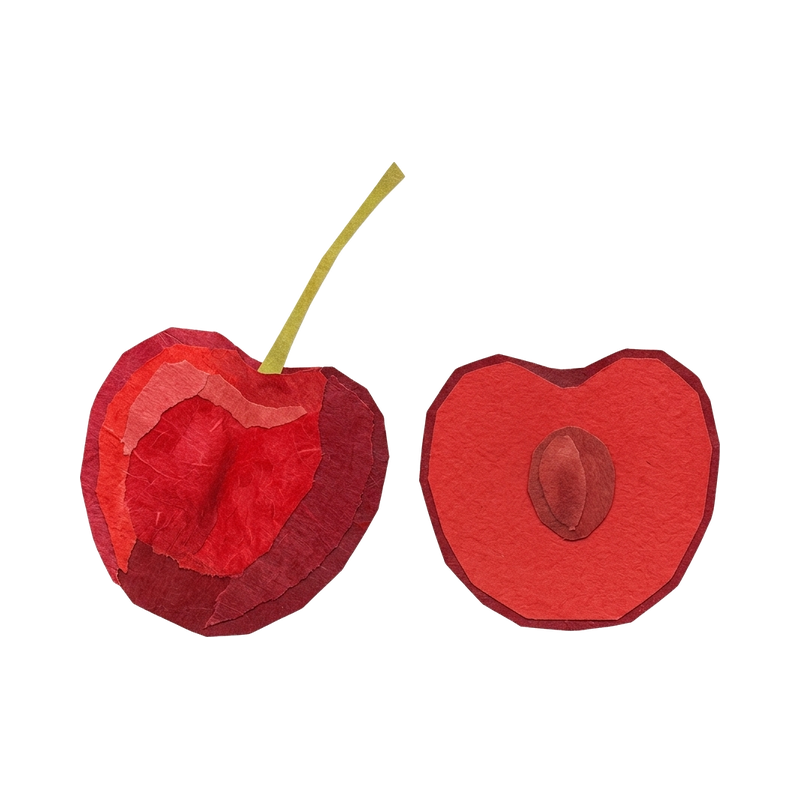
- Skin
- Light mahogany
- Flesh
- pink, red
- Shape
- round, heart
- Size
- large
Harvest & storage
- Harvest
Origin & family
Where Sweetheart began
Recorded origin
Summerland, B.C.
Canada
- Institution
- PARC
Sweetheart’s family
13 varieties · 12 recorded linksArrows follow parents → children
Sweetheart
Summerland, B.C., Canada
Drag to explore. Select a variety for its recorded relationships.
Field notes
Original source notes
- weight
- 8.3 g · United Kingdomnationalfruitcollection.org.uk ↗
- flesh colour
- pink, red · United Kingdomnationalfruitcollection.org.uk ↗
- firmness
- firm · United Kingdomnationalfruitcollection.org.uk ↗
- size
- large · Washingtontreefruit.wsu.edu ↗
- shape
- round, heart · Washingtontreefruit.wsu.edu ↗
- sweetness
- high · Washingtontreefruit.wsu.edu ↗
- firmness
- very firm · Washingtontreefruit.wsu.edu ↗
- aroma
- Slight aroma. · Washingtontreefruit.wsu.edu ↗
- season timing
- late · Washingtontreefruit.wsu.edu ↗
descriptor observations
- trait
- skin color
- value
- red
- context
- BC Cherry Association cultivar comparison
- source url
- www.bccherry.com ↗
- trait
- shape
- value
- round
- context
- BC Cherry Association cultivar comparison
- source url
- www.bccherry.com ↗
- trait
- appearance
- value
- moderately large size, round to heart shaped, dark bright red, red flesh
- context
- WSU cultivar descriptors; appearance is not unique enough for visual cultivar identification.
- source url
- treefruit.wsu.edu ↗
- trait
- pollination class
- value
- self-fertile (S1S4)
- context
- WSU cultivar descriptor; S-allele notation retained without reconciling conflicts among sources.
- source url
- treefruit.wsu.edu ↗
- trait
- fruit description
- value
- Rounded; bright-red skin
- context
- Alicante IGP variety description
- source url
- xn--cerezasmontaadealicante-3hc.com ↗