Soncoya
Annona purpurea · Annonaceae family
A large, rough-surfaced Annona with orange pulp and a mango-like aromatic comparison.
Find it near DetroitGet to know it
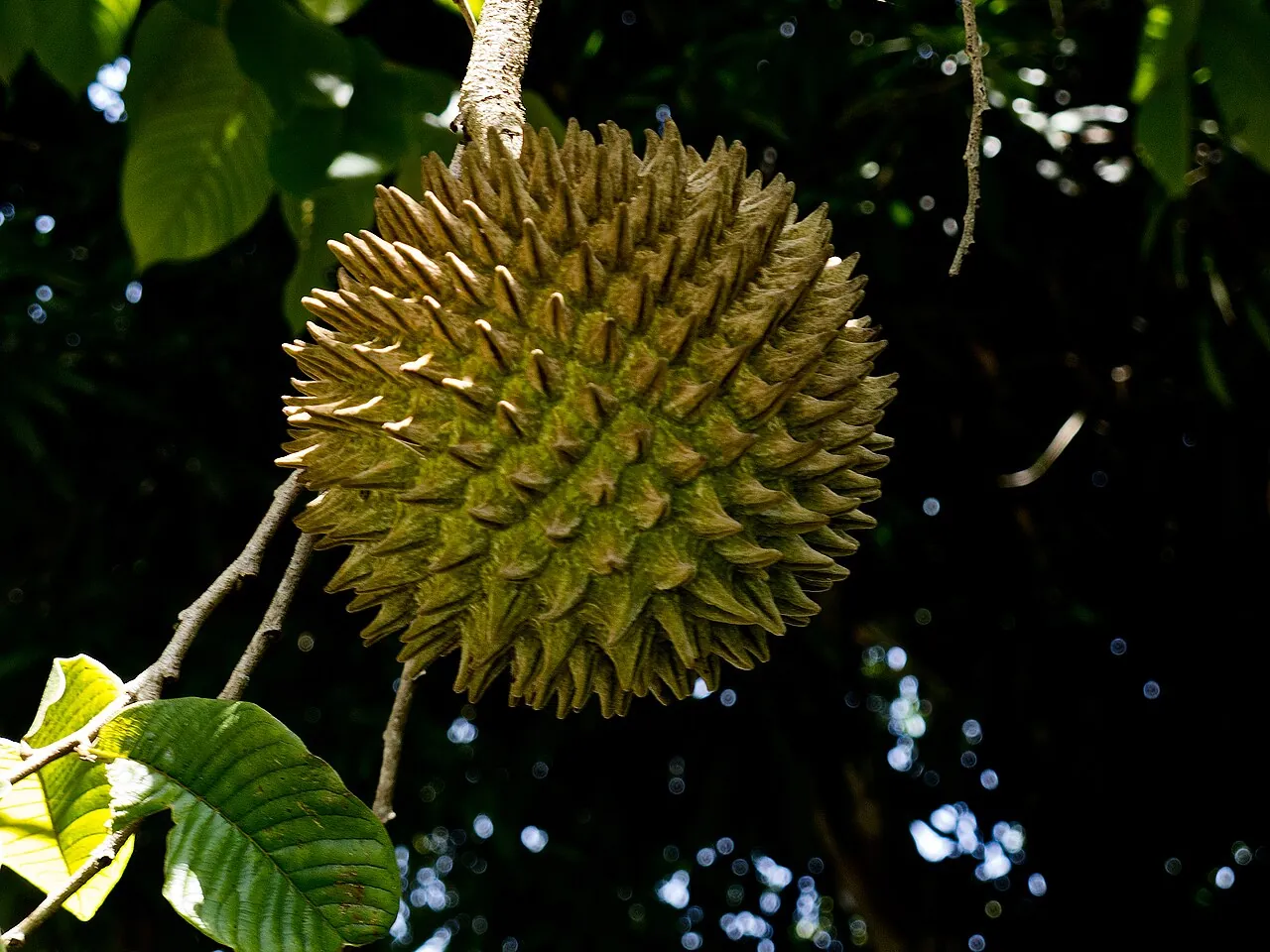
Soncoya hides soft yellow-orange flesh under a brown, felted rind covered in hooked points. This large Central American fruit has a mild flavour, plenty of fibre and an aroma that suggests mango. In Colombia, the pulp is eaten fresh or strained into juice.
What it is
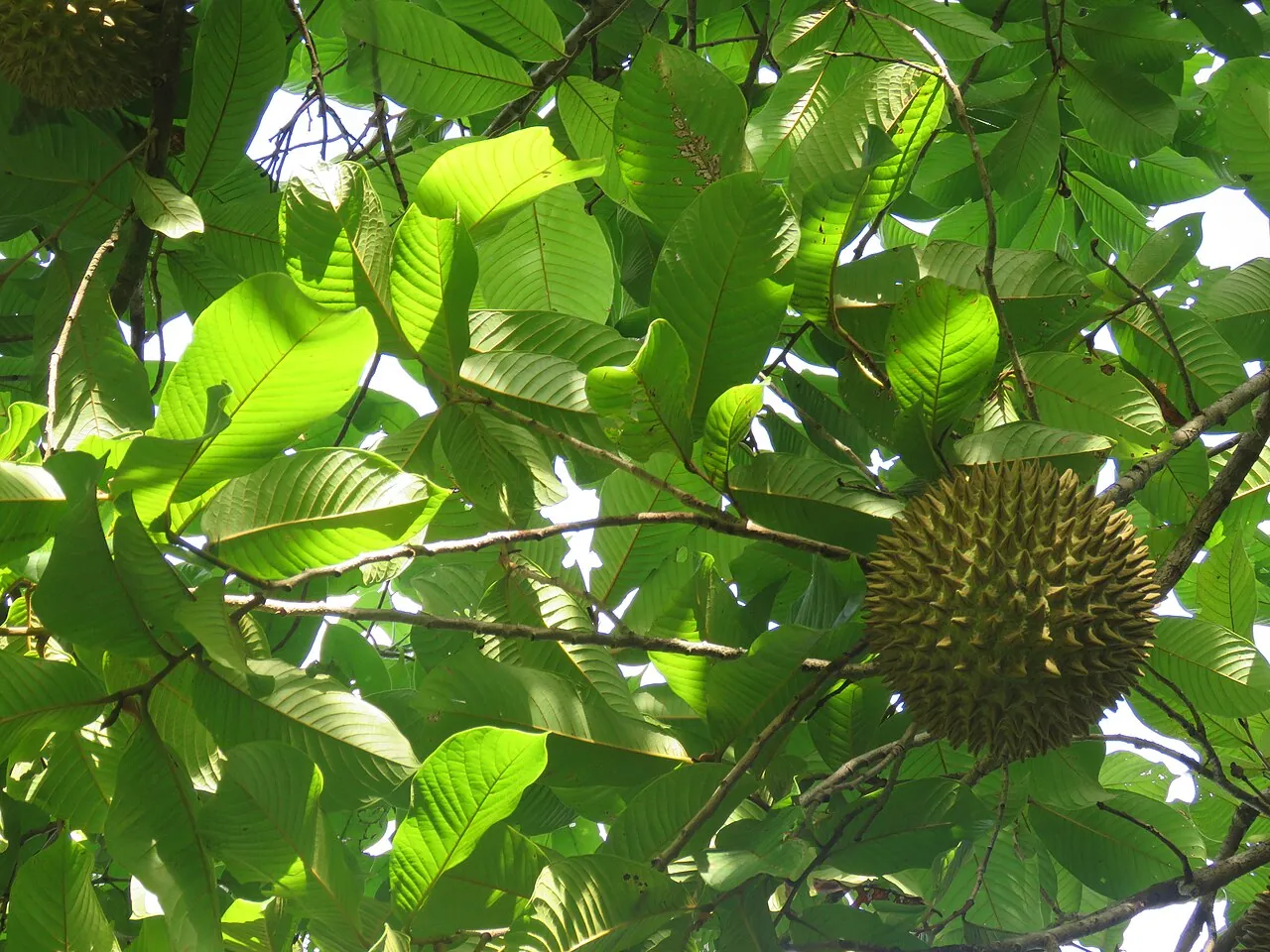
Soncoya is Annona purpurea, a member of the custard-apple family. The oval or nearly round fruit measures 15–20 cm (6–8 in) across. Its hard surface breaks into segments that separate readily when ripe. Inside the abundant pulp are numerous dark-brown seeds, each 2.5–3 cm (about 1 in) long.
Where it comes from
Its native home is the coastal lowlands from southern Mexico through Central America to Panama, Colombia and Venezuela. In Guatemala it grows in Petén, Alta Verapaz, Izabal and Escuintla, among other regions.
The tree travelled to the Philippines in the early 1900s. Plantings followed in Mayagüez, Puerto Rico, in 1918 and St. Croix in 1930. At Lamao in the Philippines, trees grew and flowered well but apparently set no fruit for several years.
How it's eaten where it grows
In Colombia, the soft pulp is eaten raw or strained for a drink, separating the juice from its fibres. In Guatemala, ripe soncoya goes into refrescos, or fruit drinks, as well as ice cream and sweets. The yellow-orange pulp is the food; the seed kernels are poisonous.
How it's grown
Soncoya grows wild and in home gardens. The tree reaches 6–10 m (20–33 ft), with spreading branches, and loses its leaves seasonally. Large, strongly scented flowers emerge with the new leaves. The thick outer petals are mottled yellow and purple inside; smaller inner petals are creamy white outside and purple within. It likes warm, humid conditions and open places. In Guatemala, flowering usually runs from February to June.
When and where you'll find it
Guatemala’s fruit season usually runs from June to October; in Mexico’s Yucatán, fruits usually ripen in August. Home-grown fruits go to local markets. In Guatemala, names include sincuya and chincuya, so a market fruit with either name can be this same brown, pointed soncoya.
Get it near Detroit
What it tastes like
The pulp is soft, fibrous, yellow to orange, with a mild flavor and an aroma compared to mango.
The pulp is abundant, yellow to orange, soft, fibrous and mildly flavored, with an aroma suggesting mango — this can vary by seedling.
Choose, eat
1ChooseCarpels separate readily
Look for
- Carpels separate readily
Fruit carpels separate readily when ripe.
2EatPulp · not seeds
Eat
PulpNot eaten
SeedsUse the pulp of ripe fruit; keep the numerous seeds out of preparations.
Detroit, Michigan