Salmonberry
Rubus spectabilis · Rosaceae family
A soft Pacific Northwest bramble fruit with colors and food traditions that differ among places and communities.
Find it near DetroitGet to know it
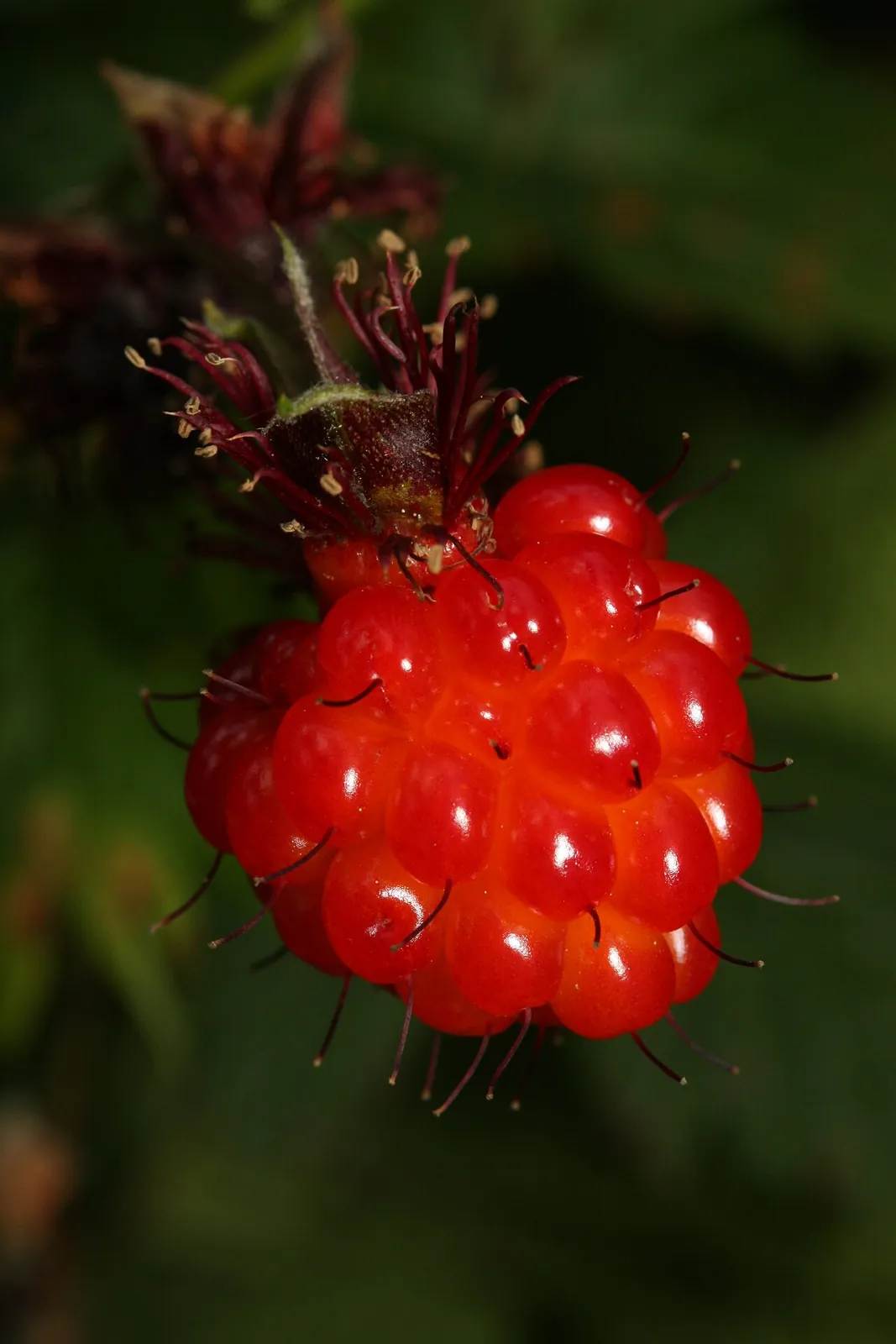
Salmonberries look like raspberries in yellow, orange or deep red, with soft flesh full of juice. They are among the first berries to ripen along the Northwest Coast. They are so fragile that they taste best the day they are picked.
What it is
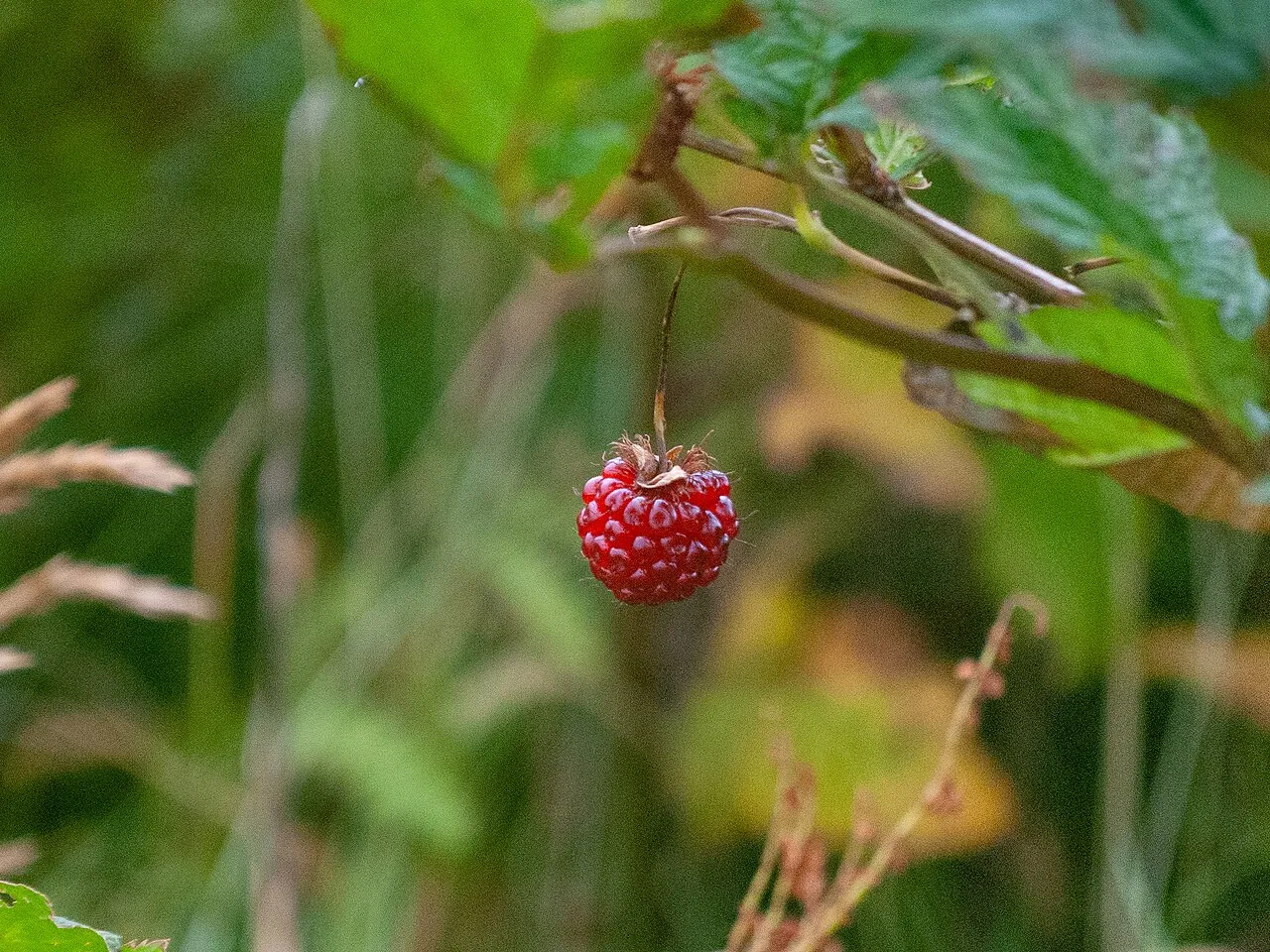
Salmonberry, Rubus spectabilis, is a relative of raspberry in the rose family. Each fruit is a cluster of smaller fruits, giving it the same bumpy outline. It follows a pink-purple flower with five petals.
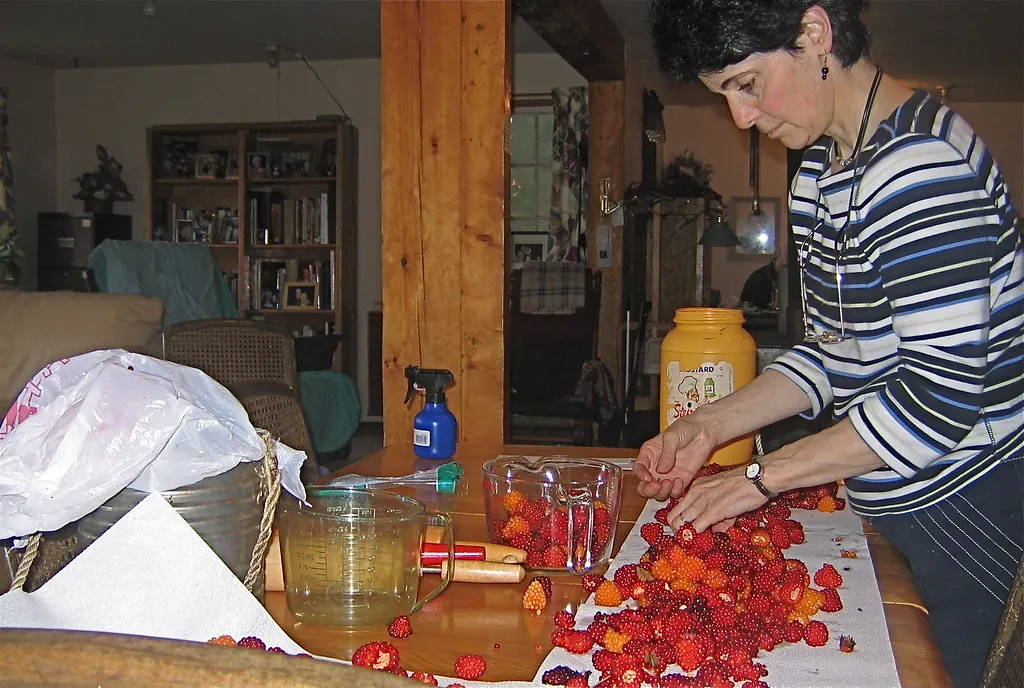
The ripe fruit is extremely fragile and crushes easily. Cooking leaves the seeds tough, so many jam, jelly and syrup recipes press the softened berries through a food mill to take the seeds out.
Where it comes from
Salmonberry is native from Alaska south to northwestern California, between the Pacific coast and the Cascade Mountains. It grows in moist places and wetlands, especially beside streams. Coastal peoples of British Columbia and western Washington have long eaten both the berries and the young shoots. In Squamish, the berry is yetwán and its bush is yetwánaý.
How it's eaten where it grows
Along the Northwest Coast, large amounts of fresh salmonberries were picked and served at feasts, usually with oil or ooligan grease. In Alaska, the fruit goes into jam, jelly and syrup as well as being eaten fresh.
Salmonberry-rhubarb jam combines crushed berries, diced rhubarb and sugar. A syrup made with salmonberry juice, lemon juice and sugar goes over waffles or pancakes. Because cooked seeds stay tough, cooks often strain them out first.
How it's grown
The shrub loses its leaves in winter and reaches about 1–4 m (3–13 ft) tall, with upright or arching stems that are often densely prickly. It grows very fast in moist, shady ground. Branches that touch the soil can take root and make new plants. The flowers feed hummingbirds, bees and butterflies; songbirds, bears and small mammals eat the berries.
When and where you'll find it
At San Juan Island National Historical Park in Washington, salmonberries usually ripen in late May and early June. Alaska’s harvest comes later, usually in mid-to-late summer. Fresh berries are best on picking day and keep only two or three days refrigerated. Frozen berries, jam, jelly and syrup carry them beyond the brief fresh season.
Get it near Detroit
What it tastes like
Crisper than a blueberry, no sweeter than a grapefruit≈
More about the taste
Ripe salmonberries are very juicy and extremely fragile.
Flavor ranges from citrus-like to earthy, and color varies among bushes and patches.
Choose, store, eat
1ChooseHandle ripe salmonberries gently and pick by hand — they crush readily
Handle ripe salmonberries gently and pick by hand — they crush readily.
2StoreFridge, ripe berries
- FridgeRipe berries
Eat them the day they're picked; they hold only briefly in the refrigerator.
3EatRipe berries
Eat
Ripe berriesRipe berries are eaten fresh or processed; cooked seeds can feel tough, so some preparations strain them out.
Detroit, Michigan
When it’s good hereUsual monthsJust arrivedAt their bestLast chanceAll yearWhere it is in its usual monthsToday, Oct 22Grown hereIn season in your stateShips fromIn season where it grows
10 names in 6 languages
Cook it
Recipes 1
Strange but trueHistoryNatureWhere the name came fromCustoms and culture
If you like Salmonberry
Tastes alike
Close relatives
Sources
Sources
Salmonberry · Fruitopia · checked Sep 22, 2026