Rainforest plum
Eugenia candolleana · Myrtaceae family
A Brazilian Eugenia whose dark skin can conceal different stages of pulp texture.
Find it near DetroitGet to know it
Rainforest plum is a small, dark Brazilian fruit with soft, sweet flesh and a thin edible skin. Called cambuí-roxo or cereja-de-Joinville, it also goes into syrup: the fruit wrinkles as it cooks, ready to spoon over coconut manjar.
What it is
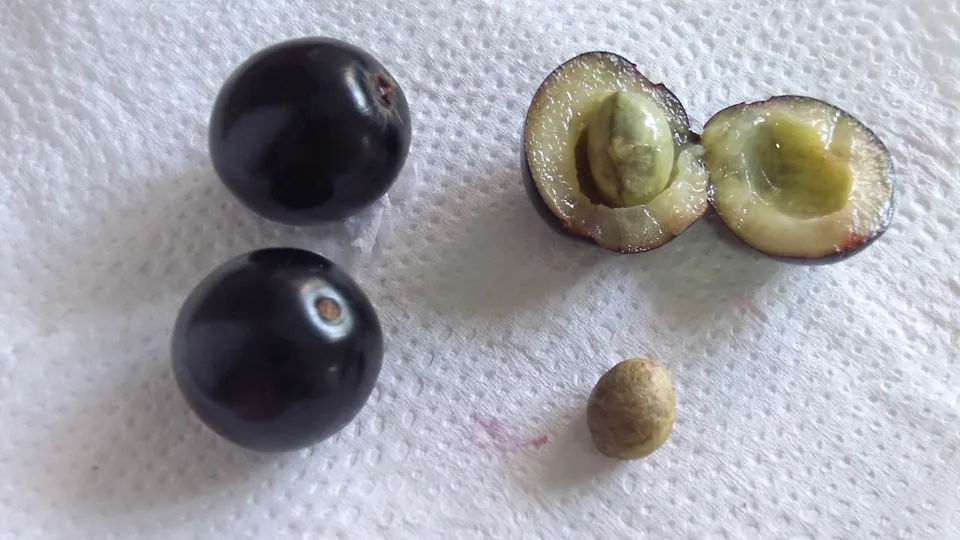
Eugenia candolleana fruit from Domingos Martins, Espírito Santo, averages about 2.4 cm (0.9 in) across and 3.3 cm (1.3 in) long. The ripe pulp there is purple, soft and sweet, with an astringent, mouth-drying edge. The green seed separates easily.
The skin can already be black while the flesh is still firmer, yellowish and slightly acidic. In that partly ripe fruit, the skin clings more closely; on ripe fruit it comes away more easily.
Where it comes from
This is a fruit of Brazil’s coast: sandy coastal plains, restinga scrub and the coastal Atlantic Forest, from the Northeast down to Santa Catarina. Cambuí-roxo and cereja-de-Joinville are two of its names. It is also grown at Colecionando Frutas, a rare-fruit collection at Campina do Monte Alegre in São Paulo state.
How it's eaten where it grows
In Brazil, food writer Neide Rigo simmers cereja-de-Joinville in sugar syrup for about 10 minutes, until the skins wrinkle, then serves it with coconut manjar and caramel sauce. Her manjar is a chilled pudding made with milk, cornstarch, sugar and grated coconut. The fruit cooks without splitting.
With the seeds taken out, the fruit also goes into cakes, juice, ice cream and jelly.
How it's grown
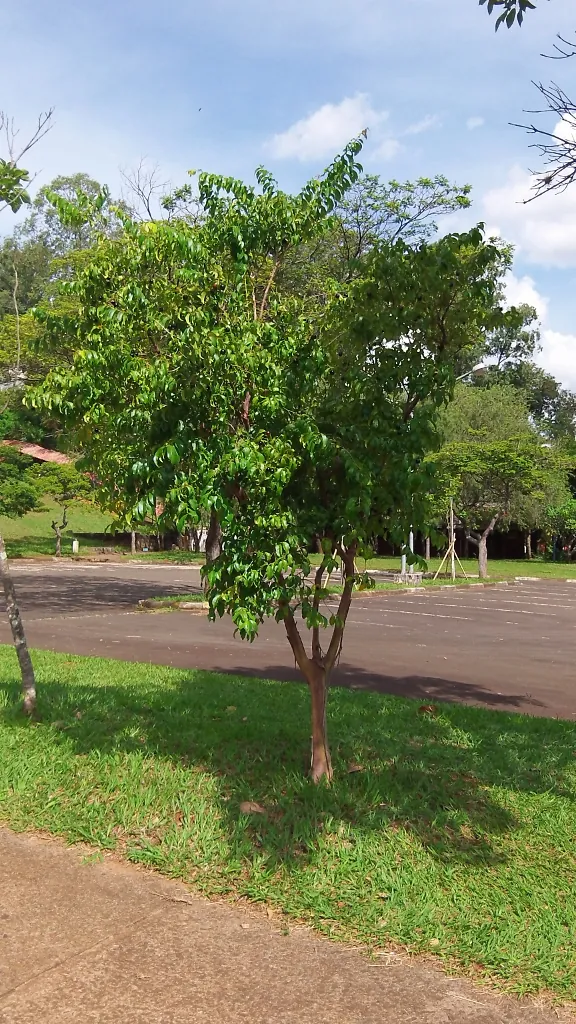
The small, branching tree stays about 2–4 m (7–13 ft) tall. It grows in full sun or among larger trees spaced well apart, and can begin fruiting two to three years after planting. Fresh seeds take 30–60 days to germinate; drying them can destroy their ability to sprout within 20 days.
When and where you'll find it
At the rare-fruit garden in Campina do Monte Alegre, rainforest plum usually fruits from March to May. The garden receives visitors by advance booking. In Brazil, the fruit also reaches open-air fairs fresh, while jelly and liqueur offer other ways to taste it.
Get it near Detroit
What it tastes like
Ripe rainforest plum is soft, sweet and astringent, with purple pulp; semi-ripe pulp is harder, yellowish and slightly acidic. Both stages have dark skin.
Ripe rainforest plum is soft, sweet and astringent, with purple pulp; semi-ripe pulp is harder, yellowish and slightly acidic. Both stages have dark skin.
Choose, eat
1ChooseSkin separates readily from flesh
Look for
- Skin separates readily from flesh
Ignore
- Dark skin color
Ripe rainforest plum has skin that separates more readily from the flesh; on semi-ripe fruit, the skin clings more closely.
2EatSkin, Pulp · not seed
Eat
SkinPulpNot eaten
SeedThe skin and pulp are edible; the seed is removed separately.
Detroit, Michigan
When it’s good hereUsual monthsJust arrivedAt their bestLast chanceAll yearWhere it is in its usual monthsToday, Oct 22Grown hereIn season in your stateShips fromIn season where it grows
Cook it
Sources
Sources
Rainforest plum · Fruitopia · checked Sep 22, 2026
What we don't know yet
The name cambui covers multiple species; the recipes here specifically use Eugenia candolleana.