Puçá
Mouriri pusa
Puca comes in yellow, brown and black forms, each studied separately - these are different forms, not stages of one fruit ripening.
Find it near DetroitGet to know it
Puçá is a small Brazilian fruit with sweet, fleshy pulp around a few seeds. It grows pressed against the tree’s trunk, earning the nickname jabuticaba-do-cerrado. Yellow, brown and black forms give this wild fruit more than one ripe colour.
What it is
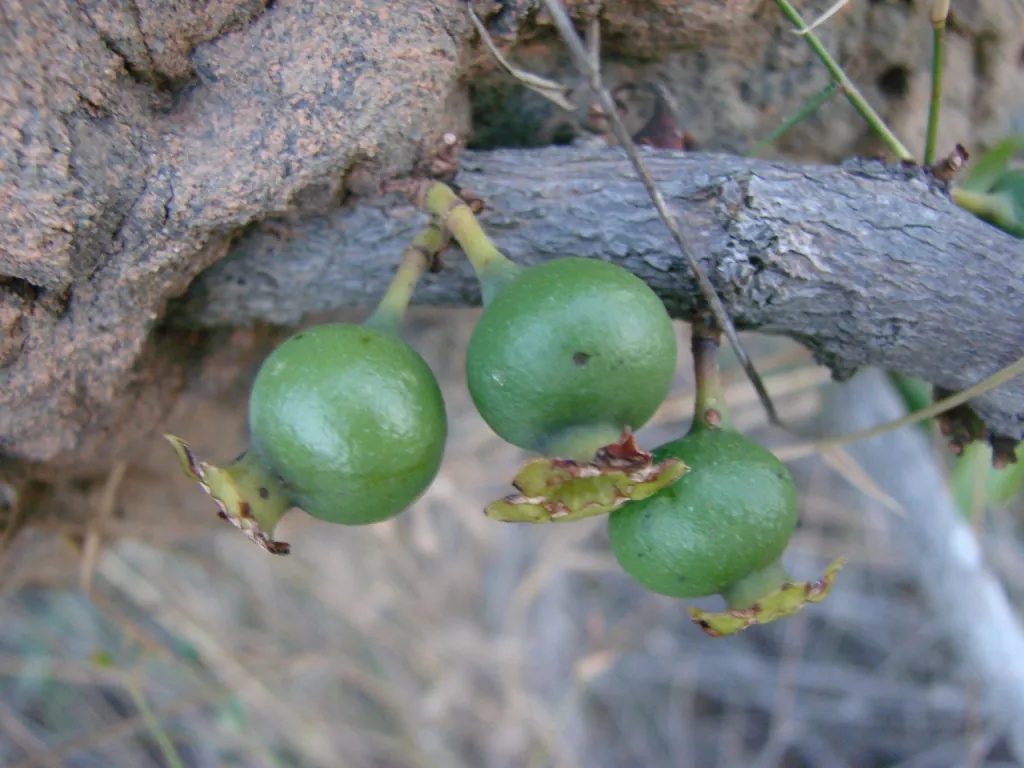
Mouriri pusa produces thin-skinned fruit about 2–3 cm (0.8–1.2 in) across, round or slightly elongated. One to four seeds sit inside the sweet pulp. Yellow, brown and black are names for separate skin-colour forms.
In the black form, ripening means the skin loses its green colour and darkens, the flesh becomes yellower and the fruit softens. A ripe yellow puçá belongs to a different colour form.
Where it comes from
Puçá comes from Brazil’s Cerrado and also grows in the Caatinga. Its range includes Bahia, Piauí and Minas Gerais. Around Pilão Arcado in Bahia, it grows in wet areas where the Cerrado and Caatinga meet. In Piauí, people remember it as a childhood fruit, gathered during walks into the bush.
How it's eaten where it grows
Fresh fruit is the main way people eat puçá, with juice and liqueur among its other uses. In the Rio Novo community of Jalapão, Deusenir José, known as Deusa, makes puçá jam. She brought it to the Agrotins fair in 2024, and her jam has also gone into drinks at a local establishment.
How it's grown
The puçá tree can reach 8 m (26 ft), with a small crown, twisting trunks and thick bark that protects it during Cerrado fires. Fruit grows close against the trunk. Birds visit for the fruit, while the flowers attract bees. Its scented white flowers have four petals and gather along woody, leafless sections of the branches as well as the main trunk.
When and where you'll find it
In Piauí, puçá belongs to roadside selling and open-air markets as well as wild gathering. In Jalapão, jam is another way the fruit reaches people, through small local producers such as Deusa in Rio Novo. Fresh fruit, juice, liqueur and jam are its different food forms in these Brazilian communities.
Sources · 5
- Borges, Universidade Federal de Lavras (2011)repositorio.ufla.br
- Lima et al., Acta Scientiarum Technology (2023)periodicos.uem.br
- Naturatins, republished by Folha do Jalapão (2024)folhadojalapao.com.br
- Slow Food Brasil, Ark of Tasteslowfoodbrasil.org.br
- Universidade Estadual do Tocantins, Nativas Digitaisunitins.br
Get it near Detroit
What it tastes like
The pulp is fleshy and sweet, surrounding one to four seeds. Yellow, brown and black forms are based on peel color, not a taste ranking.
The pulp is fleshy and sweet, around one to four seeds.
In Gurupi samples, yellow and brown forms measured sweeter relative to acidity than the black form.
Choose, eat
1ChooseLoses green color, darkens
Look for
- Loses green color, darkens
- Pulp yellower, softer
As the black form ripens, it loses green color, darkens, and the pulp turns yellower and softer. Yellow and brown forms may show different signs of ripeness.
2EatPulp · not peel
Eat
PulpNot eaten
PeelThe pulp, after peeling, is the edible part.
Detroit, Michigan
When it’s good hereUsual monthsJust arrivedAt their bestLast chanceAll yearWhere it is in its usual monthsToday, Oct 22Grown hereIn season in your stateShips fromIn season where it grows
Sources
Photos · 1
Sources
Puçá · Fruitopia · checked Sep 22, 2026