Pitanga do campo
Eugenia punicifolia · Myrtaceae family
A small Eugenia fruit found across a wide range, with flavor that varies from place to place.
Find it near DetroitGet to know it
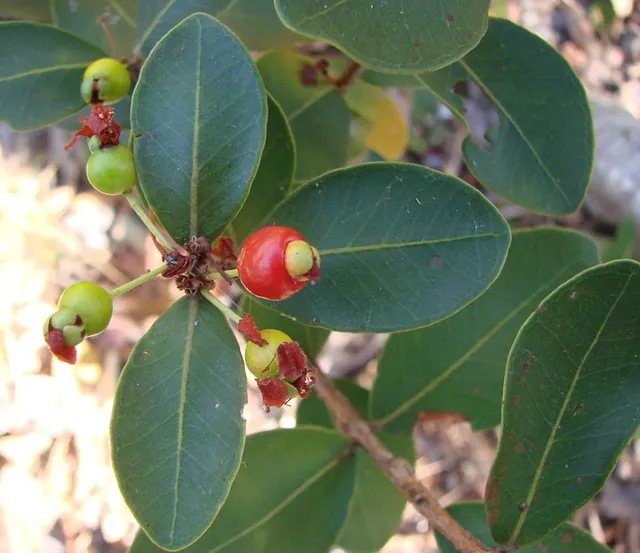
Pitanga-do-campo is a small red fruit of Eugenia punicifolia, a shrub in the same family as guava and ordinary pitanga. The Cerejinha de Jaguariúna form tastes sweetish, with a slight drying feel in the mouth when fully red.
What it is
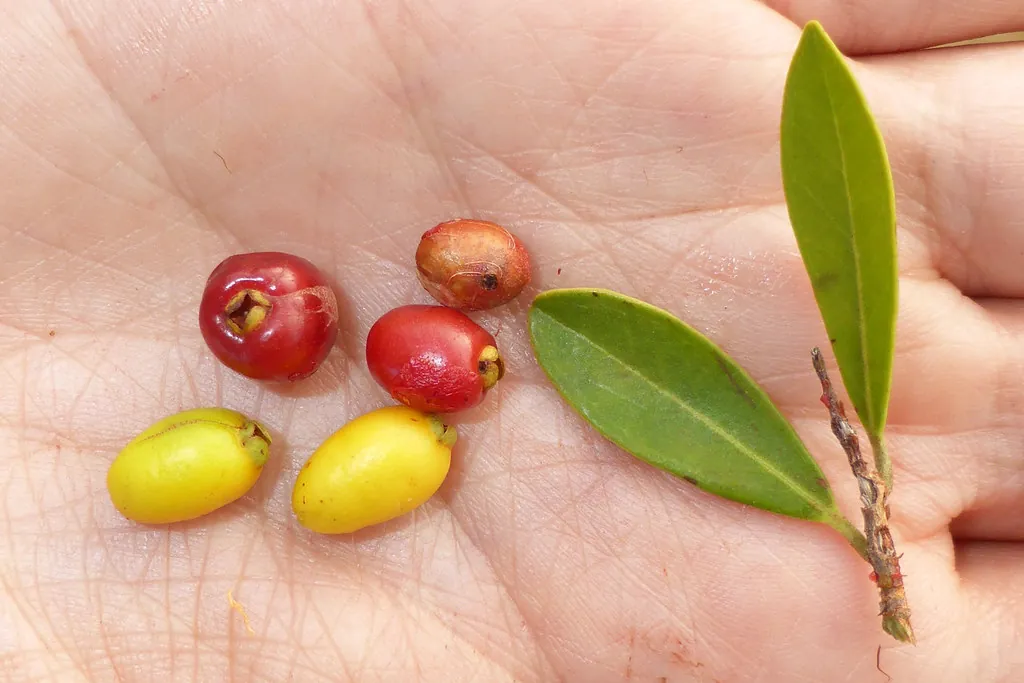
The fruit is oval, about 1.3 cm (0.5 in) long and 0.8 cm (0.3 in) wide, with a single seed inside. Cerejinha de Jaguariúna turns red when fully ripe, with sweetness and a little astringency, the dry feeling it leaves in your mouth.
Its scientific name is Eugenia punicifolia. Ordinary pitanga belongs to a different species, Eugenia uniflora, in the same family.
Where it comes from
This is a widely spread American fruit. Its range includes western Cuba and much of South America, from Venezuela and the Guianas through Brazil, Peru and Bolivia to Paraguay and northern Argentina. It grows in savannas and beside rivers, as well as in evergreen forests.
The Cerejinha de Jaguariúna form comes from surviving patches of Cerrado around Jaguariúna, in Brazil’s São Paulo state.
How it's eaten where it grows
In Carapebus, on the coast of Rio de Janeiro state, the fruit is known as luzinha and eaten fresh. The Cerejinha de Jaguariúna form, from São Paulo state, is good fresh or made into jelly, juice and ice cream.
How it's grown
The plant keeps its leaves year-round and grows as a many-branched shrub or small tree, usually 2–5 m (6.5–16 ft) tall. Cerejinha de Jaguariúna stays much smaller, barely exceeding 1 m (3.3 ft), and can grow in a pot. That form grows in full sun and accepts most soils apart from waterlogged ground.
When and where you'll find it
The fresh fruit is gathered locally from wild plants. In Manaus, the largest crops usually come in January, February and March. Fruits fall soon after turning red, then dry out quickly on the ground; their ripe stage on the plant is brief.
Sources · 5
Get it near Detroit
What it tastes like
The Cerejinha de Jaguariuna form is sweetish and lightly astringent when fully red; the species varies considerably by form.
The fruit is described as sweet.
Choose, eat
1ChooseTurns red
Look for
- Turns red
Fruit tends to fall soon after turning red and dries out quickly on the ground, so ask a grower about picking it promptly.
2EatFruit
Eat
FruitIn Carapebus, where it's known as luzinha, the fruit is eaten fresh.
Detroit, Michigan
When it’s good hereUsual monthsJust arrivedAt their bestLast chanceAll yearWhere it is in its usual monthsToday, Oct 22Grown hereIn season in your stateShips fromIn season where it grows
1 variety
Strange but trueScience
Sources
Sources
Pitanga do campo · Fruitopia · checked Sep 23, 2026
- alice.cnptia.embrapa.br
- ciprest.blogspot.com
- flickr.com
- pmc.ncbi.nlm.nih.gov
- revistas.ufg.br
- tropical.theferns.info
What we don't know yet
The Carapebus record is historical food knowledge, not permission to forage in a protected area.