Pineapple
Also called AnanaAnanas comosus · Bromeliaceae family
A sweet-acid fruit that can carry both a grilled dessert and a savory braise.
Find it near DetroitGet to know it
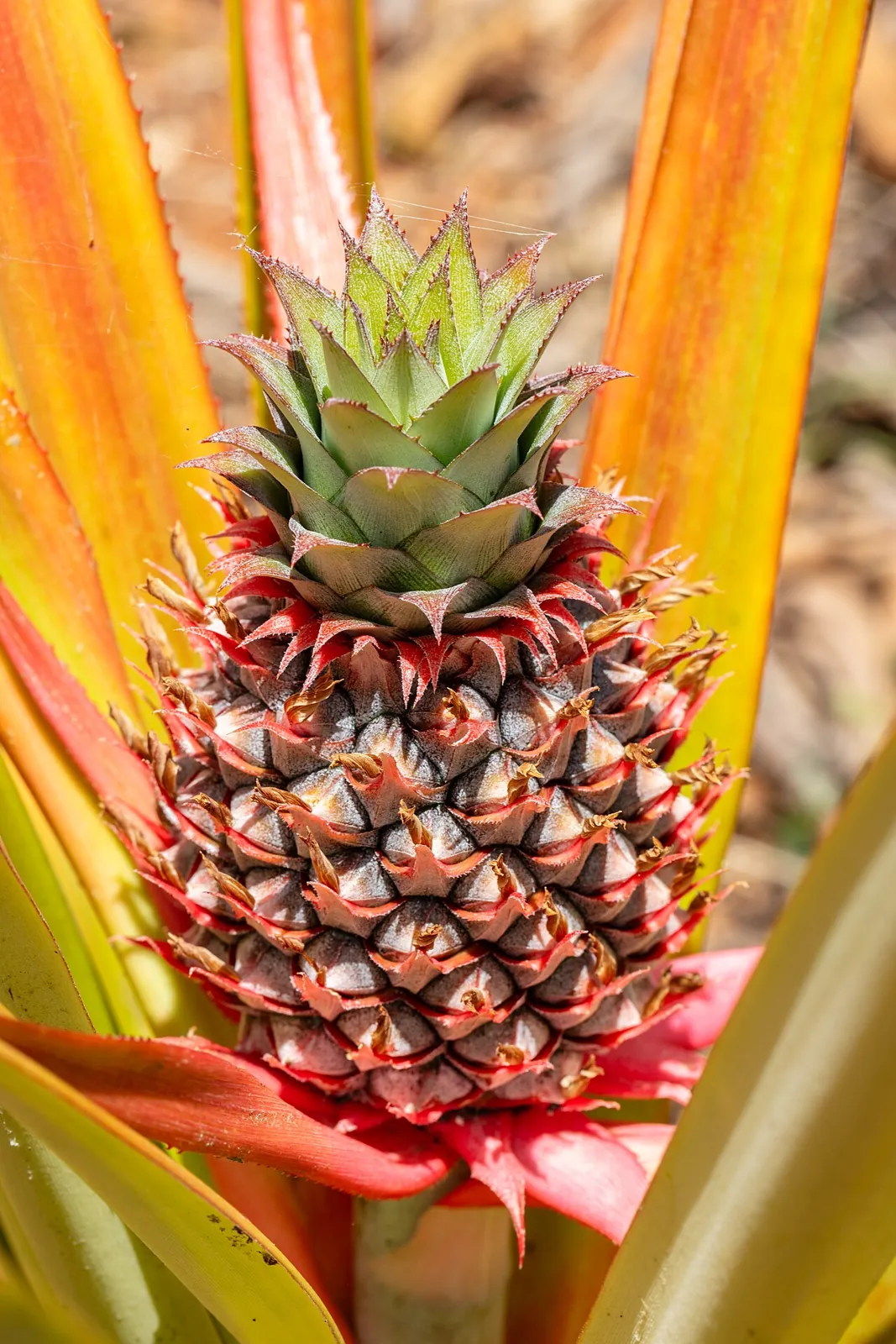
Pineapple has juicy, sweet flesh, often with a tart edge, wrapped in a tough shell and topped with a crown of leaves. Each patterned piece of that shell belongs to a small fruit: many of them grow together to make the pineapple you slice.
What it is
Under the leafy crown sits a tough shell patterned with the outlines of small fruits. They join around a central stem, which becomes the fibrous core. A large pineapple can grow 30 cm (12 in) long.
The common US grocery variety MD-2 has yellow flesh, plenty of sugar and little acidity. It usually weighs 1.3–1.8 kg (3–4 lb). Smooth Cayenne, one of the most widely grown varieties in the world, is high in both sugar and acid. Queen has golden flesh with a crisp bite and a mild flavour. The variety changes both the sharpness of a slice and the feel of it between your teeth.
Where it comes from
Pineapple comes from southern Brazil and Paraguay. Indigenous peoples grew it and carried it north through South and Central America to Mexico and the Caribbean long before Europeans arrived.
Today the three biggest growers are Indonesia, the Philippines and Costa Rica. Costa Rica has a particularly close link to the US fruit bowl: it supplied almost 90% of the fresh pineapples imported into the United States in 2024.
How it's eaten where it grows
In Kerala, India, pineapple pachadi cooks the fruit until soft with chilli, then mixes it with ground coconut and cumin. Sour curd goes in after cooling, and fried mustard seeds, red chillies and curry leaves finish the dish.
In the Philippines, pineapple juice joins soy sauce, vinegar, garlic and bay leaves in a version of pork adobo. The related pork dish humba also uses pineapple juice; some versions add salted black beans, dried banana blossoms and star anise.
How it's grown
Pineapple grows on a low, leafy plant about 0.9–1.2 m (3–4 ft) tall, with stiff leaves spreading around its base. The leafy top can root and become another plant, as can shoots from lower down. In Australia’s Northern Territory, shoots called suckers or slips take 12 to 18 months to fruit, while a planted top takes two to three years.
Pineapples develop their sweetness on the plant. Picking ends that process, so leaving one in a fruit bowl does not make it sweeter.
When and where you'll find it
Fresh pineapples reach the US all year, with imports usually peaking in May. Fresh-cut packs of cored cylinders, spears, chunks or wedges are prepared in-store or at a central plant, and pineapple also comes canned and as juice.
Near the growing fields, the calendar can be narrower. In Darwin, northern Australia, pineapple harvest usually runs from October through March. Fruit for distant markets is picked slightly less mature than a fully yellow, fully ripe pineapple.
Sources · 8
- Kerala Tourismkeralatourism.org
- Morton, Fruits of Warm Climates (1987)hort.purdue.edu
- NC State Extension Gardener Plant Toolboxplants.ces.ncsu.edu
- Northern Territory Governmentnt.gov.auOther pages2
- University of Florida IFASask.ifas.ufl.edu
- University of Hawaiʻi at Mānoa CTAHRctahr.hawaii.edu
- USDA Economic Research Service, Fruit and Tree Nuts Outlook (July 2025)ers.usda.gov
- Vanjo Merano, Panlasang Pinoypanlasangpinoy.com
Get it near Detroit
What it tastes like
As sweet as a banana, crisper than a blueberry≈
More about the taste
Pineapple combines sweetness with acidity, and varieties differ meaningfully: Queen types are crisp and mildly flavored, while others vary in acidity and core texture.
MD-2 is lower-acid; Smooth Cayenne is higher-acid. Queen is crisp and mild, and Sugarloaf has white flesh with an edible core.
A tasting invitation
Compare a piece from the lower part of the fruit with one from nearer the crown. Notice acidity, fiber and juice separately. Then compare fresh and lightly grilled pieces; heating offers a different culinary experience rather than a way to ripen pineapple.
Choose, ripen, store, eat
1ChooseFlattened eyes
Look for
- Flattened eyes
- Fresh green crown
- Pleasant aroma
Ignore
- Yellow skin
- Pulling a leaf
Look for sound fruit with flattened eyes and a fresh green crown. Avoid soft areas, mold or a deteriorating crown; yellow skin alone doesn't mean it's sweet.
2RipenDoesn’t ripen after picking
Doesn’t ripen after pickingPineapple does not become sweeter after harvest. Countertop color or softness changes cannot rescue fruit picked before adequate sweetness developed.
3StoreFridge, ripe
- FridgeRipe
- CounterImmature green
Refrigerate ripe pineapple and use it within about a week.
4EatFruit, Juice · not rind
Eat
FruitJuiceNot eaten
RindThe grilled recipe removes the rind and core; the adobo uses pineapple juice. Some varieties have a more tender, edible core.
More tips
A useful detail What looks like one pineapple is a fused structure built from many flowers, called a syncarp. The pattern of individual fruitlets on the outside makes this visible.
Worth knowing
- Pineapple varieties differ in aroma as well as sweetness.
Detroit, Michigan
When it’s good hereUsual monthsJust arrivedAt their bestLast chanceAll yearWhere it is in its usual monthsToday, Oct 22Grown hereIn season in your stateShips fromIn season where it growsOrderableListed by a seller we checkedThe day a seller was checked
37 growing areas, 19 countriesUsual monthsOur estimated monthsToday, Oct 22

- Alajuela
- Analanjirofo
- Andhra Pradesh
- Bahia
- Bihar
- Bukidnon
- California
- Central Region
- Espírito Santo
- Florida
- Greater Accra
- Hawaii
- Jeju
- Johor
- Kayunga
- La Libertad
- Northern Territory
- Oyo
- Pernambuco
- Rio Grande do Sul
- South Africa
- Veracruz
- Yunnan
- You
5 of 7 areas · October
Growing areas by country
- Brazil7
- India4
- Malaysia3
- United States3
- Australia2
- China2
- Ghana2
- Indonesia2
and 14 more countriesand 11 more countries
In Hawaii, pineapple bound for distant markets is picked less mature than fruit meant for local eating, so the same variety can taste different at home and after shipping.
49 varieties
- No variety photo yetImperial
- Feel
- firm
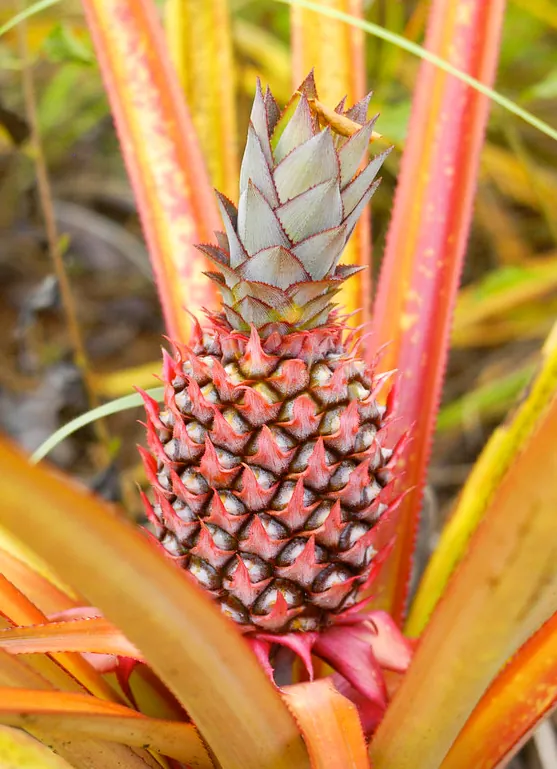 Española Roja
- Scent
- aromatic
- Feel
- firm
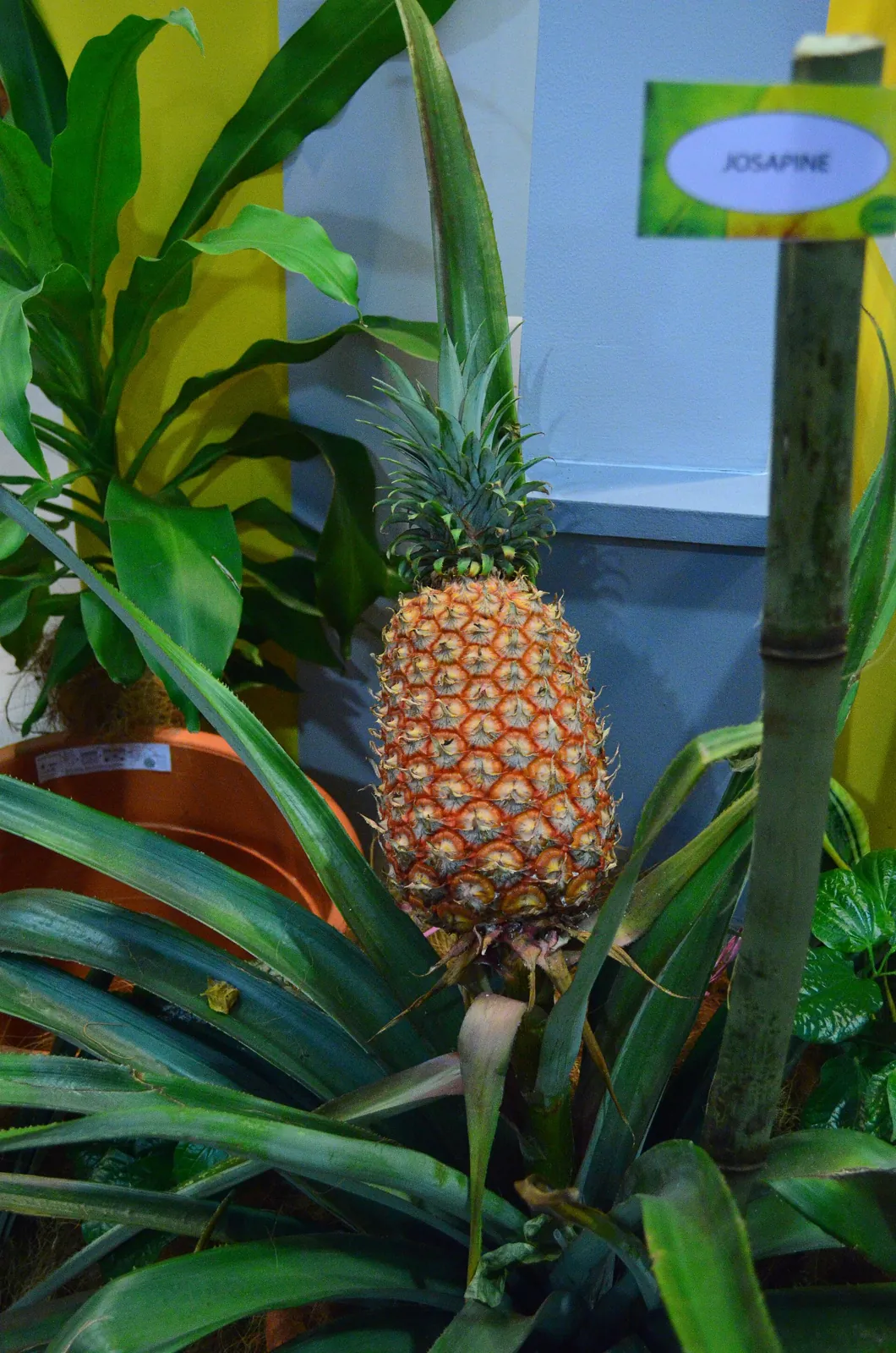 JosapinePhoto: Ma Hzi Wong at Malay Wikipedia · CC BY-SA 3.0
- No variety photo yetAus-Jubilee
- Feel
- firm
- No variety photo yetPérola
- Feel
- soft
- Juice
- juicy
- No variety photo yetPerolera
- Taste
- sweet
- Feel
- firm
49 names in 23 languages
- nanasroot
Cook it
How to serve it first
Trim the shell and remaining tough eyes, then slice the flesh around the firmer central core to your preferred texture. Taste a fresh piece before choosing whether to serve the rest plain, grill it or add it to a savory salad.
6 pineapple festivalsUsual monthToday, Oct 22
Strange but trueHistoryA myth, and the truthScienceNatureWhere the name came fromCustoms and cultureFood and drinkPeople
If you like Pineapple
Tastes alike
Used the same way
Nutrition, sources
Nutrition
Pineapple, raw, traditional varieties · per 100 g
- Carbohydrate
- 12 g
- Sugars
- 8.3 g
- Protein
- 0.6 g
- Fat
- 0.1 g
- Vitamin C
- 17 mg
- Potassium
- 125 mg
Sources
Pineapple · Fruitopia · checked Sep 21, 2026