Pindo palm fruit
Butia odorata · Arecaceae family
A palm fruit often made into jelly, sometimes mislabeled under an older botanical name.
Find it near DetroitGet to know it
Pindo palm fruit is a small, sweet-tart fruit from southern Brazil and Uruguay, wrapped in thin yellow-to-red skin. It makes jelly and wine, while the kernel inside becomes something quite different: Uruguay’s café de coco, a roasted drink.
What it is
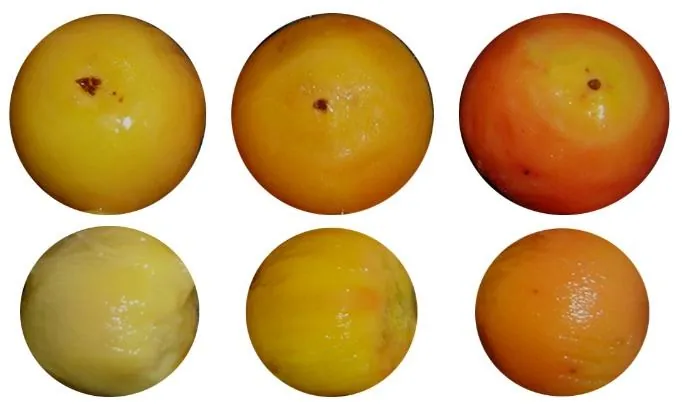
A pindo fruit is round to oval and about 2.5 cm (1 in) across. The thin skin encloses a tart, sweet mouthful. Its colours run from yellow to red, so orange is only one of its ripe colours.
The flesh and the kernel have separate uses. The fruit goes into jelly or wine; the kernel provides edible oil and ingredients for sweets. In Uruguay it appears in cookies and bonbons as well as café de coco.
Where it comes from
The palm’s name is Butia odorata, and its home is southern Brazil and neighbouring Uruguay. In eastern Uruguay, butiá palm groves covering 70,000 hectares lie around the town of Castillos and stretch towards the Brazilian border.
Pindo also grows as a garden palm in the warm coastal part of southeastern North Carolina. It has long been confused with Butia capitata, a different, more tropical palm.
How it's eaten where it grows
In Rocha, Uruguay, butiá goes into liqueurs, jams, jellies, sweets and sauces. These are family craft traditions passed down through generations. Café de coco uses the seeds, roasted and ground: people drink the infusion on its own, mix it with milk or add it to mate. The name means coconut coffee, but the palm supplying it is butiá.
How it's grown
Pindo grows on a single stout trunk with featherlike leaves that arch back towards it. In North Carolina gardens it reaches about 6 m (20 ft); in Rocha’s groves the trunk stands 7 to 9 m (23 to 30 ft) tall. The palm prefers a warm, sunny position and tolerates some drought, but wet soil does not suit it. Bees carry most of its pollen between flowers.
When and where you'll find it
In Rocha, Uruguay, butiá usually ripens in the first half of April. Beyond the fresh fruit, Rocha’s butiá becomes bottled liqueur, jellies, jams and sweets, made in local traditions passed down through generations of families.
Get it near Detroit
What it tastes like
Compared with beach butia, Butia odorata fruit has more fiber and is less sweet.
How to buy it
1EatPulp, Kernel · not hard stone
Eat
PulpKernelNot eaten
Hard stoneThe pulp surrounds a hard stone; remove it before chopping the fruit for jelly. The kernel inside the stone is also edible, but prepared separately from the pulp.
Detroit, Michigan
When it’s good hereUsual monthsJust arrivedAt their bestLast chanceAll yearWhere it is in its usual monthsToday, Oct 22Grown hereIn season in your stateShips fromIn season where it grows
Cook it
Strange but trueHistoryNature
Sources
Sources
Pindo palm fruit · Fruitopia · checked Sep 22, 2026