Perinha do Cerrado
Eugenia klotzschiana · Myrtaceae family
A small pear-shaped Eugenia fruit that grows less acidic as it ripens.
Find it near DetroitGet to know it
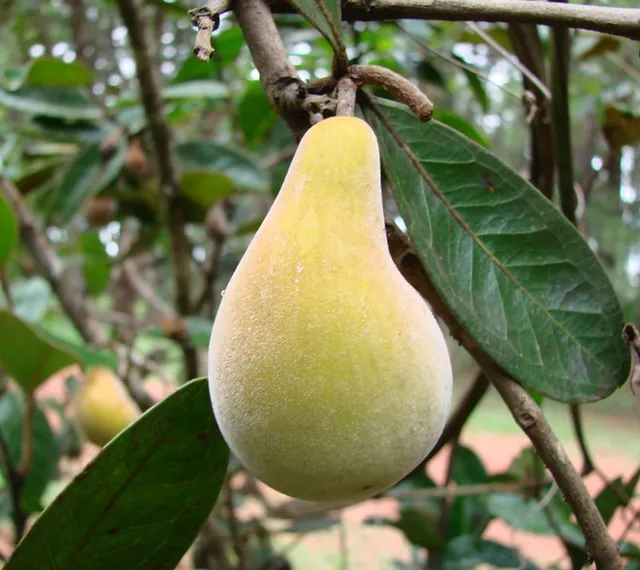
Perinha-do-cerrado is a yellow, pear-shaped fruit with soft white flesh and a strong aroma. It belongs to the myrtle family and grows on a small Brazilian shrub. Even ripe, it has a tart bite; fruit from southern Minas Gerais is less acidic and more fragrant than fruit from the Federal District.
What it is
A ripe fruit measures 6–10 cm (2½–4 in) long and 4–7 cm (1½–2¾ in) across, with two to four seeds inside. Its skin changes from green to yellow as it ripens. The flesh is soft and aromatic.
Ripeness takes some of the edge off the acidity. In fruit grown at Jaboticabal, São Paulo, the sweeter balance comes mainly from falling acidity, while the concentration of sugars and other dissolved solids changes little.
Where it comes from
Eugenia klotzschiana is native to Brazil, including Goiás, Mato Grosso do Sul, Minas Gerais, São Paulo and Bahia. It grows in the Cerrado’s open woodland and grassland. Its fruit differs by region: the Federal District’s larger, sharper fruit contrasts with the smaller, more aromatic fruit of far southern Minas Gerais.
How it's eaten where it grows
In rural Brazil, pera-do-cerrado is eaten fresh and turned into fruit sweets, jelly and juice. Ice cream is another use for its aromatic pulp. Which fruit you get depends on where it grew: the larger Federal District fruit brings more acidity, while the smaller southern Minas Gerais fruit is less sharp.
How it's grown
In the wild, the shrub usually stays below 1 m (3 ft); twelve-year-old cultivated plants can reach 3 m (10 ft). It has white, fragrant flowers and grows best in soil that drains freely. In southern Minas Gerais, it grows and fruits despite frequent winter frosts. New plants can be raised from seed.
When and where you'll find it
The fruit usually ripens from October to December. There are no commercial orchards yet: fresh perinha-do-cerrado comes mainly from wild gathering, with some plants kept in home gardens. Where the fruit is traded, it is normally packed in plastic or mesh bags. Yellow skin marks the ripe stage, when the fruit is less acidic than it is while green.
Get it near Detroit
What it tastes like
Ripe pera-do-cerrado is soft, aromatic and acidic. Fruit from the Federal District tends to be larger, more acidic and less aromatic than the smaller, sweeter, more aromatic fruit from southern Minas Gerais.
As the fruit ripens from green to yellow, acidity drops while sugar content stays about the same, giving ripe fruit a sweeter balance.
Choose, store, eat
1ChooseYellow peel
Look for
- Yellow peel
Look for yellow peel color as a sign of ripeness.
2StoreCounter, ripe5 days
- CounterRipeUp to 5 days
At room temperature (about 24C), ripe fruit keeps for around five days, growing less acidic as it sits.
3EatFruit
Eat
FruitEat it fresh, or use it in juice, ice cream or jelly.
Detroit, Michigan
When it’s good hereUsual monthsJust arrivedAt their bestLast chanceAll yearWhere it is in its usual monthsToday, Oct 22Grown hereIn season in your stateShips fromIn season where it grows
Sources
Photos · 1
Sources
Perinha do Cerrado · Fruitopia · checked Sep 22, 2026