Marirana
Also called UmariranaCouepia subcordata
A little-known Amazonian fruit with strongly aromatic yellow-orange pulp.
Find it near DetroitGet to know it
Marirana is an Amazonian fruit with yellow-orange skin, thick flesh and a strong, distinctive aroma. Also called umarirana, it has one seed inside a thin inner shell. On Ecuador's coast, the pulp goes into milk drinks.
What it is
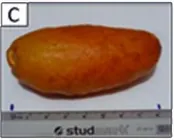
The oval fruit measures about 4.5–9 cm (1.8–3.5 in) long and 3–5 cm (1.2–2 in) wide. Its smooth skin surrounds a thick layer of fleshy pulp, yellow-orange like the outside. Beneath that pulp is a thin, brittle, fibrous shell enclosing the seed. The pronounced aroma is one of the fruit's defining features.
Where it comes from
Couepia subcordata comes from forests in the central and western Amazon that do not flood. It also grows on Marajó Island in Pará, Brazil. People have established the tree on Ecuador's coast, beyond its Amazonian home, where people in rural areas eat the fruit fresh or processed.
How it's eaten where it grows
On Ecuador's coast, guaijí is the name for this fruit. People eat it fresh or process it, and the strongly scented fruit is made into milk drinks. In Peru's Loreto region, the same species goes by parinari.
How it's grown
Marirana is a medium-sized tree, with leaves smooth on top and covered underneath in short grey-silver to brown hairs. Its flowers have five white petals. On Ecuador's coast, flowering usually falls in July and August, ahead of the October and November fruit harvest.
When and where you'll find it
In the Amazon, marirana is traded in small quantities at open-air markets. In Loreto, Peru, its main fruiting season usually runs from March to May, with a smaller season from November through February. On Ecuador's coast, harvest is usually in October and November.
Sources · 4
- Embrapa Amazônia Oriental — Cardoso, Carvalho and Barbosaalice.cnptia.embrapa.br
- Instituto de Investigaciones de la Amazonía Peruana — Frutales Nativos Amazónicosrepositorio.iiap.gob.pe
- Revista Cubana de Plantas Medicinales — Naranjo-Morán and colleaguesmedigraphic.com
- Universidad Nacional de Colombia — Flora de Colombiabiovirtual.unal.edu.co
Get it near Detroit
What it tastes like
The skin and pulp are yellow-orange, with a strong, distinctive aroma.
The skin and pulp are yellow-orange, with a strong, distinctive aroma.
How to buy it
1EatYellow-orange pulp · not seed, shell
Eat
Yellow-orange pulpNot eaten
SeedShellThe yellow-orange pulp is the edible part, separate from the seed and shell; the seeds are used separately for oil.
Detroit, Michigan
When it’s good hereUsual monthsJust arrivedAt their bestLast chanceAll yearWhere it is in its usual monthsToday, Oct 22Grown hereIn season in your stateShips fromIn season where it grows
Sources
Photos · 2
Photographer not separately credited; article by Jaime Naranjo Morán and Eduardo Chica MartínezCC Attribution (version unspecified; explicit reuse grant) 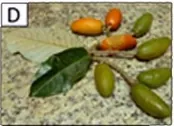
Photographer not separately credited; article by Jaime Naranjo Morán and Eduardo Chica MartínezCC Attribution (version unspecified; explicit reuse grant)
Sources
Marirana · Fruitopia · checked Sep 23, 2026