Maqui
Also called MaqueiAristotelia chilensis · Elaeocarpaceae family
Maqui's dark fruit is only one part of a much larger plant story. Museum collections preserve its use as a fiber plant, while contemporary food enterprises turn gathered berries into ingredients that travel beyond the harvest season.
Find it near DetroitGet to know it
Maqui is a tiny, sweet purple berry from Chile and Argentina. It becomes juice, fermented drinks and a deep-purple powder for yogurt and smoothies; its colour is strong enough to have been used to dye cloth.
What it is
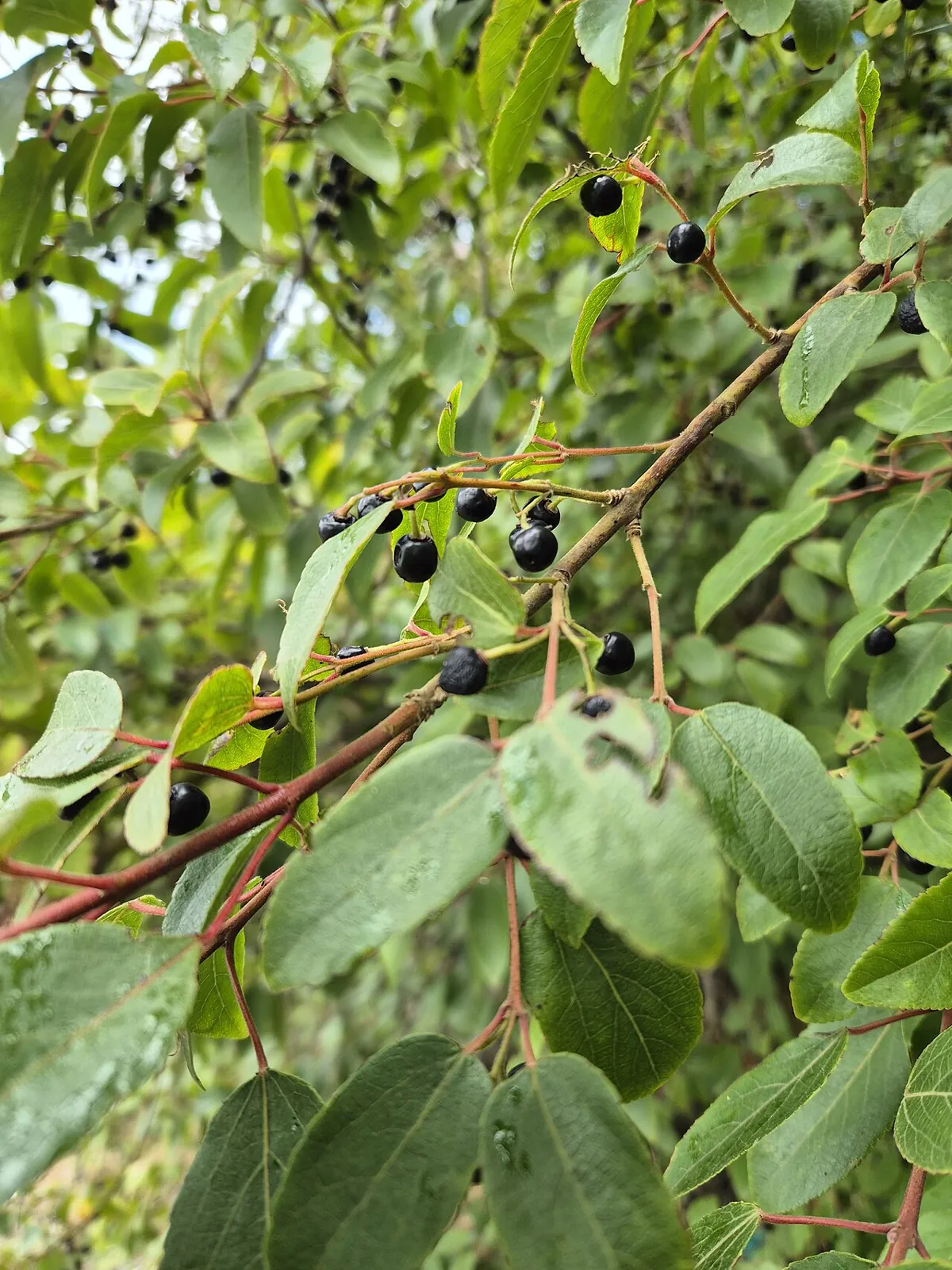
Wild berries are tiny, no more than about 0.5 cm (0.2 in) across, and most of each berry is seed: four to eight small, angled ones. With orchard care, the berries can grow larger, around 0.7–0.9 cm (about 0.3 in). Ripe fruit is dark violet to glossy black.
Fresh maqui tastes sweet. The deep-purple powder made from it has a tart berry taste and is stirred into yogurt, oatmeal and smoothies. The fruit also has a long history as a dark-blue dye for yarn and cloth.
Where it comes from
Maqui is native to Chile and neighbouring Argentina. In Chile it grows from Coquimbo southward, on the slopes of both mountain ranges and in the central valley, up to 2,500 m (8,200 ft). It is an ancestral Mapuche food.
Wild-gathered berries are sold commercially. Near Villarrica, in La Araucanía, the family business Chihuaico began drying maqui in 2014, paying women from the local Indigenous community a fair price to gather the fruit.
How it's eaten where it grows
In Chile, maqui has a long life as a drink. Its sweet fruit suits juices and alcoholic drinks, and before the Spanish arrived it went into a refreshing chicha called treco or tecu.
Today, maqui is also dried. Dried berries go into infusions and baking, and the powder goes into yogurt, fruit salads and shakes.
How it's grown
Maqui is a small evergreen tree, easily 5 m (16 ft) tall and sometimes 8 m (26 ft), with male and female flowers on separate plants. Fruit grows on the previous year’s wood. In an orchard, it needs soil that drains well and enough water while the berries develop. Even on one wild plant, the crop does not ripen all at once; glossy violet-black berries mark the harvest stage.
When and where you'll find it
In Chile’s Los Ríos region, maqui usually ripens in late January.
Beyond the harvest, maqui keeps as a dried powder. One US brand makes its powder from wild-gathered berries from southern Chile that are freeze-dried; it goes into oatmeal as well as smoothies.
Get it near Detroit
What it tastes like
Maqui fruit is sweet and purple, used in juices and fermented drinks.
The fruit is purple and sweet, suited to juices and fermented drinks; dried powder won't necessarily have the same sweetness or texture.
It's sold both as dried whole fruit and as a powder used in yogurt, smoothies and other foods.
Choose, eat
1ChooseGlossy purple-black
Look for
- Glossy purple-black
Wild-fruit maturity is uneven within a plant; a glossy purple-black color is the usual harvest cue.
2EatFruit · not bark
Eat
FruitNot eaten
BarkThe fruit itself is the food material, used for drinks and powders — the bark and other tissues are not food ingredients.
More tips
Worth knowing
- Ask which ecotype and harvest stage a maqui product comes from; a dark berry or high sugar content doesn't make it the best for eating fresh.
Detroit, Michigan
When it’s good hereUsual monthsJust arrivedAt their bestLast chanceAll yearWhere it is in its usual monthsToday, Oct 22Grown hereIn season in your stateShips fromIn season where it grows
3 growing areas, 1 countryUsual monthsToday, Oct 22

- Araucanía
- Maule
- O'Higgins
- You
A preserved maqui-bark rope in Chile's national natural-history museum shows the plant's historical use for fiber, tied to Mapuche plant knowledge.
12 names in 6 languages
- QueldrónSpanish
Cook it
Strange but trueScienceNatureWhere the name came from
Sources
Photos · 1
Sources
Maqui · Fruitopia · checked Sep 22, 2026
- diario.uach.cl
- frenchpressedkitchen.com
- indap.gob.cl
- infor.cl
- mnhn.gob.cl
- navitasorganics.com
- thehealthfulideas.com
What we don't know yet
Recipes and sellers typically use processed maqui — dried or powdered — not fresh berries.