Magenta lilly pilly
Also called Magenta cherry · Brush cherrySyzygium paniculatum · Myrtaceae family
A striking purple fruit from a tree whose garden success is different from its wild conservation story.
Find it near DetroitGet to know it
Magenta lilly pilly is a small, purple-pink Australian fruit with crisp flesh and a mild flavour. It grows on a glossy-leaved rainforest tree, Syzygium paniculatum. The bright fruit goes into jam and a strained, sweetened cordial diluted with water.
What it is
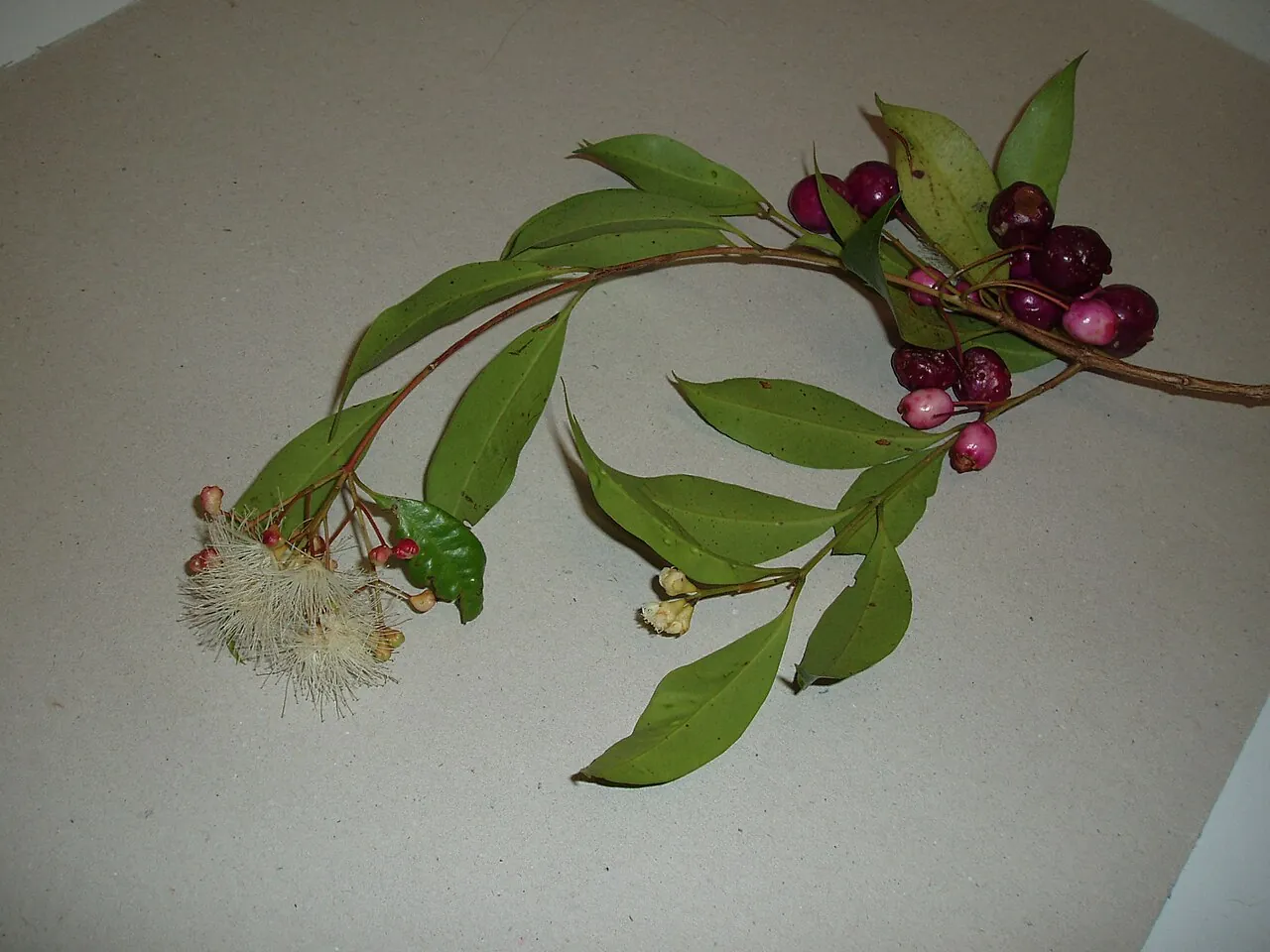
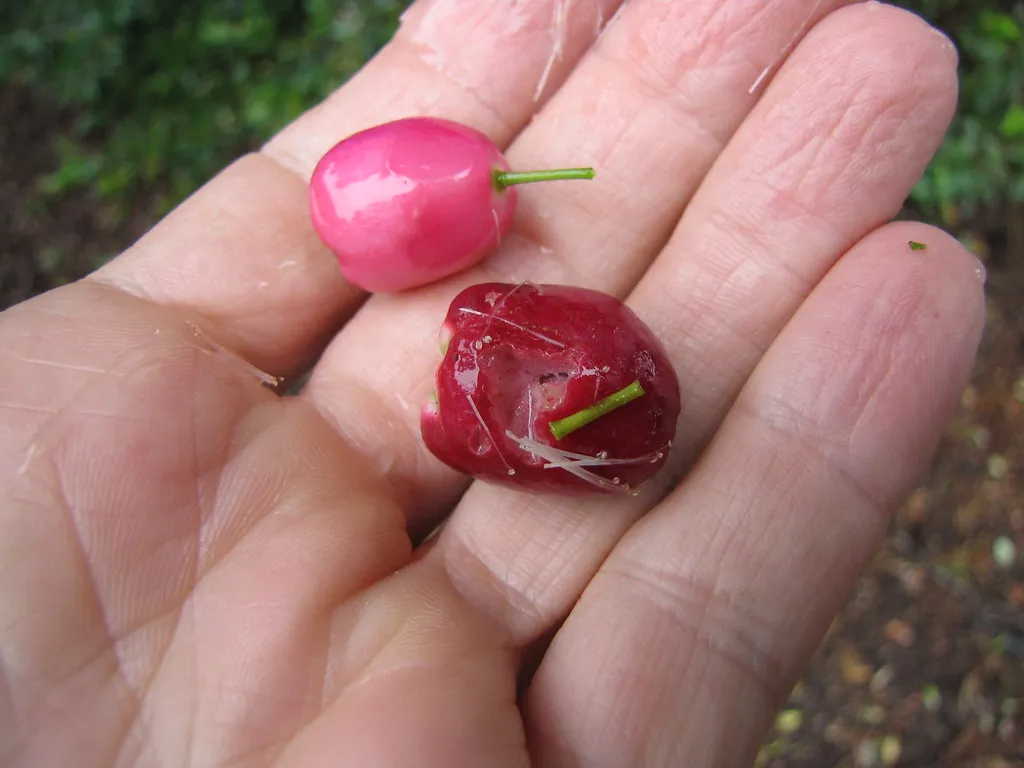
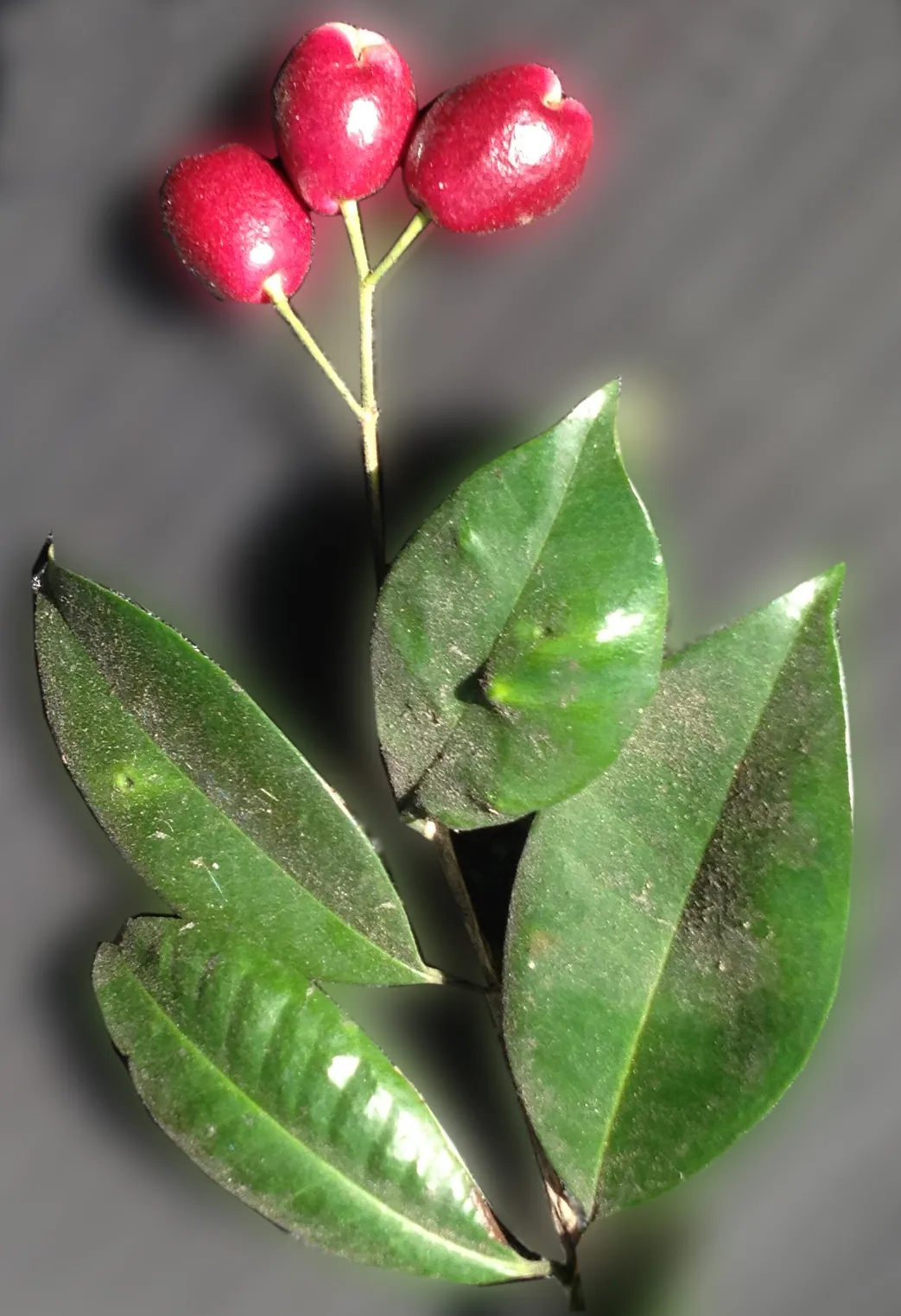
A fruit is about 2 cm (¾ in) long, egg- or cherry-shaped, with a large seed inside. The colour runs from magenta to purple. Its flesh is crisp, and the flavour is quieter than the vivid skin suggests. It belongs to the myrtle family.
Where it comes from
Wild magenta lilly pilly grows along a narrow strip of the New South Wales coast, from Upper Lansdowne to Conjola State Forest. Its homes include coastal rainforest on sandstone soils and rainforest beside rivers.
Garden planting has carried it farther. In frost-free parts of California and Florida, it grows as hedges, screens and clipped ornamental shapes. In some Australian areas beyond its natural range, planted trees have escaped into bushland.
How it's eaten where it grows
In Australia, a home-grown magenta lilly pilly crop becomes saft, a concentrated cordial. The fruit is cooked with a little water, mashed and strained. Sugar dissolves into the juice, which is diluted with water to drink. Straining leaves the skins and pulp behind.
In South Africa, Patricia Furstenberg turns the same species into jam. She removes the pits, then uses sugar weighing half as much as the prepared fruit. Lemon adds extra tartness to one version.
How it's grown
The tree grows in sun or partial shade and likes enriched soil that drains well. Fresh seed or cuttings start new plants. It can grow in a large tub, while established garden trees may exceed 10 m (33 ft) tall. Pruning encourages denser foliage, and the new growth is reddish.
When and where you'll find it
In New South Wales, the fruit usually matures in May, after white flowers appear in summer. Garden trees offer the fruit alongside their glossy leaves and flaky bark, and birds eat the crop too. The same tree that makes a tall screen can supply fruit for a small batch of preserves.
Sources · 6
- Aussie Baronsaussiebarons.com
- Australian Native Plants Society (Australia)anpsa.org.au
- Australian Plants Society NSWresources.austplants.com.au
- NSW Environment, Energy and Sciencethreatenedspecies.bionet.nsw.gov.au
- Patricia Furstenbergalluringcreations.co.za
- World Agroforestry, Agroforestree Database (2009)apps.worldagroforestry.org
Get it near Detroit
What it tastes like
The flesh is crisp, with relatively little flavor.
The flesh is crisp, with relatively little flavor.
Choose, eat
1ChoosePurple or magenta
Look for
- Purple or magenta
- Small cherry size
Ripe fruit is purple or magenta, about the size of a small cherry.
2EatFruit · not pits
Eat
FruitNot eaten
PitsFor jam, remove the pits before weighing and cooking the fruit — small berries sometimes have no pit at all.
Detroit, Michigan
When it’s good hereUsual monthsJust arrivedAt their bestLast chanceAll yearWhere it is in its usual monthsToday, Oct 22Grown hereIn season in your stateShips fromIn season where it grows
8 names in 4 languages
Cook it
Strange but trueNature
Sources
Sources
Magenta lilly pilly · Fruitopia · checked Sep 22, 2026