Lilly pilly
Syzygium smithii · Myrtaceae family
A native Australian fruit with a sour-jelly tradition and a living connection to a historic garden.
Find it near DetroitGet to know it
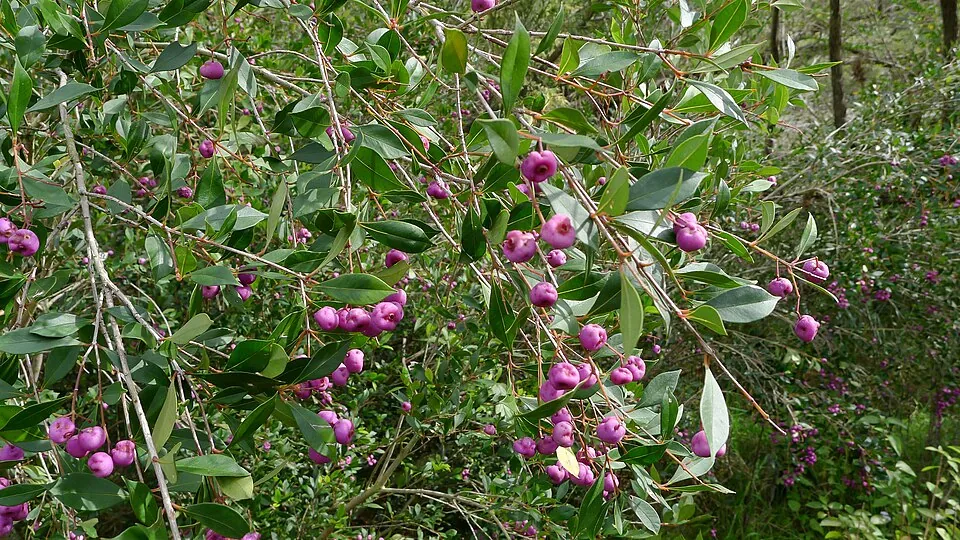
Lilly pilly is a small Australian fruit that ranges from white to purple and makes a gently tart jelly. This one is Syzygium smithii, also known as Acmena smithii. Its pink fruit has a long place in home preserving, from jam jars to roast-dinner accompaniments.
What it is
The fleshy fruit is about 1–1.5 cm (0.4–0.6 in) across, with a large seed inside. Clusters may be white, pink, mauve or purple. The flavour is mild and a little acidic, making jelly and sauce useful ways to enjoy it.
Lilly pilly is a shared name: several Australian species carry it. Syzygium smithii is a member of the myrtle family, with glossy green leaves and fluffy, cream-white flowers.
Where it comes from
This lilly pilly grows naturally in Australian east-coast rainforests, from northern Queensland down to Victoria, and on King Island. It has also travelled abroad as a garden tree. In New Zealand it is known as monkey apple and has spread into bushland, where dense young plants crowd out other vegetation. Kererū, the native pigeons, eat the fruit and carry its seeds.
How it's eaten where it grows
In Australia, lilly pilly jelly carries on a preserving tradition used by nineteenth-century settlers. It goes with roast lamb or pork, or onto hot crumpets. The Meroogal recipe adds green apples to help it set: cooked fruit is strained, then its juice is boiled with sugar and lemon.
A spiced sauce takes the fruit in another direction. The pulp is cooked and sieved to remove seeds, then combined with vinegar, sugar, cinnamon, bay, cardamom and chilli.
How it's grown
In gardens, Syzygium smithii usually forms a dense tree about 8–10 m (26–33 ft) tall. It tolerates sun or fairly deep shade, moderate frost and regular pruning, which makes it useful as a tall hedge. Growers raise it from fresh seed or cuttings. Seed can germinate slowly and unevenly, so a batch need not all come up together.
When and where you'll find it
At Meroogal, the historic house and garden in Nowra, New South Wales, the tree usually fruits in the Australian summer, when pink fruit litters the ground below it. Around Sydney, lilly pillies grow in parks, sports grounds and front-garden hedges; this is a fruit with a strong garden-and-preserving tradition.
Get it near Detroit
What it tastes like
The white-to-purple fruit is edible, but not especially tasty.
The white-to-purple fruit is edible, but not especially tasty.
The pink fruit is mildly acidic and traditionally made into jelly.
How to buy it
1EatPulp · not seeds
Eat
PulpNot eaten
SeedsFor a cooked sauce, the fruit is simmered until soft, then the pulp is separated from the seeds with a sieve or food mill — a good alternative if the fresh fruit isn't to your taste.
Detroit, Michigan
When it’s good hereUsual monthsJust arrivedAt their bestLast chanceAll yearWhere it is in its usual monthsToday, Oct 22Grown hereIn season in your stateShips fromIn season where it grows
Cook it
Strange but trueHistoryNaturePeople
Sources
Sources
Lilly pilly · Fruitopia · checked Sep 22, 2026