Kapundung
Also called MentengBaccaurea racemosa · Phyllanthaceae family
A Southeast Asian Baccaurea whose white and red flesh forms can each be sweet or sour.
Find it near DetroitGet to know it
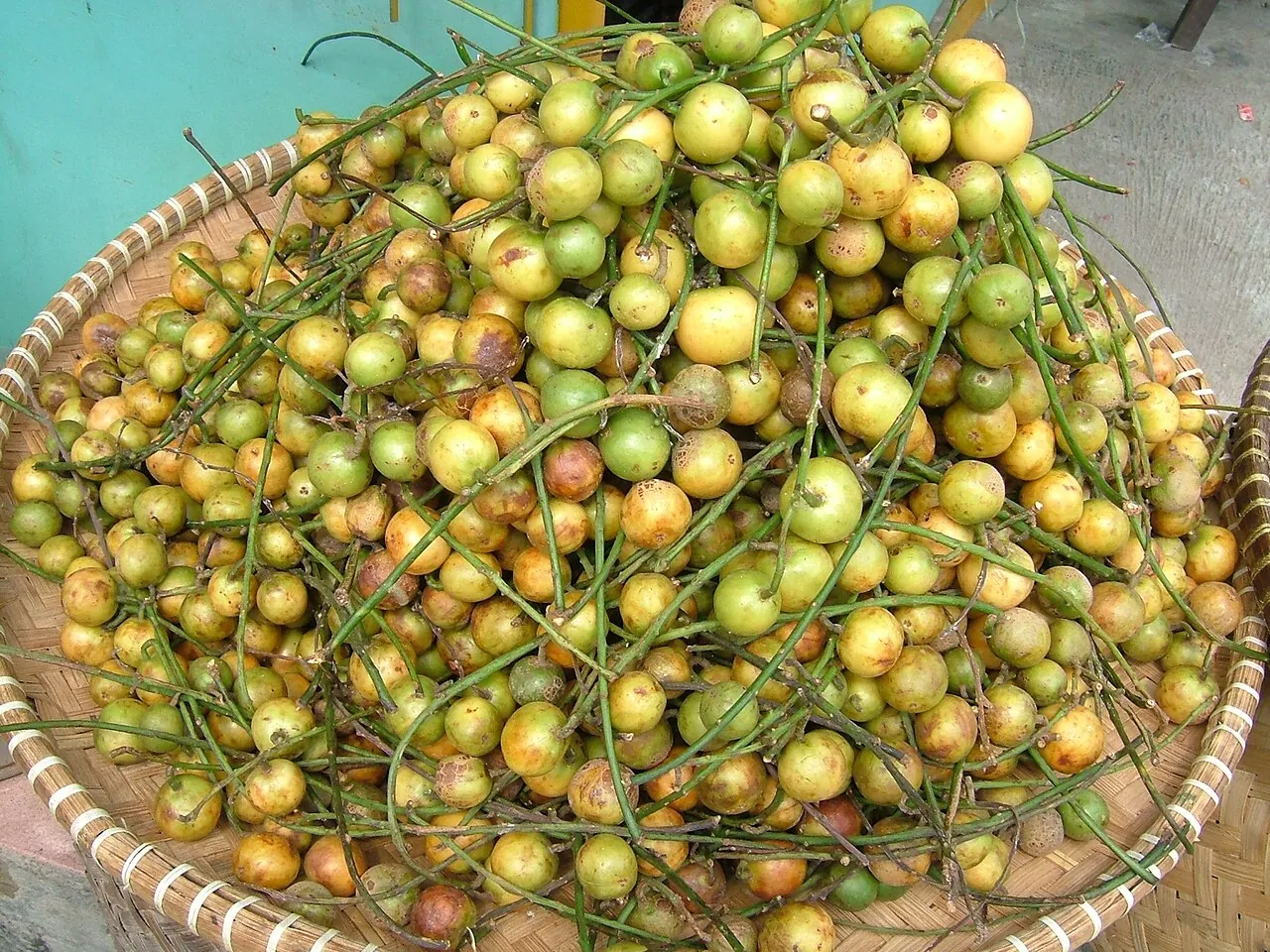
Kapundung, also called menteng, is a small Southeast Asian fruit with white or red flesh around its seeds. Either colour can taste sweet or sour. The fruits hang in strings from old branches and the trunk, and in Indonesia kapundung in particular goes into asinan fruit pickles.
What it is
Each fruit measures about 2–2.4 cm (¾–1 in) across, with yellowish-green or reddish skin. Peeling it exposes the fleshy covering around the seeds, which clings closely to them.
The white-fleshed form is called menteng and the red-fleshed one bencoy. Both include sweet and sour fruits, so the colour of the flesh doesn’t tell you how sweet a mouthful will be.
Where it comes from
Kapundung’s home is western Malesia, where people widely grow it in Java, Sumatra, Bali and peninsular Malaysia. Besides menteng, Indonesians call it kepundung or bencoy, and Malaysians jinteh merah.
Its scientific name is Baccaurea racemosa. Rambai (Baccaurea motleyana) and Burmese grape (Baccaurea ramiflora) belong to the same genus of trees, but they are separate species.
How it's eaten where it grows
The peeled fruit is eaten fresh, or made into asinan, a sweet, salty, chilli-spiced fruit pickle. In Bogor, West Java, cook Binti Sae briefly cooks peeled menteng in water with sugar, sliced chillies and salt. As it cools, the fruit’s sourness flavours the liquid.
In nearby Depok, cook Vel Ka adds chopped apple and pieces of menteng’s inner rind to the mixture, then serves it chilled. The pickle makes use of the rind as well as the flesh around the seeds.
How it's grown
Kapundung grows into a tree 15–25 m (49–82 ft) tall with a dense, uneven crown. It thrives in humid tropical lowlands; wild trees also grow as high as 1,000 m (3,280 ft).
Male and female flowers grow on separate trees. On females, flower strings 10–20 cm (4–8 in) long grow from older branches or the trunk. Growers can copy a fruit-bearing tree by air layering, rooting a branch while it is still attached, or by budding.
When and where you'll find it
Menteng has grown scarce in markets, but in Bogor it is still widely sold at traditional markets, and some sellers set up around the railway station. In Jakarta, look around Ragunan. Travelling fruit sellers are another local route: Binti Sae bought hers from one in Bogor, two bunches of about 40 fruits for her asinan.
Get it near Detroit
What it tastes like
Kapundung comes in white-fleshed (menteng) and red-fleshed (bencoy) forms; both can be sweet or sour.
Kapundung comes in white-fleshed (menteng) and red-fleshed (bencoy) forms; both can be sweet or sour.
Choose, eat
1ChooseFlesh color alone
Ignore
- Flesh color alone
Ask about the batch's taste rather than judging sweetness by flesh color alone, since both the white (menteng) and red (bencoy) forms can be sour or sweet.
2EatFleshy covering
Eat
Fleshy coveringThe edible part is the fleshy covering around the seeds. Kapundung is also used in asinan pickles.
Detroit, Michigan
When it’s good hereUsual monthsJust arrivedAt their bestLast chanceAll yearWhere it is in its usual monthsToday, Oct 22Grown hereIn season in your stateShips fromIn season where it grows
Cook it
Sources
Photos · 1
Sources
Kapundung · Fruitopia · checked Sep 22, 2026