Illawarra plum
Also called Plum pine · Brown Pine · Turpentine PinePodocarpus elatus · Podocarpaceae family
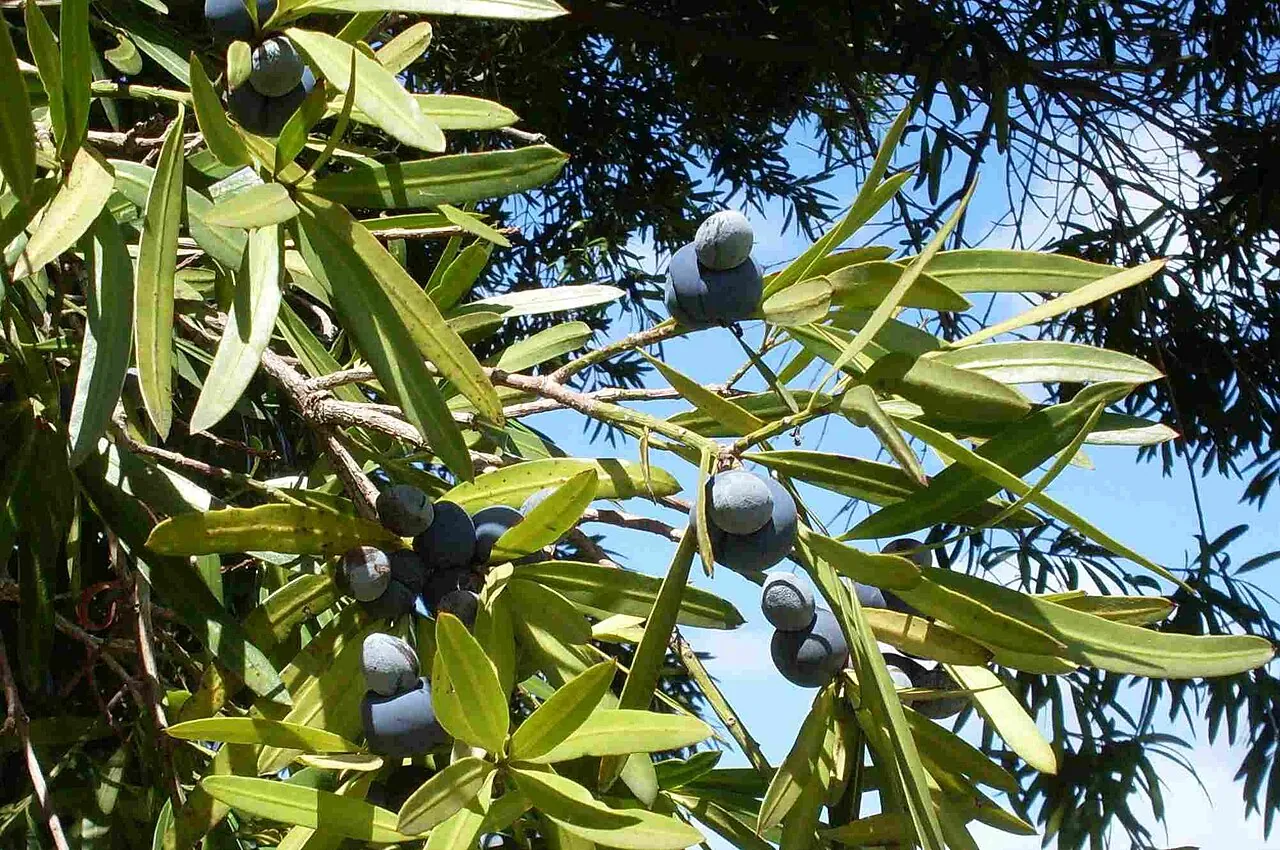
The edible portion is a fleshy cone stalk from a conifer, rather than an ordinary plum.
Find it near DetroitGet to know it
Illawarra plum tastes sweet and gently pine-like, with juicy flesh that feels like a grape. It grows on an Australian conifer, and its hard seed sits outside the part you eat. Twist that seed off and the purple flesh is ready to eat or cook.
What it is
The blue-black or purple fleshy part reaches about 2.5 cm (1 in) long and 2 cm (¾ in) across. A hard seed sits on its end. The two pieces twist apart; only the soft part is eaten.
Its tree, Podocarpus elatus, also goes by plum pine and brown pine. It has long, dark-green leaves and makes cones instead of flowers. The little purple 'plum' is the swollen, fleshy stalk of one of those cones.
Where it comes from
Illawarra plum comes from Australia's east coast. Its native range stretches from Jervis Bay in New South Wales north into Queensland, in scattered patches as far as Coen on Cape York Peninsula. It grows in coastal, dry and subtropical rainforests.
First Nations people in some parts of Australia ate the fleshy stalks. Today the tree is also planted in botanic gardens and larger parks around Australia, and as a street tree.
How it's eaten where it grows
In Australia, the fruit is eaten raw or made into jam and jelly, and it's often paired with chilli and garlic in sauces and marinades. Headlands' jam combines plums with the seed removed, sugar and lemon juice; the finished jam goes with scones, cheese or pancakes, or under plain yoghurt.
It also gives gin a local twist. South Coast Distillery steeps Illawarra plums in gin for twelve months, then adds cane sugar to make a sloe-style drink.
How it's grown
This is a slow-growing tree, usually reaching up to 15 m (49 ft) in gardens. Male and female cones grow on separate trees, so a fruiting planting needs both. It grows in sun or part shade and prefers rich, moist soil that drains well. Ripe plums can be picked from the branches; they also fall to the ground.
When and where you'll find it
In eastern Australia, the fruit usually ripens from March to July. Beyond fresh fruit, it comes dried: Oz Tukka in Toukley, New South Wales, sells pure freeze-dried Illawarra plum in 20 g pouches for jams, sauces and baking. Its pine flavour becomes stronger with cooking.
Get it near Detroit
Sell fruit online? Add your business
What it tastes like
Illawarra plum is jelly-like, sweet and mildly pine-flavored.
Choose, eat
1ChooseBlue-black to purple stalk
Look for
- Blue-black to purple stalk
- Conspicuous attached seed
Look for a fleshy blue-black to purple stalk with a conspicuous attached seed.
2EatFleshy part · not seed
Eat
Fleshy partNot eaten
SeedTwist apart the small hard seed from the jelly-like fleshy part; only the fleshy part is eaten.
Detroit, Michigan
When it’s good here
Season not documented for Michigan.
9 names in 4 languages
Cook it
Strange but trueScienceCustoms and cultureFood and drink
Sources
Photos · 1