Hala fruit
Also called Thatch Screwpine · Pu hala · Tahitian screwpinePandanus tectorius
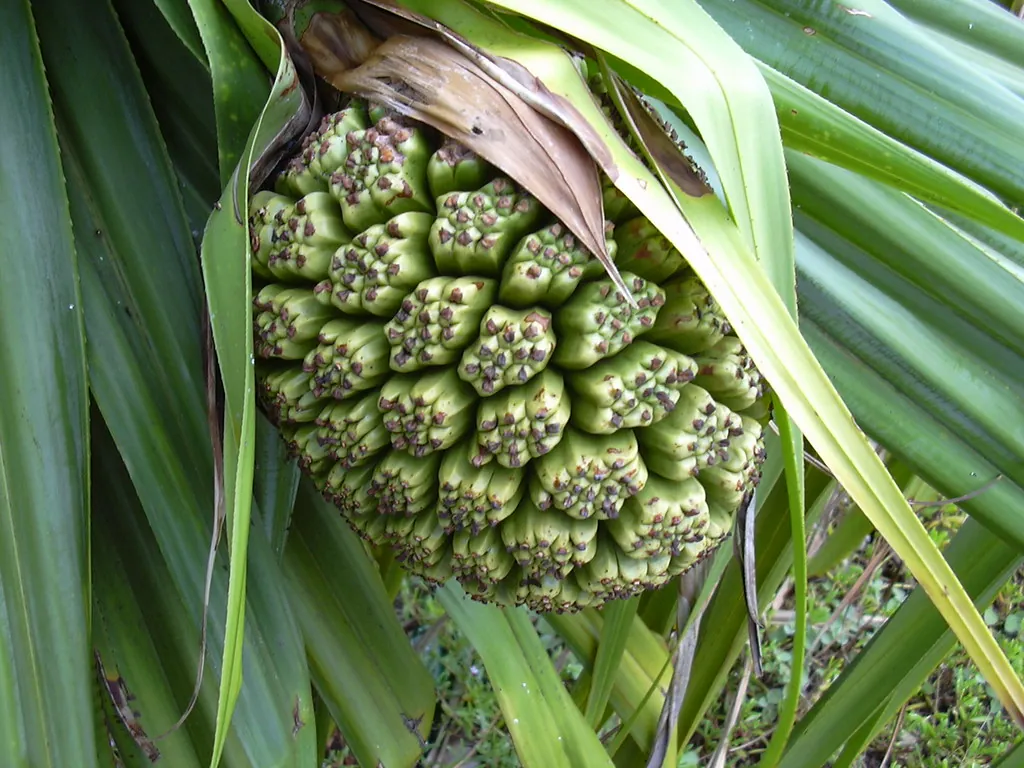
A hala fruit head is a bundle of wedge-shaped units, each with fibrous tissue at its base; only some pandanus varieties are eaten as food.
Find it near DetroitGet to know it
Hala fruit is a head of tightly packed wedges called keys, with a fibrous end you suck or chew for its juice. In the Marshall Islands, sweet, juicy pandanus is cooked and dried into a paste that keeps for years. Only some varieties are food fruits.
What it is
The head measures 4–20 cm (1.6–8 in) across and holds 38 to 200 keys. Pull one out and the rest come apart easily. In edible varieties, ripe keys turn bright orange or orange-red and smell sweet. The soft types can be eaten raw; tougher ones are boiled or baked.
Where it comes from
Hala, Pandanus tectorius, grows naturally along coasts from the Philippines and Indonesia through northern Australia and across the Pacific. It is native to Hawaiʻi, where it grows on all the main islands except Kahoʻolawe. In the Marshall Islands, on the dry northern atolls of Aelok, Likiep and Mājeej, few food plants thrive, but pandanus grows well and in abundance.
How it's eaten where it grows
Marshallese mokwan begins with keys cooked in an earth oven. The juicy paste is pressed out, simmered until it turns red or light brown, and spread over banana leaves to dry in the sun. The dried sheets are rolled up and wrapped in pandanus leaves. A little dissolved in water makes the drink jōnnōb.
On the Rālik atolls of Ujae, Lae and Wōtto, the same kind of paste is called jāānkun, and sailors take it on voyages, slicing off pieces with no further cooking. Eating a fresh key means sucking or chewing the fibres at its end.
How it's grown
Hala bears its fruit on female trees. Food varieties are grown from branch cuttings so the new plants keep the parent’s qualities. The tree handles hot, windy coastal ground, including salty and sandy soils. Its long leaves have another harvest: Hawaiians weave them into mats, hats, baskets and canoe sails.
When and where you'll find it
Fresh edible keys keep poorly once picked, so ripe pandanus is best eaten soon after picking. Dried paste is the travelling form. Half the Marshall Islands' people live on Majuro and Ebeye, where there aren't enough pandanus trees for everyone, so family, friends and church groups bring paste in from the outer islands.
Get it near Detroit
What it tastes like
Juice from edible pandanus varieties is sweet, slightly acid and pungently aromatic; cooking turns the fibrous inner portion into soft pulp. Dried mokan is compared with date or fig paste.
The edible basal portion is fleshy and fibrous. Soft-fruited varieties are eaten directly; tougher ones are cooked.
Orange to orange-red fingers, a sweet aroma and easy separation from the head are signs of ripeness in edible varieties.
Choose, store, eat
1ChooseEdible varieties only
Look for
- Edible varieties only
Ignore
- Color
Only some pandanus varieties have edible fruit, and color alone doesn't tell them apart.
2StoreRipe fingers keep poorly and are best eaten soon after picking
Ripe fingers keep poorly and are best eaten soon after picking; dried paste (mokan) is a separate, preserved product.
3EatSoft inner ends of the keys
Eat
Soft inner ends of the keysOnly the soft inner ends of the keys, from edible varieties, are eaten; bitter, astringent types can look similar.
Detroit, Michigan
When it’s good hereUsual monthsJust arrivedAt their bestLast chanceAll yearWhere it is in its usual monthsToday, Oct 22Grown hereIn season in your stateShips fromIn season where it grows
31 names in 13 languages
- halaHawaiian
- boproot
- 露兜树Chinese
Cook it
Strange but trueA myth, and the truthWhere the name came fromCustoms and cultureFood and drink
Sources
Photos · 1
Sources
Hala fruit · Fruitopia · checked Sep 22, 2026