Grey-leaved cordia fruit
Cordia sinensis · Boraginaceae family
Sweet, sticky pulp used as a fruit and a porridge ingredient in dryland food systems.
Find it near DetroitGet to know it
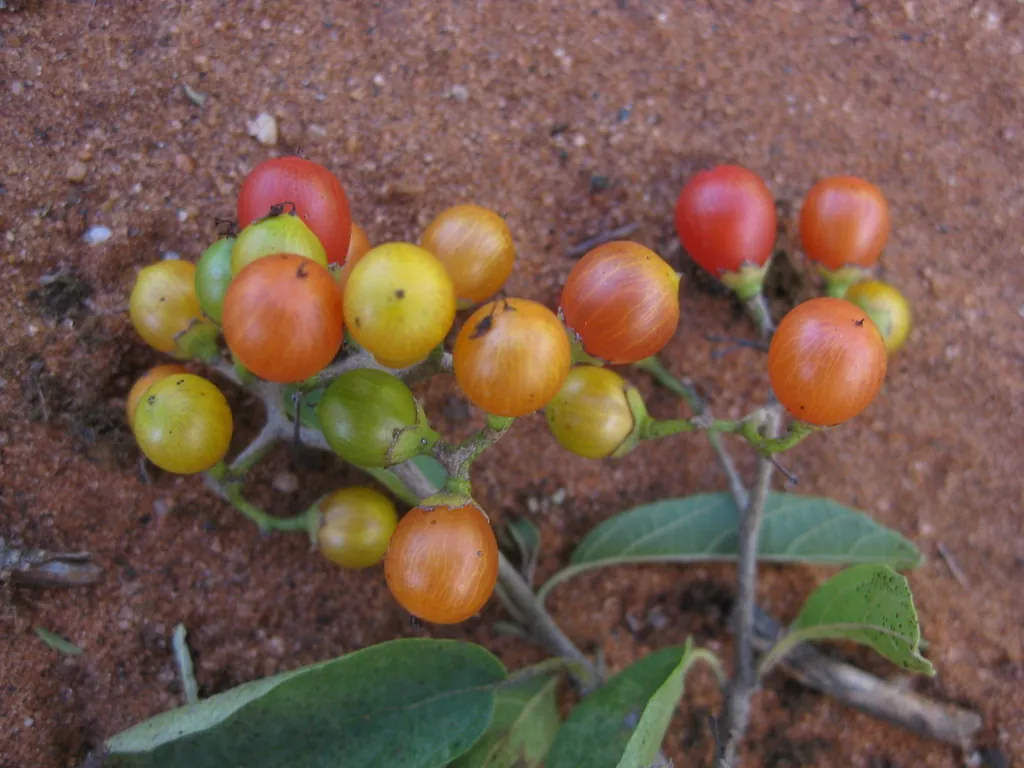
Grey-leaved cordia carries clusters of orange-red fruit with pointed tips and sweet, sticky pulp. In Tanzania, the fruit sweetens porridge; in Turkana, Kenya, it becomes a dried provision. This is a dry-country fruit with uses well beyond a fresh handful.
What it is
Cordia sinensis bears egg-shaped fruit up to 2 cm (0.8 in) long. Each sits in a little cup with a toothed rim and has a distinct point at the other end. The ripe fruit is bright orange to red, with sticky flesh inside.
The tree’s grey-green leaves feel rough to the touch. Small, fragrant cream flowers grow in clusters. In Kenya, the pulp is eaten while the fruit’s skin and seeds are discarded.
Where it comes from
Its range stretches from West Africa through the Middle East to India and Sri Lanka, and south to South Africa. It grows in dry-country river vegetation and open bushland, including sandy or rocky river beds. In Turkana it is edome; Swahili names include mkamasi and mnya mate.
How it's eaten where it grows
In Tanzania, children snack on the small fruits while herding animals, and the fruit goes into porridge in place of sugar.
In Turkana, fruit is gathered and pounded into a sticky mass, dried in the sun and kept in a wooden container called an eburr. In Kenya the pulp sometimes goes into a local beer, and in Turkana the fresh juice is drunk. The fresh snack and the stored provision are two ways to use the same sticky sweetness.
How it's grown
Grey-leaved cordia grows as a shrub or a tree with many branches, often drooping towards the ground. It sheds its leaves and can be raised from seedlings. It also regrows after cutting. Monkeys, baboons and birds eat the fruit and carry its seeds to new places.
When and where you'll find it
In Kenya, fruit is sold in Lodwar, Turkana. The usual fruiting windows are March in Kilifi, May–June in Kajiado and Kitui, and August–September in Garissa, Samburu, Turkana and Kajiado. Kajiado therefore has two usual windows in this local calendar. Fresh fruit and sun-dried pulp both belong to Turkana food traditions.
Get it near Detroit
What it tastes like
The pulp is sweet and sticky.
The pulp is sweet and sticky.
Choose, eat
1ChooseBright orange to red
Look for
- Bright orange to red
Mature fruit is bright orange to red.
2EatSweet pulp · not fruit cover, seeds
Eat
Sweet pulpNot eaten
Fruit coverSeedsThe sweet, mucilaginous pulp is eaten; the fruit cover and seeds are discarded.
Detroit, Michigan
When it’s good hereUsual monthsJust arrivedAt their bestLast chanceAll yearWhere it is in its usual monthsToday, Oct 22Grown hereIn season in your stateShips fromIn season where it grows
Cook it
Strange but trueWhere the name came fromCustoms and cultureFood and drink
Sources
Sources
Grey-leaved cordia fruit · Fruitopia · checked Sep 22, 2026