Green sapote
Also called Green sapotaPouteria viridis · Sapotaceae family
A green-skinned sapote can conceal deep orange flesh. A small Florida experiment gives an unusually concrete account of how one selection softened after harvest, including the shriveling that accompanied it.
Find it near DetroitGet to know it
Green sapote keeps its surprise inside: beneath a thin greenish skin is sweet, moist flesh in shades of orange and salmon. It tastes like a milder, slightly sweeter mamey sapote. Soft and ripe, it is eaten fresh, blended with milk or served with ice cream.
What it is
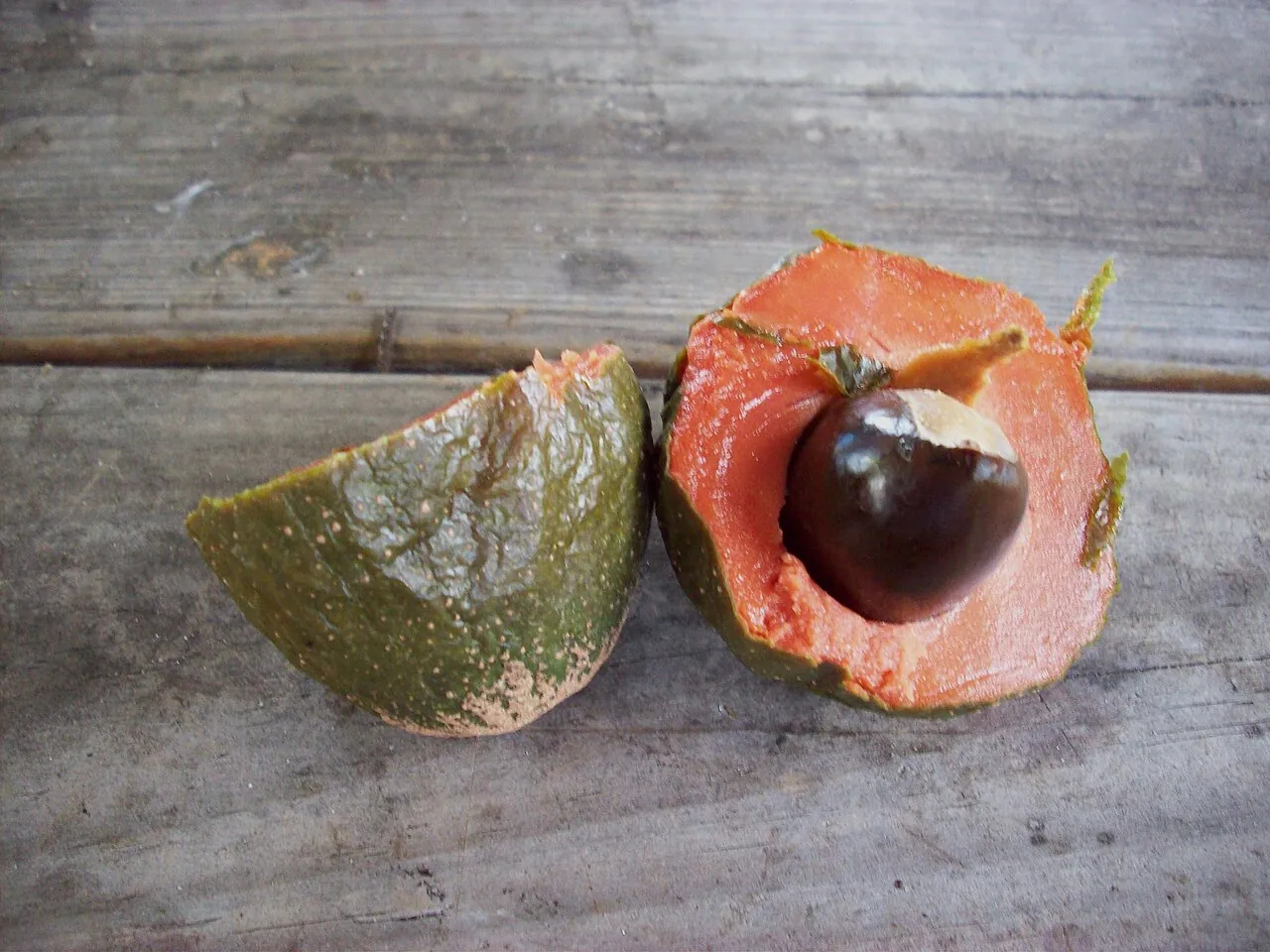
Green sapote, Pouteria viridis, is round to egg-shaped and 5–13 cm (2–5 in) long, with an olive-green skin and an orange-green blush. Inside, the flesh is orange to salmon, smooth and sweet, around one or two dark brown seeds.
A soft fruit needs gentle handling: its thin peel breaks easily.
Where it comes from
This is a fruit of the Central American highlands. It is common in the highlands of Guatemala and also grows in Honduras and, rarely, Costa Rica. In Guatemala it is called injerto, and it is most abundant in Alta Verapaz, in the north, at about 1,200–1,800 m (4,000–6,000 ft).
Trees also grow in Florida and eastern Australia; Lennox Community Gardens grows a Lara tree grafted from one west of Byron Bay.
How it's eaten where it grows
Usually the fruit is eaten fresh, but in some parts of Guatemala it is made into a preserve, like the one made from mamey sapote. The soft flesh is the starting point for drinks and desserts elsewhere too. In a Queensland grower's family, sapote smoothies get a little vanilla or coffee essence, and the fruit goes into milk drinks or alongside ice cream. At Tropical Fruit World in New South Wales, it goes into smoothies and makes a base for sorbet.
How it's grown
The tree grows in the highlands and does not thrive in hot lowlands; it takes no more than the lightest frost. Around Brisbane, grafted trees can begin fruiting in 3–5 years, sooner than seedlings at 5–7. A branch made to grow its own roots while still attached to the parent tree fruits on the same 3–5 year schedule. The fruit takes about 12 months to ripen after the tree flowers.
Good drainage matters. The Lara tree at Lennox Community Gardens sits on higher ground, because it doesn't like waterlogged soil.
When and where you'll find it
In Florida, the harvest usually runs from December through March. In Guatemala, the fruit usually ripens from October or November to February; it sells in town markets, picked hard so it can travel and eaten once it has softened. In New South Wales, Tropical Fruit World's sapote season arrives in November, with green sapote among its own harvest.
Sources · 5
- Crane and colleagues, Florida State Horticultural Society (2001)growables.org
- Lennox Community Gardenslennoxcommunitygardens.com.au
- Sub-Tropical Fruit Club of Queenslandstfc.org.au
- Tropical Fruit Worldtropicalfruitworld.com.au
- Wilson Popenoe, Manual of Tropical and Subtropical Fruits (1920)growables.org
Get it near Detroit
What it tastes like
Ripe flesh is moist, very sweet, and deep orange to salmon in color.
Ripe flesh is moist and sweet, deep orange to salmon in color, with a flavor similar to mamey sapote.
The thin peel shrivels somewhat as the fruit softens and ripens, while the flesh inside stays good to eat.
Choose, ripen, store, eat
1ChooseLight greenish-brown peel
Look for
- Light greenish-brown peel
- Orange-green blush
- Orange under calyx
Mature fruit has a light greenish-brown peel, an orange-green blush, and orange color beneath the persistent calyx.
2RipenRipens after picking4–14 days
Ripens after picking4–14 daysIn one trial, fruit softened in 4–14 days at 24–29°C (75–84°F).
3StoreHigher humidity reduces weight loss during storage
Higher humidity reduces weight loss during storage.
4EatFlesh · not peel, large seed
Eat
FleshNot eaten
PeelLarge seedThe flesh is the edible part; the peel and the single large seed are not eaten.
More tips
Worth knowing
- When buying locally grown green sapote, ask the grower how that harvest tastes; local spring and summer fruit can differ from a shipped batch.
- Orange skin isn't the only ripeness sign in green sapote; ask the grower which type it is and how its ripe fruit looks and feels.
Detroit, Michigan
When it’s good hereUsual monthsJust arrivedAt their bestLast chanceAll yearWhere it is in its usual monthsToday, Oct 22Grown hereIn season in your stateShips fromIn season where it grows
1 growing area, 1 countryUsual monthsToday, Oct 22

- New South Wales
- You
0 of 1 areas · October
One selection traces to scion wood from Honduras, supplied by Wilson Popenoe to William Whitman in 1954, with a grafted tree later donated to a Florida experiment station in 1962.
9 names in 4 languages
Cook it
Strange but trueHistoryWhere the name came from
Sources
Photos · 1
Sources
Green sapote · Fruitopia · checked Sep 23, 2026