Golden currant
Also called Clove currant · Pruterberry · Buffalo currantRibes aureum · Grossulariaceae family
Golden flowers give this currant its name; the ripe berries can be dark.
Find it near DetroitGet to know it
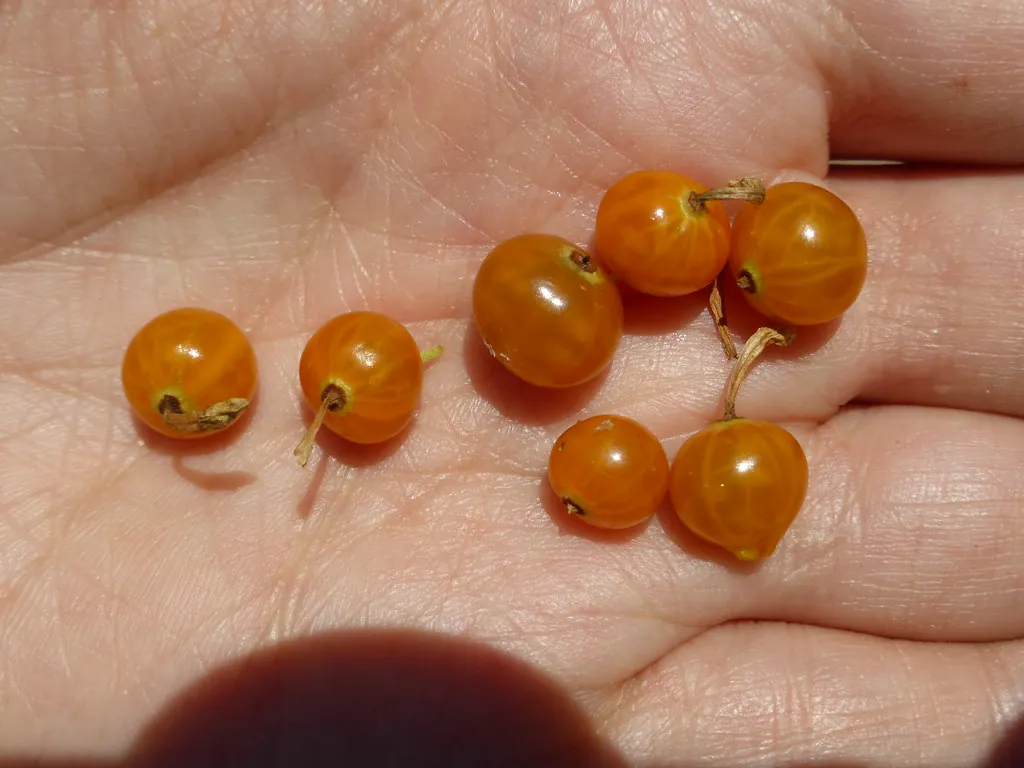
Golden currant is a North American berry with sweet flesh and plenty of seeds. Its name comes from its golden flowers; the berries ripen from yellow through red to black or dark purple. They make jam, pie and even ice cream.
What it is
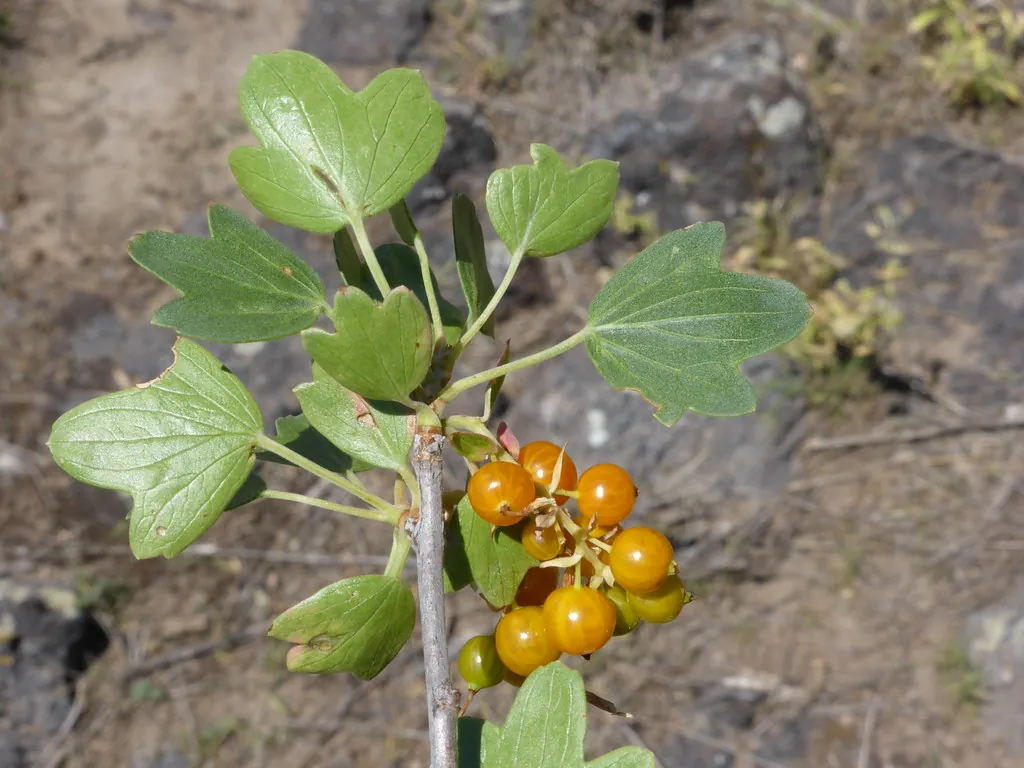
A golden currant measures just 0.6–1 cm (¼–⅜ in) across. It is round to oval, with numerous seeds inside. The berries pass through yellow and red as they darken, while the shrub has spineless branches and leaves shaped like small maple leaves. Its botanical name is Ribes aureum.
Where it comes from
Golden currant grows across western North America, from southern Canada to California, Arizona, South Dakota and western Texas. Its homes include stream banks, mountain meadows, thickets and roadside ditches.
It travelled to European gardens in the nineteenth century. Escaped garden plants now grow wild in western and central Europe, extending its range beyond its North American home.
How it's eaten where it grows
On the North American Plains, Indigenous peoples ate golden currants and their close relative, Ribes odoratum, fresh or dried. Dried berries mixed with dried buffalo meat or venison went into pemmican.
A Colorado preparation turns one batch of berries into both jelly and jam: the cooked juice drips through a jelly bag overnight, then the remaining pulp cooks with more sugar to make jam. Golden currants also go into pies and ice cream.
How it's grown
The shrub usually stands 1–3 m (3–10 ft) tall and sheds its leaves each year. It grows from seed or cuttings and spreads through underground stems, sending up new shoots. Dry, exposed ground and a range of soils suit it. Currants generally begin bearing fruit after about three years; the golden currant’s yellow flowers smell of cloves.
When and where you'll find it
The berries usually ripen from June through August, sometimes beginning in May. In one New Mexico garden, ripe berries were being picked individually by hand by mid-June in 2018. For a home harvest, the shrub is grown as a garden plant, and the Watershed Nursery Cooperative in Richmond, California, raises it as one.
Get it near Detroit
Sell fruit online? Add your business
What it tastes like
The fruit is sweet and flavorful but notably seedy.
The fruit is sweet and flavorful but notably seedy.
Choose, eat
1ChooseBluish-black fruit
Look for
- Bluish-black fruit
Ripe fruit is bluish-black; the name golden refers to the flowers, not the fruit color.
2EatBerries
Eat
BerriesThe berries are eaten fresh or made into jam, jelly and pie.
Detroit, Michigan
When it’s good here
Season not documented for Michigan.
14 varieties
12 names in 5 languages
Cook it
Strange but trueHistoryNatureWhere the name came fromCustoms and cultureFood and drink
Sources
Sources
Golden currant · Fruitopia · checked Sep 22, 2026
- flickr.com /photos/kz_yb/36743161963/
- flickr.com /photos/kz_yb/37366172626/
- fs.usda.gov /wildflowers/plant-of-the-week/ribes_aureum.shtml
- hookriflespade.com /currant-pie/
- plants.sc.egov.usda.gov /DocumentLibrary/plantguide/pdf/cs_riauv.pdf
- southwestgardensmith.com /2018/06/16/golden-currants-consistent-production-even-in-drought/
- unps.org /edible/GoldenCurrantJellyandJamRecipes.pdf
- watershednursery.com /nursery/plant-finder/ribes-aureum-2/