Gamboge fruit
Garcinia xanthochymus · Clusiaceae family
A yellow Garcinia used in preserves, with a name also associated with dye material.
Find it near DetroitGet to know it
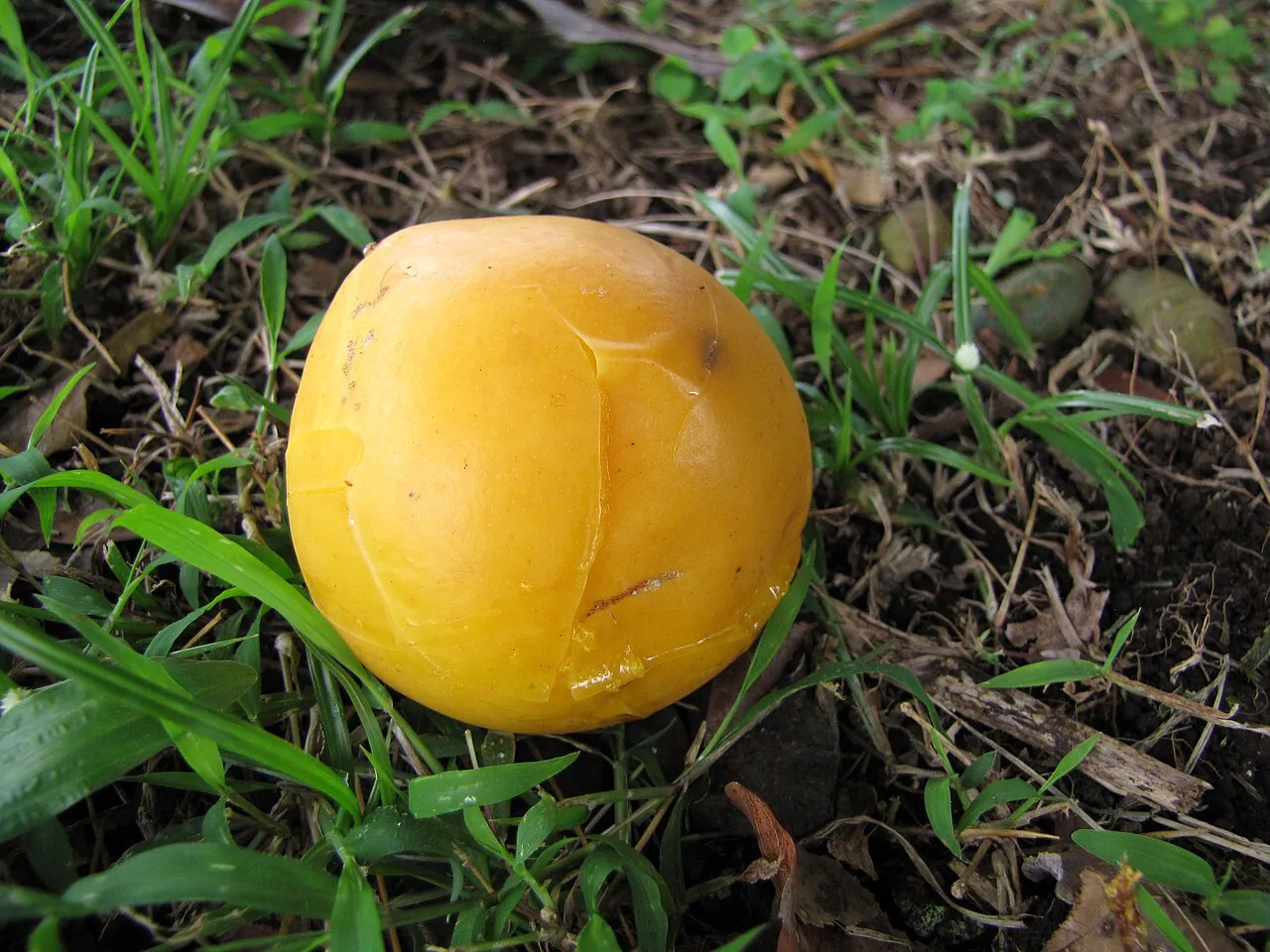
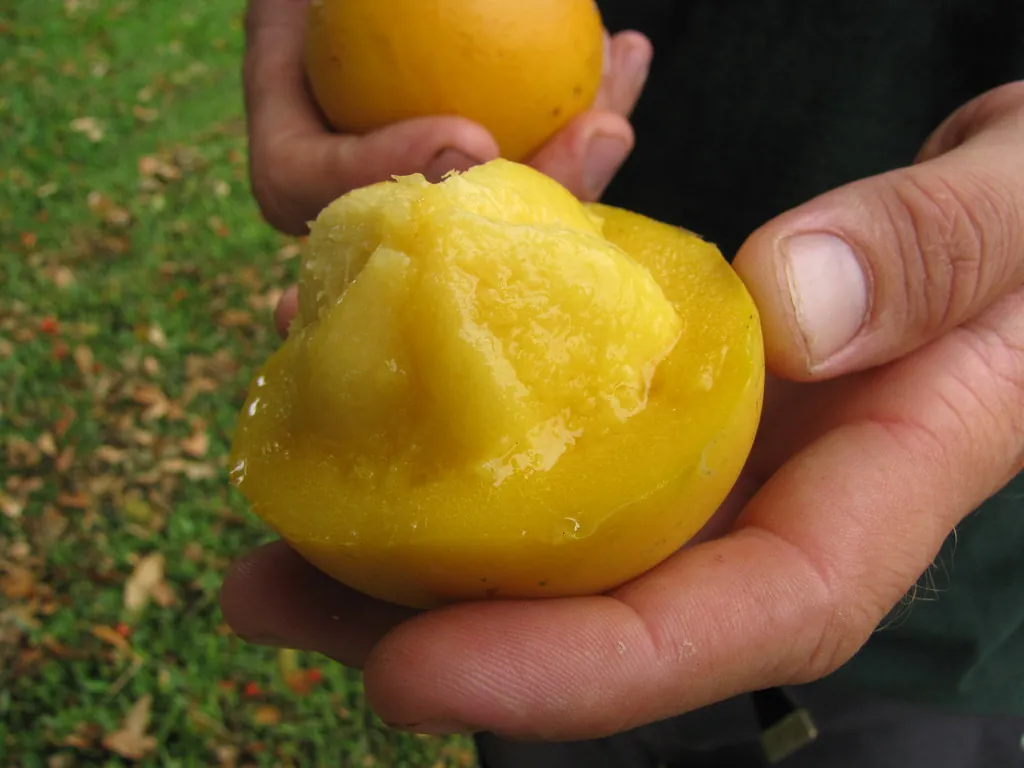
Gamboge fruit is a yellow-orange relative of mangosteen with a pointed tip and sour to sweet-sour flesh. The yellow pulp surrounds about five seeds. In West Sumatra, the fruit takes a savory turn: split and dried, it becomes a sour ingredient in beef rendang.
What it is
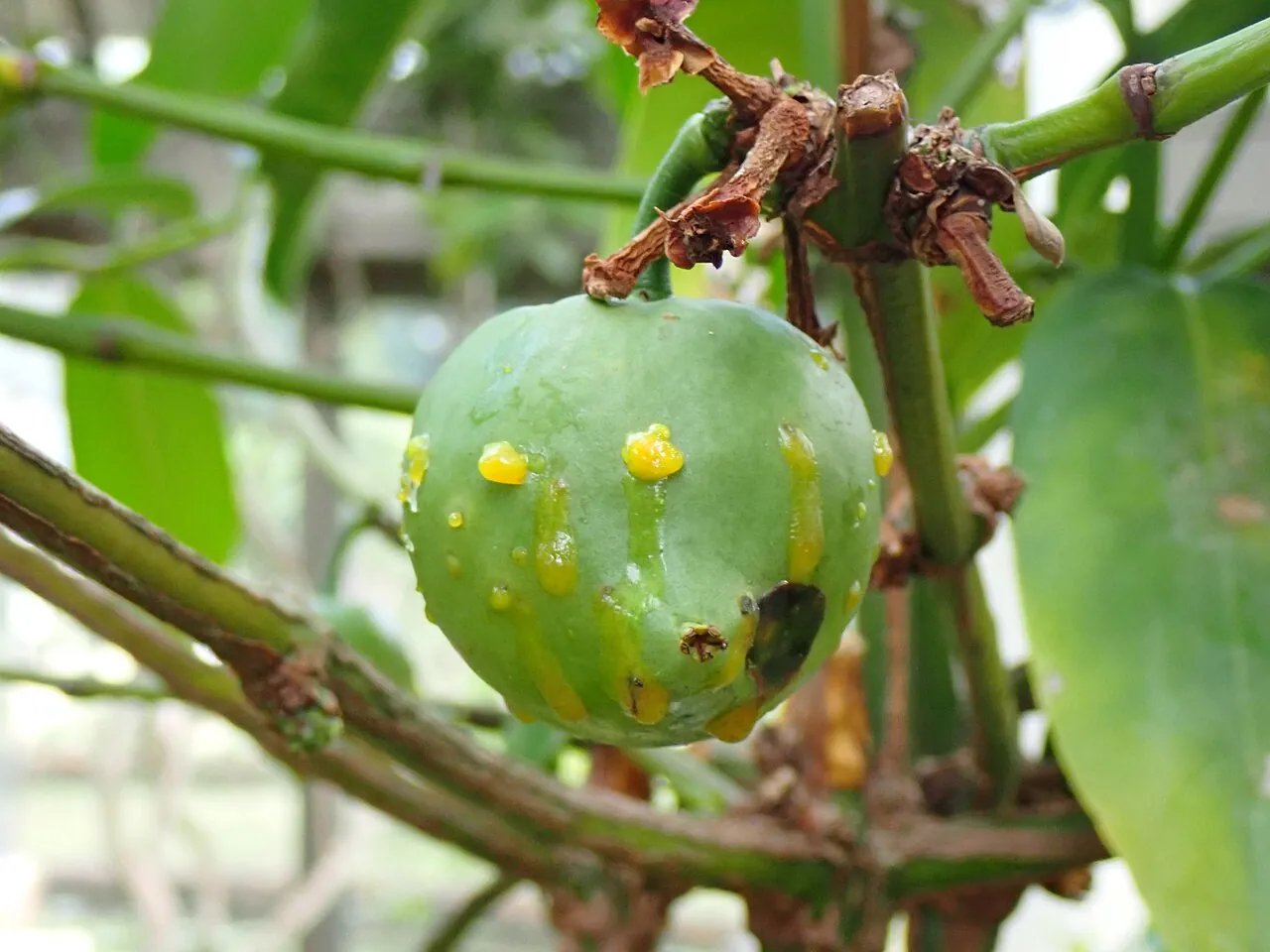
Also called false mangosteen, Garcinia xanthochymus has an almost round fruit measuring 5–8.9 cm (2–3.5 in) across. Ripe skin is yellow to pale orange. Both the yellow pulp around the seeds and the fleshy rind are edible, with a sharp taste that can carry some sweetness.
Where it comes from
Gamboge fruit grows naturally across a wide stretch of Asia, from India, Bangladesh, Nepal and Bhutan through Myanmar to Thailand and Vietnam. In the eastern Himalayas, it grows in hill forests. It is cultivated widely in Southeast Asia, and Albert Jaeger introduced the species to Hawaii in 1900.
How it's eaten where it grows
In West Sumatra, Minangkabau cooks use dried gamboge fruit in rendang. Beef cooks with coconut milk, chili, garlic, ginger, galangal and lemongrass; the sour fruit goes in as the mixture reaches its drying stage. Cooking continues until the coconut milk has dried down and the meat is soft.
The fruit also goes into preserves, jams and curries across Southeast Asia.
How it's grown
The tree keeps its leaves year-round. They are dark green, shiny and leathery, with clusters of small white flowers among them. Male and female flowers usually grow on separate trees. Growers can start plants from seed; they grow in full sun or partial shade, in moist, fertile soil that drains well.
When and where you'll find it
In Thailand, gamboge trees usually flower and fruit repeatedly, nearly year-round. In West Sumatra, mature fruit is split before drying; elsewhere in Southeast Asia it also becomes vinegar, jam and preserves.
Get it near Detroit
Sell fruit online? Add your business
What it tastes like
The flesh and pericarp taste sour to sweet-sour. As a dried souring ingredient in dishes like rendang, it's a different experience from eating the fresh fruit.
Choose, eat
1ChooseYellow to orange
Look for
- Yellow to orange
Mature fruit is yellow to orange.
2EatYellow pulp
Eat
Yellow pulpThe yellow pulp around the seeds is edible.
Detroit, Michigan
When it’s good here
Season not documented for Michigan.
19 names in 10 languages
- Bứa mủ vàngVietnamese
- ডেফলBangla
- キヤニモモJapanese
Cook it
Strange but trueScienceWhere the name came from
Sources
Sources
Gamboge fruit · Fruitopia · checked Sep 22, 2026
- flickr.com /photos/starr-environmental/24517573633/
- indonesian-medan-food.blogspot.com /2015/09/lontong-gulai-cubadak-lontong-gulai.html
- journal.unnes.ac.id /nju/teknobuga/article/download/43439/15070
- nparks.gov.sg /florafaunaweb/flora/2/9/2931
- ntbg.org /database/plants/detail/garcinia-xanthochymus
- peerj.com /articles/16572/
- rayon-de-serre.com /tropical-plants/584-garcinia-xanthochymus.html