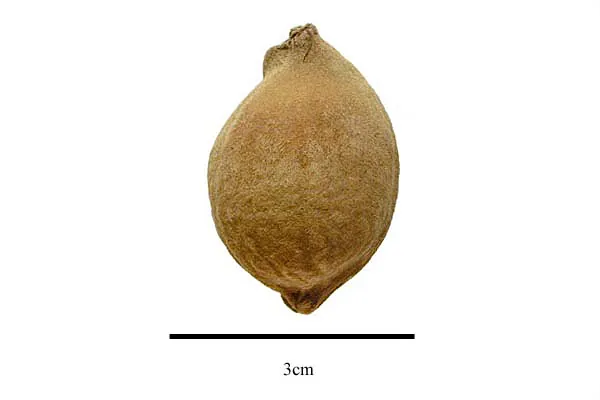
False yam fruit
Icacina oliviformis
The ripe fruit pulp is a different food from this plant's much-discussed underground tuber.
Find it near DetroitGet to know it
False-yam fruit is a small red fruit with a thin layer of sweet, jelly-like pulp. In Guinea-Bissau it is called manganaça and eaten fresh; the same shrub also produces an enormous underground tuber.
What it is
False-yam fruit grows on Icacina oliviformis, a woody herb or shrub with a large underground tuber. The small red fruit has just a thin layer of sweet, jelly-like flesh. That ripe pulp is eaten fresh. The seed kernels and the tuber are poisonous until they have been specially processed.
Where it comes from
The plant grows across tropical Africa, from Senegal to southern Nigeria and farther east into the Central African Republic and Sudan. It lives in savanna scrub, near villages and on old farmland, including yam fields.
In Guinea-Bissau it grows on land left fallow between crops. In Senegal, its fruit has been harvested in the central Kaffrine region. An older botanical name for the same plant is Icacina senegalensis.
How it's eaten where it grows
In Guinea-Bissau, manganaça fruit is eaten fresh for its sweet pulp. Its seeds take a different route to the table: after prolonged boiling and removal of their coverings, they become flour for dishes with meat, fish or vegetables. Processed kernels also combine with millet or beans.
The underground tuber, poisonous raw, has served as famine food after days soaking in running water to remove its bitterness. Fresh pulp, prepared seed flour and processed tuber are three separate foods from one plant.
How it's grown
False yam grows best in tropical places with distinct wet and dry seasons. It needs sun and grows wild in light, sandy soil. It can be raised from seed or by dividing the tuber. Once established, it spreads quickly into newly cleared or cultivated ground.
When and where you'll find it
In Guinea-Bissau, false yam enters local trade as seeds, alongside the fresh fruit eaten where the shrub grows. The seeds harden after removal from the fruit and keep for a long time. The flour used in cooking comes from those specially processed seeds.
Get it near Detroit
Sell fruit online? Add your business
What it tastes like
Ripe fruit is red, with a thin layer of sweet, gelatinous pulp.
Ripe fruit is red, with a thin layer of sweet, gelatinous pulp.
Choose, eat
1ChooseRed, ripe fruit
Look for
- Red, ripe fruit
Look for red, ripe fruit for the edible pulp; unripe fruit, seeds and the underground tuber are not interchangeable with it.
2EatRipe pulp · not tubers, kernels
Eat
Ripe pulpNot eaten
TubersKernelsThe ripe pulp is edible on its own. The tubers and kernels require special processing and can be poisonous if untreated.
Detroit, Michigan
When it’s good here
Season not documented for Michigan.
Strange but trueNature
Sources
Sources
False yam fruit · Fruitopia · checked Sep 22, 2026