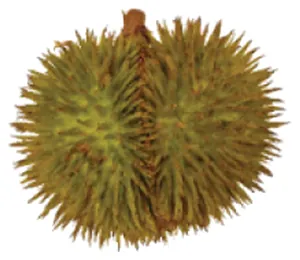
Durio graveolens fruit
Also called Red-fleshed durian · Orange-fleshed durian · Yellow durianDurio graveolens · Malvaceae family
Red, orange and yellow flesh do not simply mark stages of the same durian taste.
Find it near DetroitGet to know it
Durio graveolens opens to flesh that can be red, orange or yellow. The thick red form is creamy and mild, closer to avocado than a sugary dessert. Its shell can be bright yellow, giving little hint of the colour inside.
What it is
This is Durio graveolens, a separate species from the common durian, Durio zibethinus. Red Prawn belongs to that common species. Durio graveolens comes in yellow-, orange- and red-fleshed forms; those colours belong to different forms of the fruit.
The red form called Marahang or Durian Merah has thick, mild flesh, with little sweetness. Orange and yellow forms can taste nutty and cheesy. The orange form grown in Sarawak also has a slightly bitter edge.
Where it comes from
Wild trees grow in the lowland forests of Borneo, Peninsular Malaysia, Sumatra, Thailand and the Philippine island of Palawan. People also grow them in villages across this range. In Singapore's National Orchid Garden, two large trees have borne orange fruit with bright red flesh inside.
How it's eaten where it grows
In Kinabatangan, Sabah, the red form is called Alau. Its flesh goes into Sabah tempoyak, a cooked dish. A local recipe starts by frying garlic and onion, then adding chillies and anchovies. The seedless durian flesh goes in next, followed by sugar and salt.
This version gets its character from cooked durian and seasonings. The familiar tempoyak made from common durian gets its sourness through fermentation.
How it's grown
Durio graveolens can become a forest giant, reaching 50 m (164 ft), with broad buttress roots bracing its trunk. Harvesting the red Alau form takes careful timing: the fruit starts to split while it is still attached to the tree.
Harvesters pick it just as the seams begin opening, before the flesh and seeds drop out. The orange form falls when ripe.
When and where you'll find it
Borneo’s produce markets are a place to encounter fresh Durio graveolens. It fruits at the beginning of the common-durian season. At Kota Kinabatangan market in Sabah, the red fruit also reaches the stall as tempoyak, ready to eat as a cooked side dish.
Get it near Detroit
What it tastes like
Red-fleshed Durio graveolens is bland and low in sugar.
Red-fleshed Durio graveolens tends to be low in sweetness but especially creamy; the orange-fleshed form has a different balance of bitterness, texture and aftertaste.
Choose, eat
1ChooseNo visible defects
Look for
- No visible defects
- Minimal splitting
Look for ripe fruit without visible defects and with minimal splitting — Durio graveolens fruit can split open on the tree.
2EatFleshy aril · not seed
Eat
Fleshy arilNot eaten
SeedThe fleshy aril, separated from the seed, is the edible part.
Detroit, Michigan
When it’s good hereUsual monthsJust arrivedAt their bestLast chanceAll yearWhere it is in its usual monthsToday, Oct 22Grown hereIn season in your stateShips fromIn season where it grows
18 names in 7 languages
- Isu Kuningroot
Cook it
Strange but trueNatureWhere the name came fromCustoms and culture
Sources
Photos · 1
Sources
Durio graveolens fruit · Fruitopia · checked Sep 22, 2026