Conkerberry
Carissa spinarum · Apocynaceae family
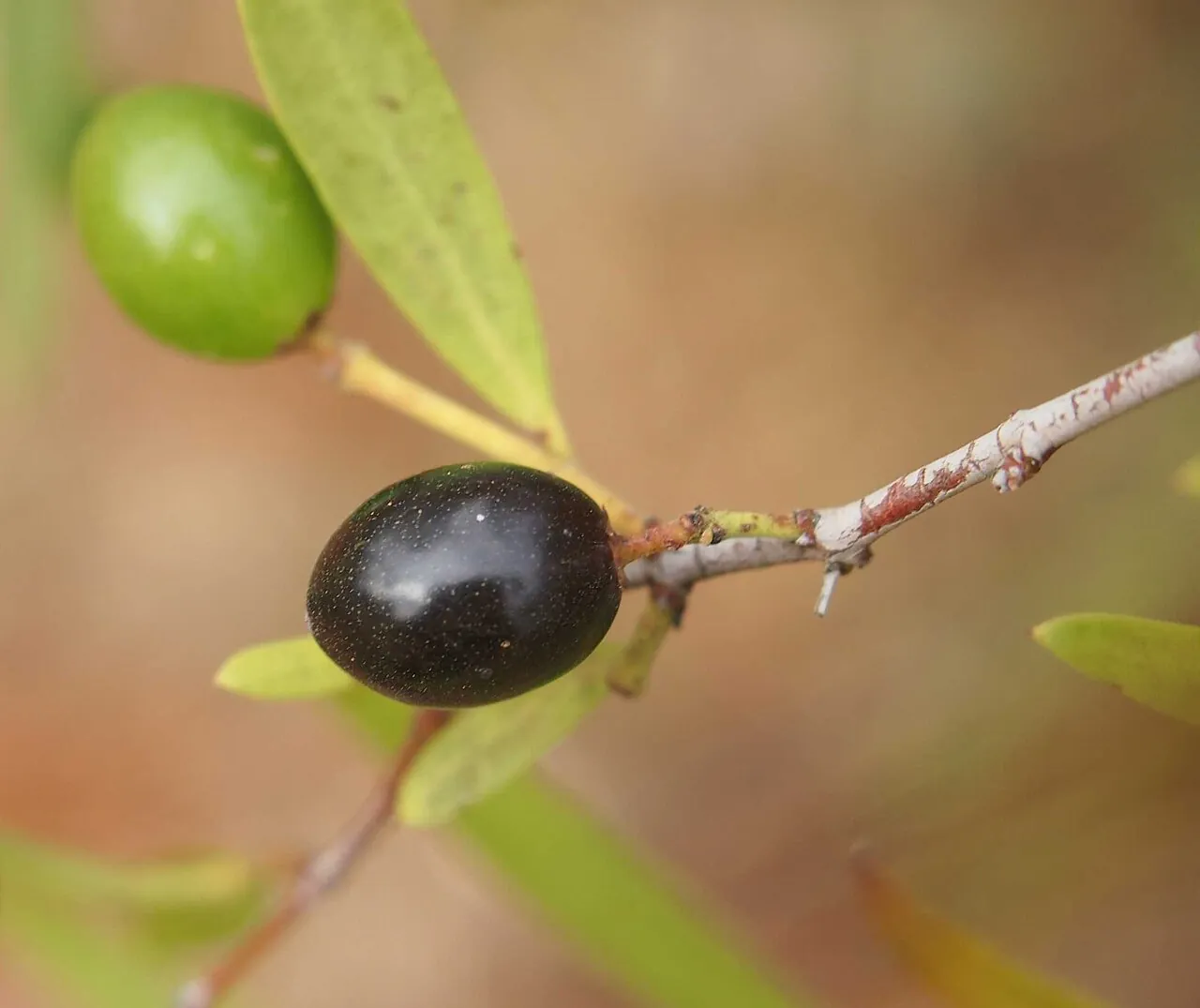
A small dark Carissa fruit that shares its common name with several other species, so identity matters.
Find it near DetroitGet to know it
Conkerberry is a sweet, purple-black fruit from a thorny shrub found across Africa, Asia and Australia. In the western Himalayas, it is called garnae and goes into jam with sugar and lemon juice. In Kenya, the berries are eaten whole.
What it is
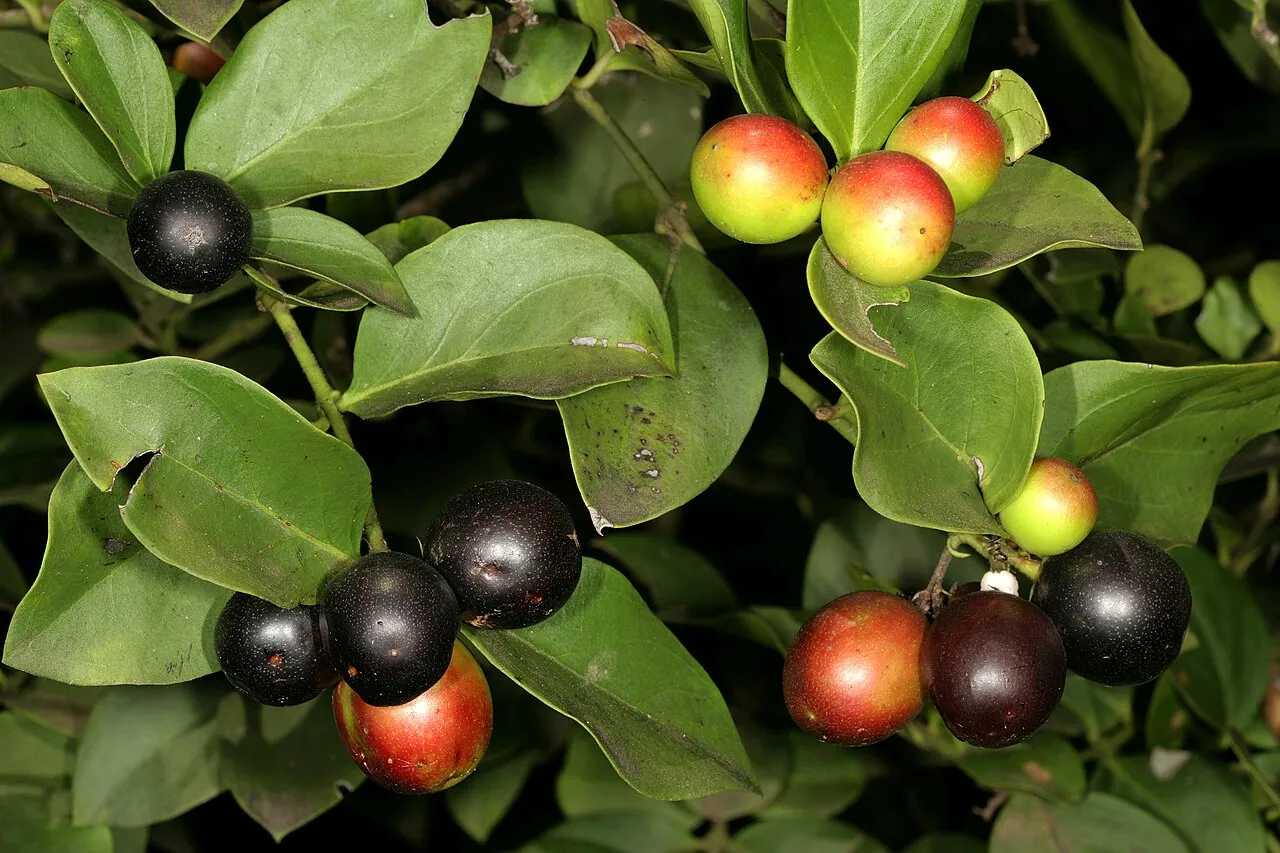
Conkerberry is Carissa spinarum, also known as Carissa edulis. In Kenya, its rounded berries measure about 1 cm (0.4 in) across and contain two to four seeds. The ripe skin is purple-black and the fruit tastes sweet.
The shrub carries shiny, leathery green leaves in opposite pairs. Fragrant pink-white flowers cluster at the ends of branches, and the plant contains milky sap.
Where it comes from
Its African range stretches from Senegal to Somalia and south to Botswana and Mozambique. It also grows from Yemen to India. In Kenya, it occupies forest edges, thickets and rocky hillsides. In Australia’s New South Wales, it grows in inland woodland and scrub and in drier coastal rainforest.
How it's eaten where it grows
In Kenya, children and adults eat ripe conkerberries whole. In the western Himalayas, garnae is gathered from wild plants and eaten fresh or cooked.
For garnae jam, the berries are softened in boiling water, cooled and mashed. The pulp then cooks gently with sugar until thick, with lemon juice stirred in at the end. The preparation turns a small wild berry into a spoonable preserve.
How it's grown
In Kenya, conkerberry grows as an evergreen shrub or climbing plant, usually reaching up to 5 m (16 ft). Seeds germinate readily, and young seedlings often appear beneath the parent bush. Fresh seed works best because it soon loses its ability to sprout.
The thorny branches also make the plant useful as a living fence. Grown from seed, it develops into a hedge that is impossible to get through.
When and where you'll find it
In Bungoma, Kenya, fruit usually appears from April to July and again from November to December. It is eaten locally and occasionally sold in markets. In the western Himalayas, fresh garnae is a locally gathered food, with homemade jam offering another way to eat the harvest.
Sources · 4
Get it near Detroit
What it tastes like
Ripe conkerberries are purple-black and sweet.
Ripe conkerberries are purple-black and sweet, though taste can vary by region and population.
Choose, eat
1ChooseRounded
Look for
- Rounded
- Purple-black
Ignore
- Color alone
Ripe conkerberries are rounded and turn purple-black. Color alone doesn't identify an unfamiliar wild berry; eat only berries from a plant you know.
2EatRipe fruit
Eat
Ripe fruitEat the ripe fruit. Other parts of the plant have traditional non-food uses, not covered here.
Detroit, Michigan
When it’s good hereUsual monthsJust arrivedAt their bestLast chanceAll yearWhere it is in its usual monthsToday, Oct 22Grown hereIn season in your stateShips fromIn season where it grows
13 names in 7 languages
- كاريس شوكيArabic
Cook it
Strange but trueWhere the name came from
Sources
Sources
Conkerberry · Fruitopia · checked Sep 22, 2026