Coastal red milkwood fruit
Also called Coastal red milkwoodMimusops caffra
A small orange-red fruit from southern African coastal vegetation, with a sweet, starchy pulp. Its story is rooted in dunes and coastal forest as much as in the kitchen.
Find it near DetroitGet to know it
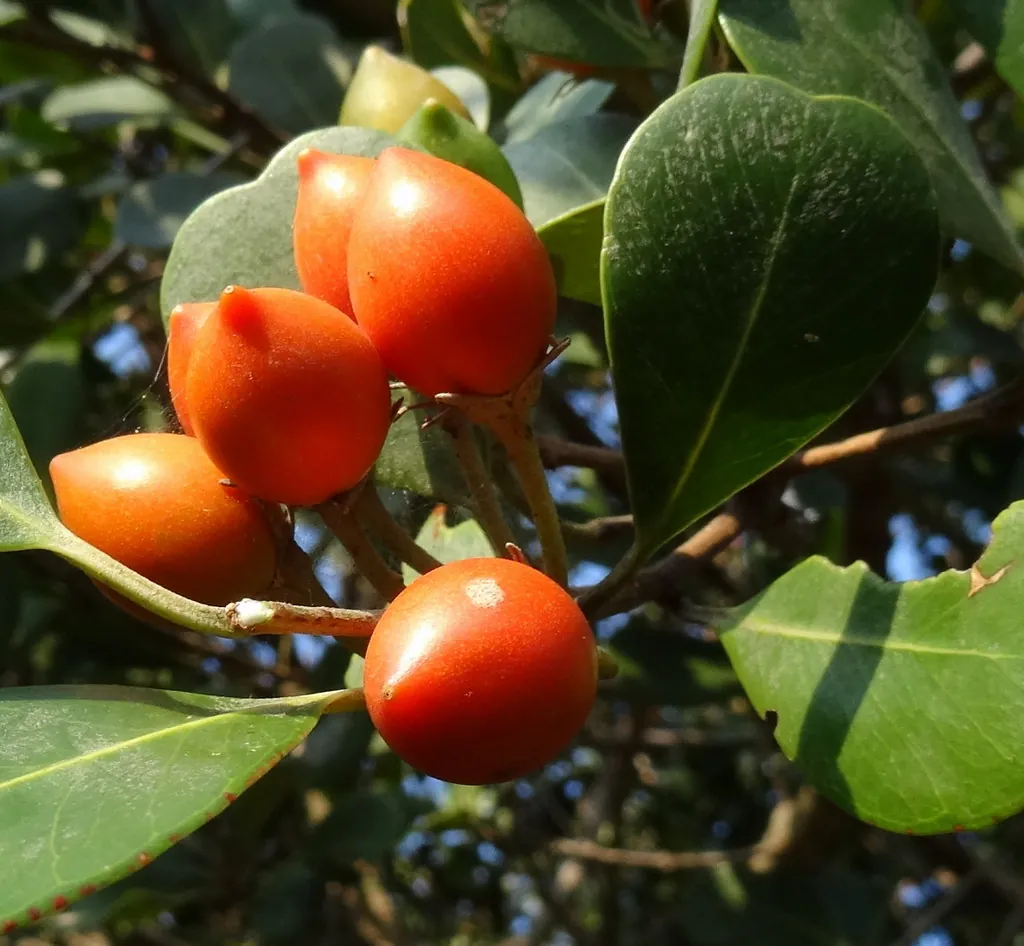
Coastal red milkwood bears small orange-red fruits with sweet, starchy flesh. The pulp feels mealy rather than juicy, and each fruit holds one seed. Its home is the sand dunes and coastal forests of Mozambique and eastern South Africa.
What it is
The egg-shaped fruit reaches about 2.5 cm (1 in) long. Inside, the single seed takes up 1–1.5 cm (about ½ in), leaving a layer of sweet pulp around it. Orange to red is its ripe colour.
The tree belongs to the Sapotaceae family. Before the fruit develops, small white or cream flowers open like stars among the leaves.
Where it comes from
This is a fruit of the southeastern African coast, including Port Alfred and Bathurst in South Africa’s Eastern Cape, Durban in KwaZulu-Natal and Maputo in Mozambique. It grows in sandy coastal thickets and in the forest sheltered behind them. Outside its native home, people also plant it as an ornamental tree in the United States.
How it's eaten where it grows
In South Africa, people pick the fruit and eat it raw. The same pulp also goes into jelly and alcoholic drinks. Its sweetness comes with a starchy, mealy texture, so a fresh fruit feels more like a soft, floury bite than a mouthful of juice.
How it's grown
Wind shapes this tree. On exposed dunes it often stays below 5 m (16 ft), with salt spray and sea winds battering its leaves. Behind the dunes, sheltered trees can reach 20 m (66 ft). The trunk is often twisted, with dark grey, wrinkled bark.
Growers raise it from seed in full sun; young garden trees need water through dry spells. It also helps reclaim sand dunes. Monkeys eat the fruit and carry its seeds, while Cape parrots feed on the fruit in Eastern Cape forests.
Get it near Detroit
Sell fruit online? Add your business
What it tastes like
The pulp is mealy, sweet and starchy, used for jelly and fermented drinks.
The pulp is sweet, starchy and mealy, unlike a watery berry.
The ripe fruit is an orange-to-red, single-seeded berry, about two and a half centimeters long.
Choose, eat
1ChooseOrange-red fruit
Look for
- Orange-red fruit
Ripe fruit is orange-red.
2EatPulp
Eat
PulpThe pulp is eaten fresh in rural South African communities.
Detroit, Michigan
When it’s good here
Season not documented for Michigan.
Strange but trueNatureWhere the name came from
Sources
Photos · 1
Sources
Coastal red milkwood fruit · Fruitopia · checked Sep 22, 2026