Chupa chupa
Also called South American sapote · Matisia cordataQuararibea cordata
Soft orange-yellow pulp surrounds large seeds threaded with fibers, making texture central to the experience.
Find it near DetroitGet to know it
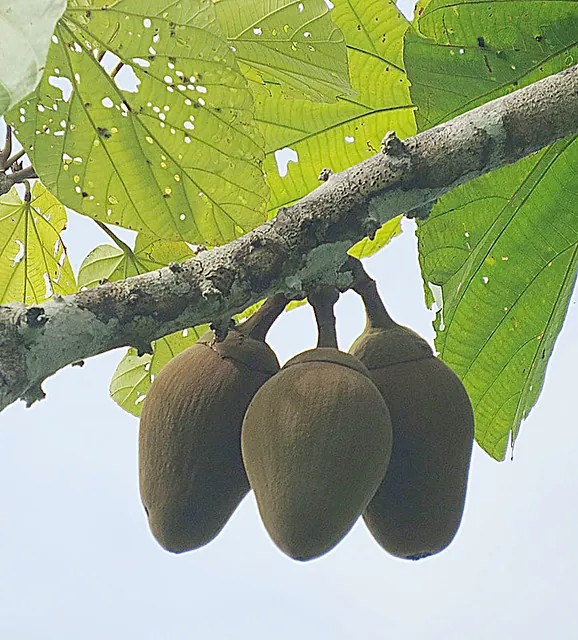
Chupa chupa hides soft, sweet, orange-yellow flesh beneath a downy brown-green skin. It is juicy but stringy: long fibres run out from the large seeds, so eating one means working the flesh away from them.
What it is
The fruit is 10–14.5 cm (4–5¾ in) long, with a small rounded knob at one end. Its thick, greenish-brown skin feels leathery and downy. Inside, two to five large seeds send long fibres through the flesh. As the fruit ripens, it softens and its green skin turns browner.
Its botanical names are Matisia cordata and Quararibea cordata, and it belongs to the mallow family, Malvaceae. Where it grows it is mostly called sapote or zapote, names also given to several other fruits, above all the sapote Pouteria sapota.
Where it comes from
Chupa chupa grows wild in the lowland rainforests of Peru, Ecuador and neighbouring Brazil. It is also common in southwestern Venezuela and in Colombia's Cauca and Magdalena valleys.
Seeds from Iquitos, Peru, travelled to Florida with William Whitman in 1964. He raised seedlings and shared them with other growers; B.C. Bowker's tree in Miami became the first of that group to bear fruit, in 1973.
How it's eaten where it grows
In its South American home, chupa chupa is eaten fresh, working the soft flesh away from the seeds. Less fibrous fruit also makes juice.
Newer Colombian recipes, written up in 2018, take it further. A chutney cooks the pulp with onions, shallots, ginger and vinegar. Arequipe de zapote cooks strained pulp down with sugar to the thick texture of arequipe, and a zapote jelly made from the juice fills chocolates.
How it's grown
In the wild the tree can reach 40–45 m (130–145 ft), though in cultivation it is often no more than 12 m (40 ft). It is commonly raised from seed and grows best in full sun with plenty of moisture.
Broad, heart-shaped leaves, usually 15–30 cm (6–12 in) long, cluster near the branch ends. Flowers appear on the trunk as well as the smaller branches, where hummingbirds, bees and wasps carry their pollen.
When and where you'll find it
Fresh chupa chupa reaches produce markets in Colombia, Ecuador and towns of the western Brazilian Amazon, including Tefé. In Popayán, Colombia, Ecuador-grown fruit usually appears from February through May. Fruit from the surrounding Cauca region follows from July through September.
Get it near Detroit
What it tastes like
Chupa chupa has soft, juicy, sweet orange-yellow flesh, with long fibers extending from the seeds.
The flesh is soft, juicy and sweet, with long fibers extending from the seeds — the amount of fiber affects both eating and whether the pulp works well for juice.
How to buy it
1EatFlesh around seeds · not seeds
Eat
Flesh around seedsNot eaten
SeedsThe flesh surrounding the seeds is eaten fresh; less fibrous portions are also used for juice.
Detroit, Michigan
When it’s good hereUsual monthsJust arrivedAt their bestLast chanceAll yearWhere it is in its usual monthsToday, Oct 22Grown hereIn season in your stateShips fromIn season where it grows
Cook it
Strange but trueNatureWhere the name came from
Sources
Photos · 1
Sources
Chupa chupa · Fruitopia · checked Sep 22, 2026