Cagaita
Also called Stenocalyx dysentericusEugenia dysenterica · Myrtaceae family
A delicate Cerrado fruit whose promise is larger than any single laboratory score.
Find it near DetroitGet to know it
Cagaita is a small yellow-green fruit from Brazil’s Cerrado, with soft, juicy flesh and a tart bite. It holds enough water to cook into jelly with sugar and no added liquid. Its cream-coloured pulp also goes into sorbet.
What it is
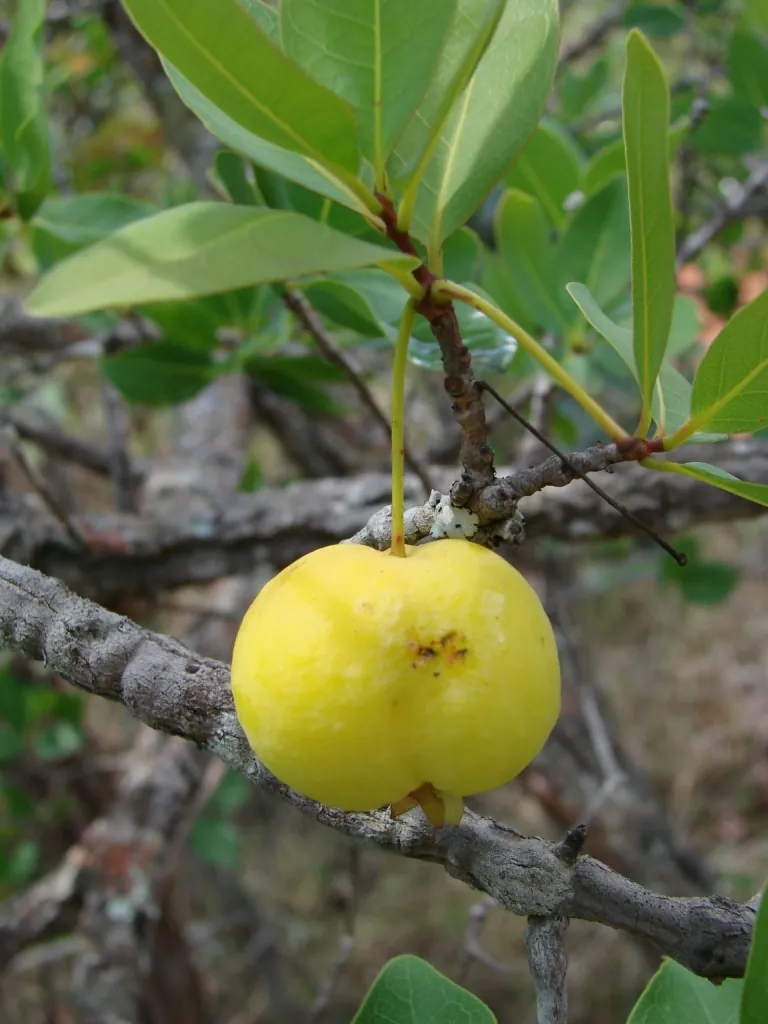
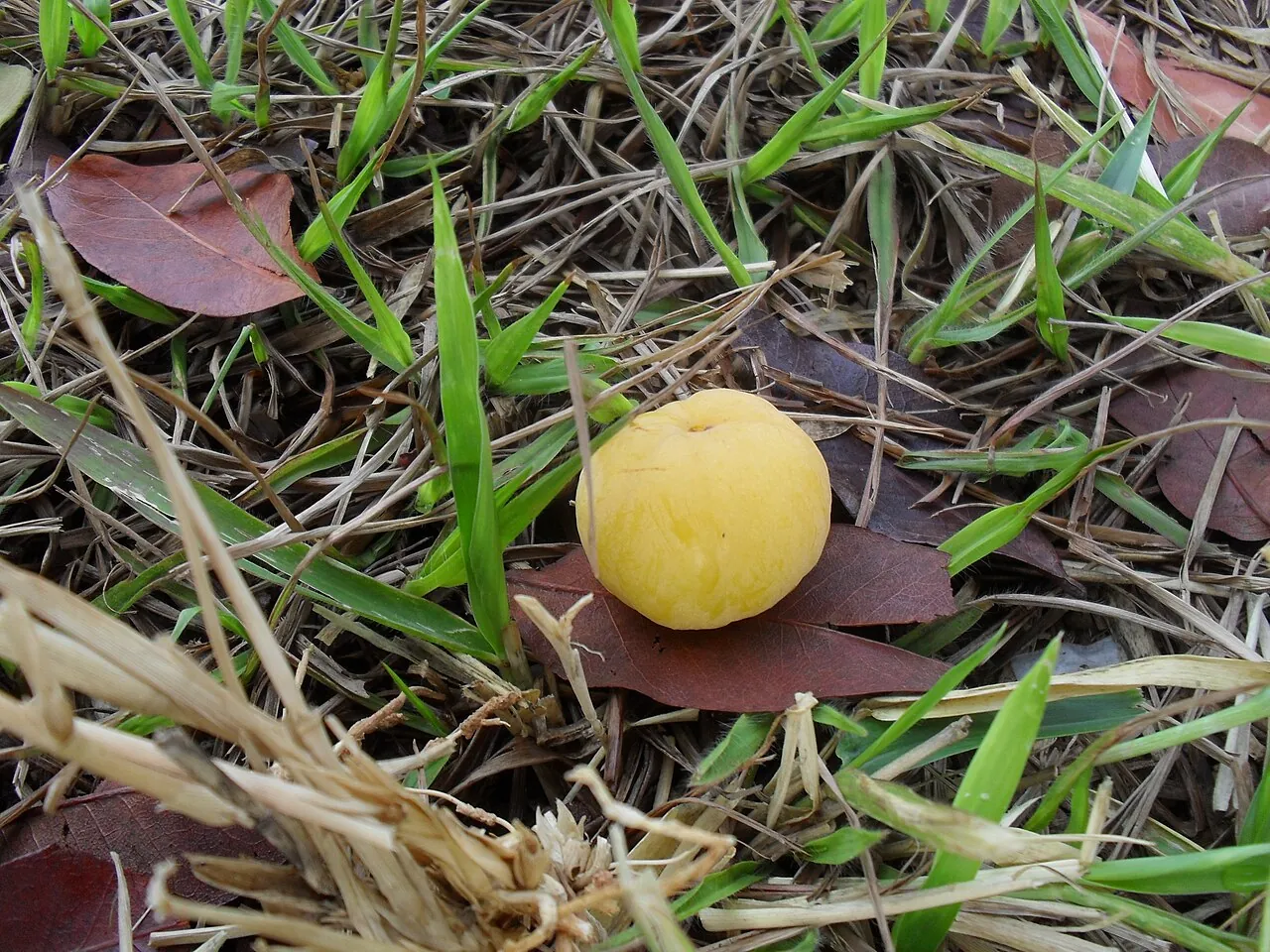
Cagaita is Eugenia dysenterica, a tree in the myrtle family. The fruit measures about 3 cm (1¼ in) across. A thin skin, green to yellow, surrounds cream-coloured flesh and a few white seeds. The pulp is soft, acidic and so juicy that juice makes up about 90 percent of the fruit.
Where it comes from
Cagaita comes from the Cerrado, the savanna region of central Brazil. It grows mainly in Goiás, Tocantins, Mato Grosso do Sul, Bahia and Minas Gerais.
In Chapada Gaúcha, in northern Minas Gerais, Cerrado vegetation meets the Caatinga. Families in the Coopsertão cooperative gather native fruits from their own yards and from native vegetation, turning them into foods for their households and for sale.
How it's eaten where it grows
In the Cerrado, geleia de cagaita starts with green fruit, its seeds removed. The fruit cooks with sugar until it reaches jelly consistency; its own juice supplies the liquid.
For cagaita sorbet, Rita Medeiros, author of Gastronomia do Cerrado, blends the pulp with sugar and water, then freezes and beats the mixture again and again. Cagaita also goes into juices, sauces, sweets, ice cream and mousses.
How it's grown
The tree reaches up to 10 m (33 ft) tall, and its flowers feed bees. During the dry season, old leaves fall and reddish new leaves appear alongside abundant, fragrant white flowers. Flowers can set fruit with pollen from the same plant or with pollen from another tree. The usual fruiting season follows from September to November.
When and where you'll find it
Cagaita usually fruits from September to November. It's eaten mostly in its home region, fresh or made into ice cream, liqueurs, juices and sweets.
In Chapada Gaúcha, Coopsertão makes cagaita sweets and jellies among its Cerrado fruit products, and they're sold through Central do Cerrado's online shop.
Sources · 8
- Central do Cerradocentraldocerrado.org.br
- Embrapa Cerrados, Frutas Nativas do Cerrado Brasileiroinfoteca.cnptia.embrapa.br
- Federal University of Mato Grosso do Sulsabores.ufms.br
- ISPN, Cerratingacerratinga.org.br
- Rita Medeiros, Fartura Brasilfarturabrasil.com.br
- Rita Medeiros, Gastronomia do Cerrado, via ISPNcerratinga.org.br
- Rodrigues and colleagues, Embrapa repositoryalice.cnptia.embrapa.br
- Wikipediaen.wikipedia.org
Get it near Detroit
What it tastes like
The pulp is acidic. Fruit from different collecting sites in Minas Gerais varies in size and composition, with no one site consistently best.
The pulp is acidic. Fruit from different collecting sites in Minas Gerais varies in size and composition, with no one site consistently best.
Choose, store, eat
1ChooseLight yellow to greenish-yellow
Look for
- Light yellow to greenish-yellow
Cagaita has a fragile skin and turns light yellow to greenish-yellow.
2StoreFridge, after picking
- FridgeAfter picking
Keep cagaita refrigerated after picking.
3EatPulp
Eat
PulpEat the pulp fresh, or use it in sweets, jellies, ice cream and juice.
Detroit, Michigan
When it’s good hereUsual monthsJust arrivedAt their bestLast chanceAll yearWhere it is in its usual monthsToday, Oct 22Grown hereIn season in your stateShips fromIn season where it grows
Cook it
Strange but trueScienceWhere the name came from
Sources
Sources
Cagaita · Fruitopia · checked Sep 23, 2026