Passiflora cincinnata fruit
Also called Maracujá silvestre · Crato passionvinePassiflora cincinnata · Passifloraceae family
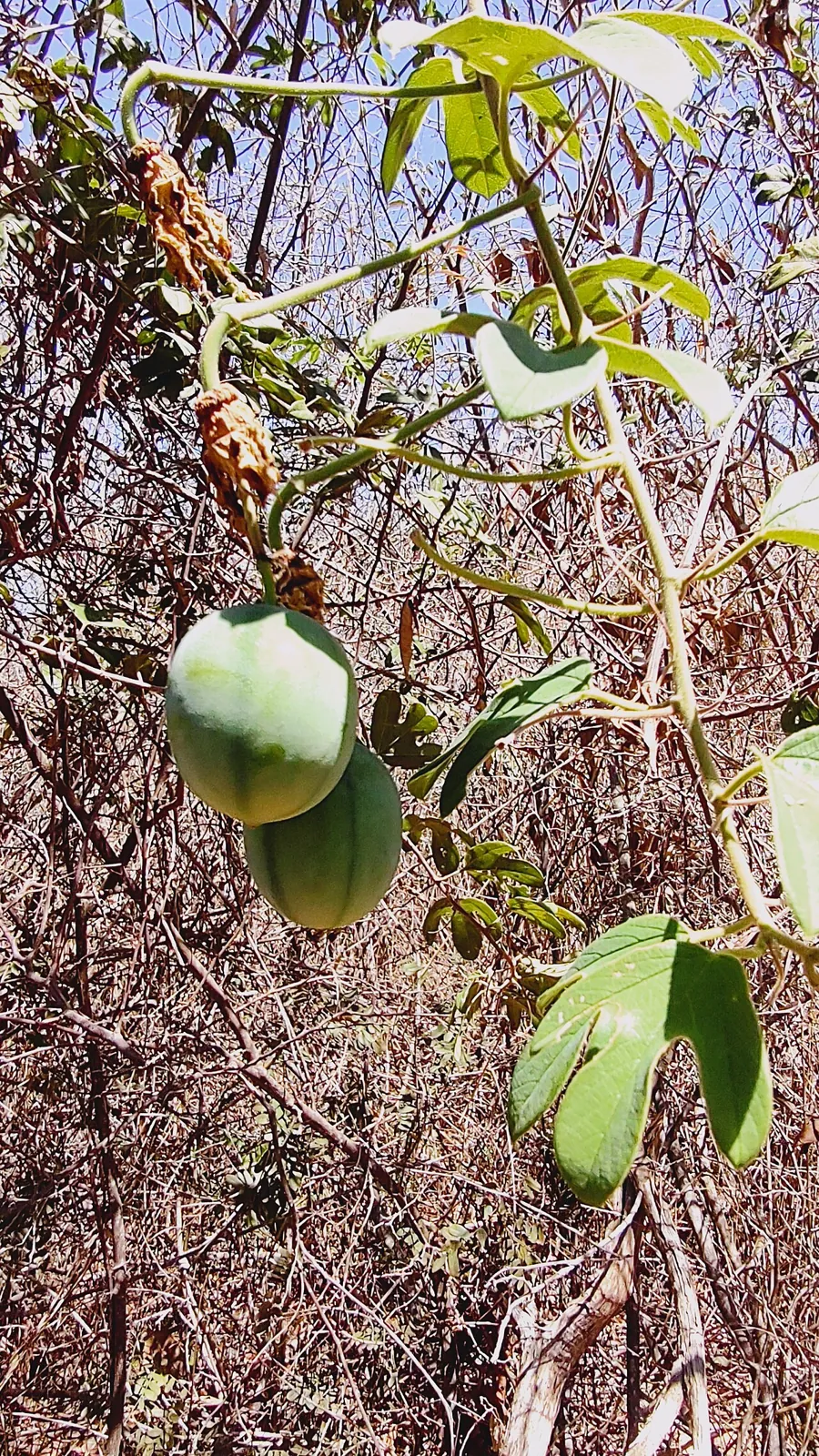
A ripe passionfruit can stay green—and still be intensely sour.
Find it near DetroitGet to know it
Caatinga passionfruit keeps its green skin even when ripe. Inside is juicy, white pulp wrapped around a crowd of seeds. The Brazilian variety BRS Sertão Forte is sharply sour, and its pulp goes into juice and jellies.
What it is
This is Passiflora cincinnata, known in Brazil as maracujá-da-caatinga or maracujá-do-mato. The named variety BRS Sertão Forte has round fruit weighing 109–212 g (about 4–7.5 oz), with light green skin when ripe. Its pale yellow to whitish pulp is very sour and suits juice.
The seeds are harder than those of ordinary passionfruit. For jelly, the cooked fruit goes through a sieve; a few seeds can go back in at the end.
Where it comes from
It grows wild across semiarid Brazil, especially in the Caatinga of the Northeast. Its native range also reaches Argentina, Bolivia, Colombia, Paraguay and Venezuela.
BRS Sertão Forte, released in Brazil in 2016, comes from selections of wild plants chosen for larger fruit and higher yields. The variety keeps the species’ tolerance of drought.
How it's eaten where it grows
In rural Uauá, Bahia, COOPERCUC turns the fruit into geleia, a jelly. In Neide Rigo’s version, cooked and strained fruit goes back on the heat with an equal volume of sugar until thick. The finished jelly goes with cheese, biscuits or bread.
A Brazilian copinho, or little dessert cup, layers jelly beneath a cream of passionfruit juice, fresh cream, coconut milk and sugar. A scattering of seeds finishes the top. The same fruit also goes into juice, sweets and ice cream.
How it's grown
The climbing plant grows on trellises, overhead supports or the fences between fields. BRS Sertão Forte tolerates dry conditions and also responds well to irrigation. In plantings that depend on rainfall, young plants go into the ground just after the short rainy season begins, with mulch around them to hold moisture in the soil.
When and where you'll find it
In Brazil’s Northeast, the largest supply usually comes from February to April. Fresh fruit travels through local markets and roadside stalls. It also travels as jelly: COOPERCUC’s is made from the fruit’s organic juice and sugar, with maracujá da Caatinga on the label.
Sources · 8
- Central do Cerradocentraldocerrado.org.br
- Cerratinga, COOPERCUC producer profilecerratinga.org.br
- Cerratinga, Copinho de maracujá da Caatingacerratinga.org.br
- Cerratinga, Instituto Sociedade, População e Naturezacerratinga.org.br
- Cerratinga, recipe by Neide Rigocerratinga.org.br
- Embrapaembrapa.br
- Embrapa and Sebrae, Maracujá-da-caatinga como um novo nicho de mercado (2021)infoteca.cnptia.embrapa.br
- Embrapa, Cultivo de Passiflora cincinnata BRS Sertão Forte (2019)infoteca.cnptia.embrapa.br
Get it near Detroit
What it tastes like
BRS Sertão Forte pulp is strongly acidic, pale yellow to whitish, and suited to juice processing.
BRS Sertão Forte pulp is strongly acidic, pale yellow to whitish, and suited to juice processing.
Choose, eat
1ChooseGreen skin
Ignore
- Green skin
Caatinga passionfruit can keep its green skin when ripe. Its pale pulp and hard seeds differ from a supermarket sour passionfruit.
2EatThe pulp is processed into juice, jelly, sweets, ice cream and mixed-fruit drinks
The pulp is processed into juice, jelly, sweets, ice cream and mixed-fruit drinks.
More tips
Worth knowing
- BRS Sertão Forte keeps a pronounced acidity even when ripe; ask which passionfruit you're buying.
Detroit, Michigan
When it’s good hereUsual monthsJust arrivedAt their bestLast chanceAll yearWhere it is in its usual monthsToday, Oct 22Grown hereIn season in your stateShips fromIn season where it grows
1 variety
Cook it
Strange but trueNature
Sources
Sources
Passiflora cincinnata fruit · Fruitopia · checked Sep 22, 2026