Burmese grape
Baccaurea ramiflora · Phyllanthaceae family
Bunches of small trunk-borne fruit bring a pale juicy pulp to Tripura’s seasonal markets.
Find it near DetroitGet to know it
Burmese grape grows in dangling bunches on a tree’s trunk and old branches. Peel a fruit and the juicy flesh is sweet with a tangy edge. Known as lotkon in Bangladesh and in Tripura, India, it is both a fresh snack and a pickle ingredient.
What it is
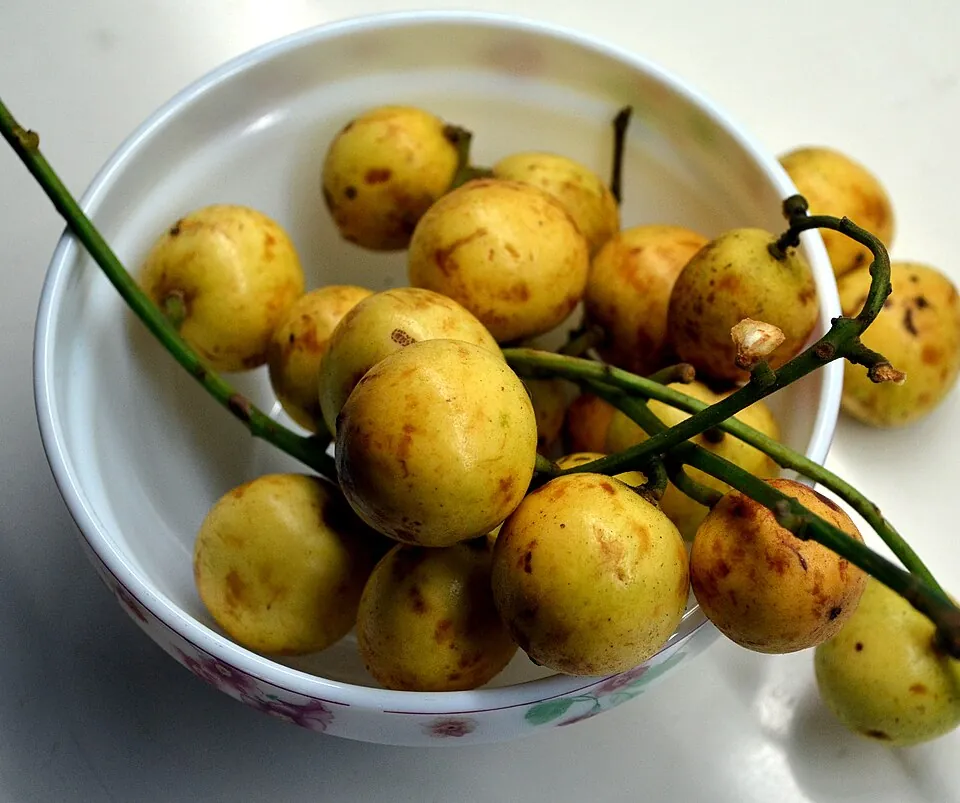
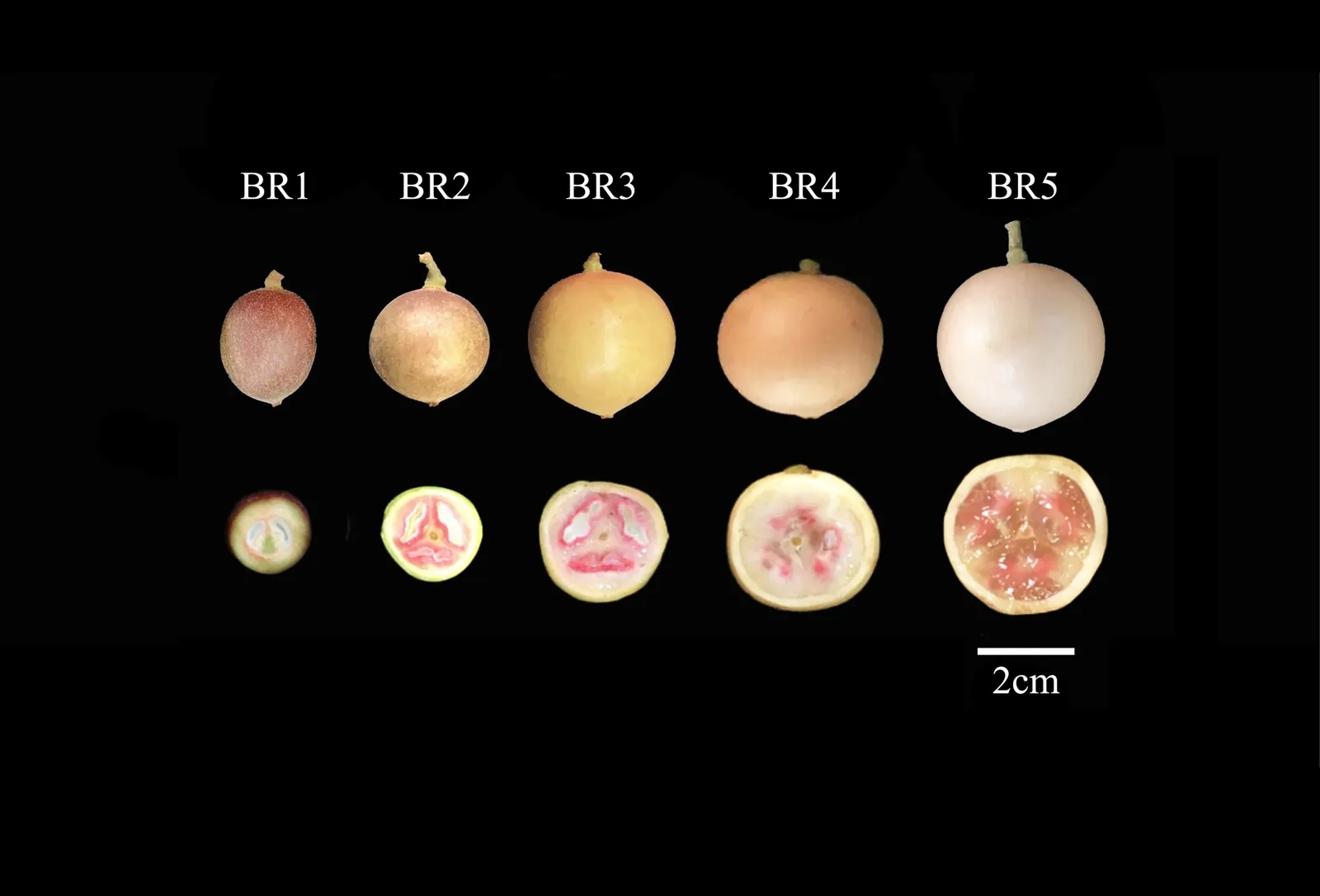
Each round or oval fruit is about 2–3 cm (0.8–1.2 in) across. In Tripura, the leathery skin turns from green to yellow, yellow-brown or yellow-orange as it matures. Inside is pinkish-white pulp around three or four seeds. The edible part, called the aril, is the juicy pulp exposed when the skin is peeled away.
Where it comes from
Baccaurea ramiflora grows naturally across South and Southeast Asia, including India, Myanmar, southern China, Thailand, Vietnam, Laos and Peninsular Malaysia. In Tripura, northeast India, it grows in backyards and as a forest crop. Local names include lotkon, bubi and kusumai; in Bangladesh, lotkon is the name used at its wholesale markets and in recipes.
How it's eaten where it grows
In Tripura, the fruit is a fresh snack and goes into jam, preserves and juice. In Bangladesh, lotkoner achar (লটকনের আচার) cooks peeled fruit into a pickle with tamarind, vinegar, chilli, sugar, cumin and panch phoron, the Bengali five-spice blend.
Cook Selina Shilpi’s lotkon diye chhoto machher jhol (লটকন দিয়ে ছোট মাছের ঝোল) puts the fruit in a small-fish stew. Onion, garlic, turmeric, mustard oil and fresh chilli flavour the broth, served with hot rice.
How it's grown
The evergreen tree suits warm, moist conditions and fertile soil that drains well. Male and female flowers grow on separate trees. Growers raise plants from seed or by air-layering, rooting a branch while it is still attached to the tree. In Tripura, flowers usually appear from mid-March through April, with fruit beginning to develop in mid-April.
When and where you'll find it
In Tripura, whole fruit usually reaches local markets and railway platforms from June through August, during the monsoon. In Bangladesh, a lotkon wholesale market sits beside Morjal bus stand on the Dhaka–Sylhet highway in Narsingdi. Crates leave this market for other parts of the country.
Get it near Detroit
What it tastes like
Choose, eat
1ChooseYellow to yellowish-brown or yellow-orange
Look for
- Yellow to yellowish-brown or yellow-orange
Young green fruit turns yellow to yellowish-brown or yellow-orange as it matures.
2EatAril · not seeds, peel
Eat
ArilNot eaten
SeedsPeelThe edible part is the aril surrounding the seeds; peel the fruit and don’t eat the seeds.
Detroit, Michigan
When it’s good hereUsual monthsJust arrivedAt their bestLast chanceAll yearWhere it is in its usual monthsToday, Oct 22Grown hereIn season in your stateShips fromIn season where it grows
1 growing area, 1 countryUsual monthsToday, Oct 22

- Tripura
- You
0 of 1 areas · October
In Tripura, India, it grows in backyards and forests, with fruit sold in local markets and on railway platforms.
10 names in 6 languages
- Lotkonroot
Cook it
Sources
Photos · 2
Sources
Burmese grape · Fruitopia · checked Sep 22, 2026