Black monkey orange
Also called Hairy-leaved monkey-orangeStrychnos madagascariensis · Loganiaceae family
A southern African pulp food with a critical distinction between pulp and toxic seeds.
Find it near DetroitGet to know it
Black monkey orange has a hard shell around orange pulp whose flavour runs from sweet to bitter. In southern Mozambique, it is called macuácua, and its pulp becomes nfuma: a flour made by drying the pulp, removing the seeds, then roasting and grinding it.
What it is
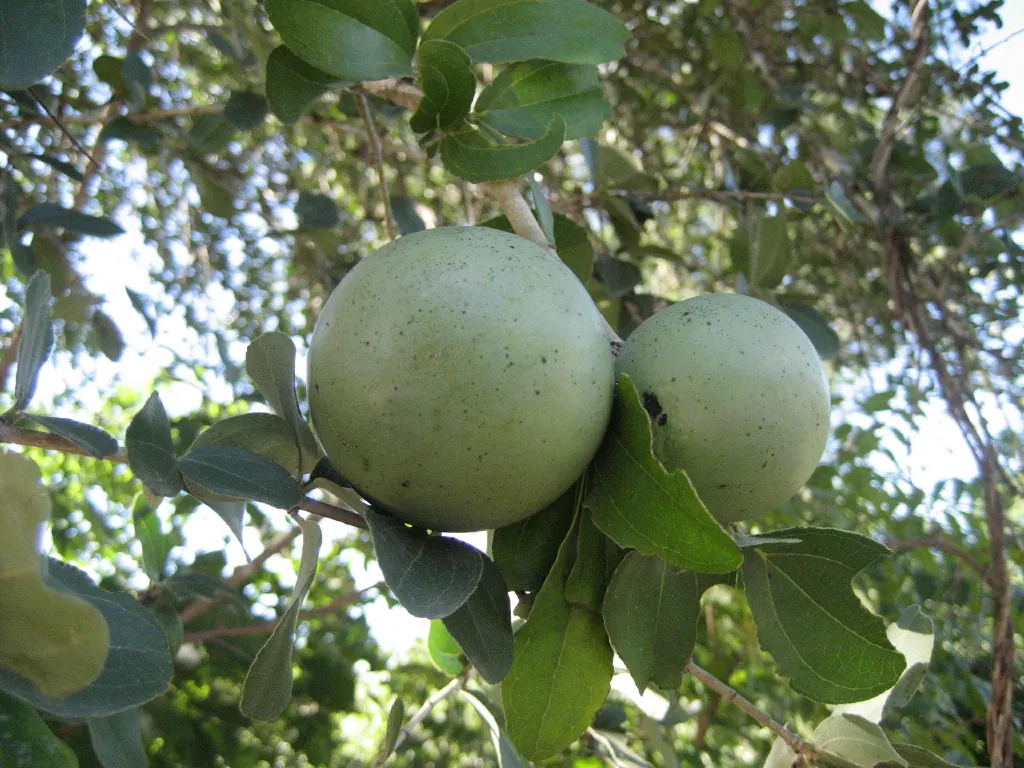
Strychnos madagascariensis has smooth, hard fruit that stays green for much of the year and turns yellow as it ripens. Inside, tightly packed seeds sit in a fleshy, edible covering. Fruits picked in southern Mozambique averaged about 510 g (1.1 lb). The seeds contain the poison strychnine, about 0.08%, and can still be harmful if eaten.
Where it comes from
This is a southern African woodland fruit, growing in Botswana and across northern and eastern South Africa, including Limpopo, Mpumalanga and KwaZulu-Natal. Its habitats include coastal sand forest, rocky hills and river fringes. It is also a food in Mozambique and Zimbabwe, where drying the pulp preserves it for periods of shortage.
How it's eaten where it grows
In southern Mozambique, nfuma begins with ripe fruit cracked open. The orange pulp is sun-dried for two to four days to make the seeds easier to remove. The seed-free pulp is then roasted and ground with a mortar and pestle. People eat the flour as a snack or alongside staple foods.
In Chatora, a village in Mozambique’s Macossa district, the pulp is pounded into a powder and eaten plain or mixed with honey. In Zimbabwe, pulp is dried in the sun or over a fire to keep for times of food shortage.
How it's grown
The tree reaches 5–8 m (16–26 ft), with one or several trunks and a spreading, uneven crown. Its leathery leaves are hairy, and trumpet-like greenish-yellow flowers often follow heavy rain. It grows readily from seed and grows fairly quickly in cultivation, but it is sensitive to frost. Baboons, monkeys and bushpigs eat its fruit, while antelopes and elephants browse the leaves.
When and where you'll find it
In southern Mozambique, Marracuene, Manhiça, Chókwè and Chicualacuala are places where local people make nfuma, from ripe fruit gathered in summer, from October to December. The fruit also has a fresh-eating tradition: in Macossa and Tamara districts, people gather ripe fruit that has fallen, crack the shell and eat the pulp.
Get it near Detroit
What it tastes like
The pulp is fleshy and juicy, with sweetness and a slight bitter note.
How to buy it
1EatPulp · not seeds
Eat
PulpNot eaten
SeedsThe pulp is the edible part; the seeds are removed. Dried pulp is made into flour in the nfuma method.
Detroit, Michigan
When it’s good hereUsual monthsJust arrivedAt their bestLast chanceAll yearWhere it is in its usual monthsToday, Oct 22Grown hereIn season in your stateShips fromIn season where it grows
Cook it
Strange but trueNatureFood and drink
Sources
Photos · 1
Sources
Black monkey orange · Fruitopia · checked Sep 22, 2026