Barberry
Also called Common barberry · European barberryBerberis vulgaris · Berberidaceae family
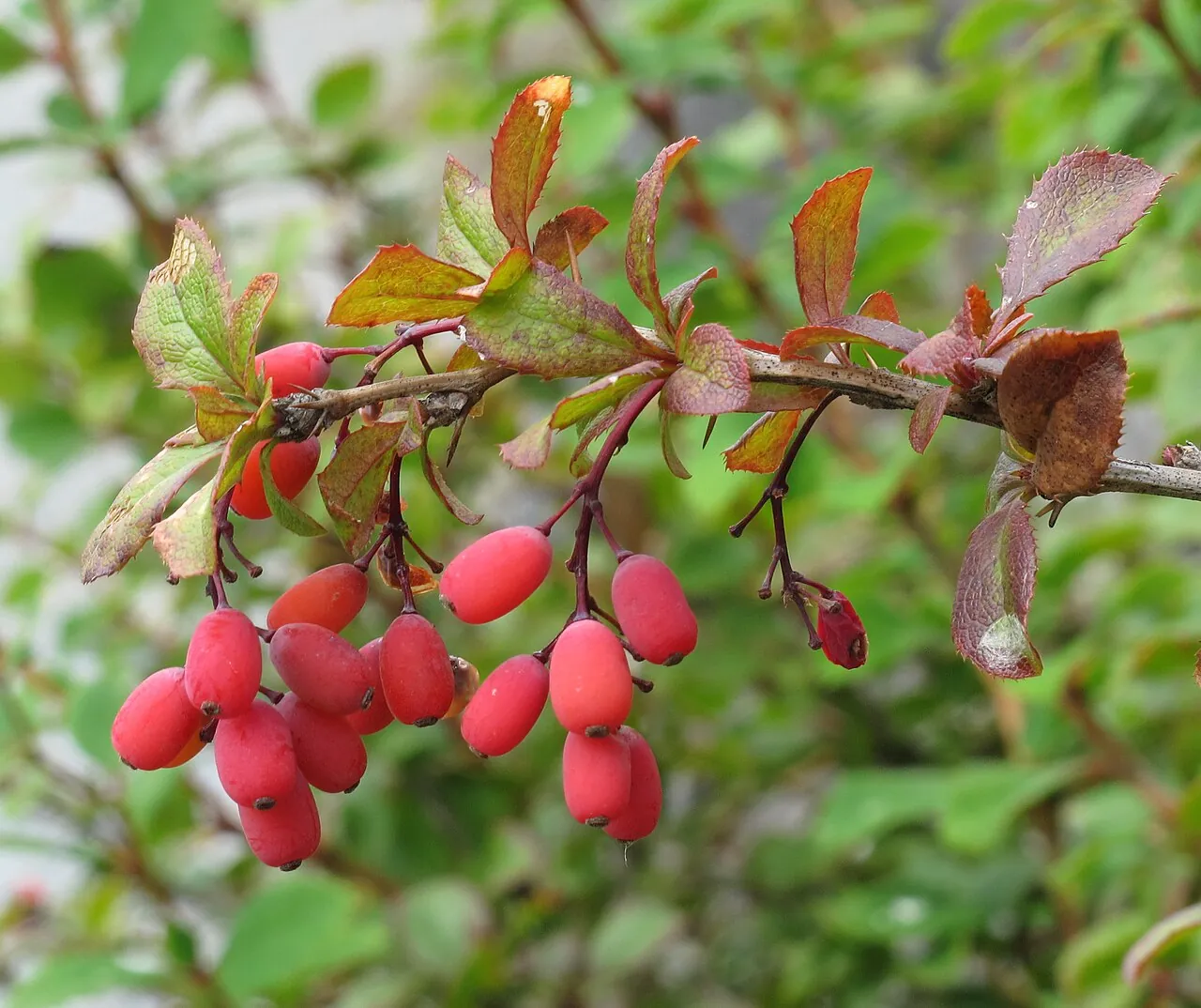
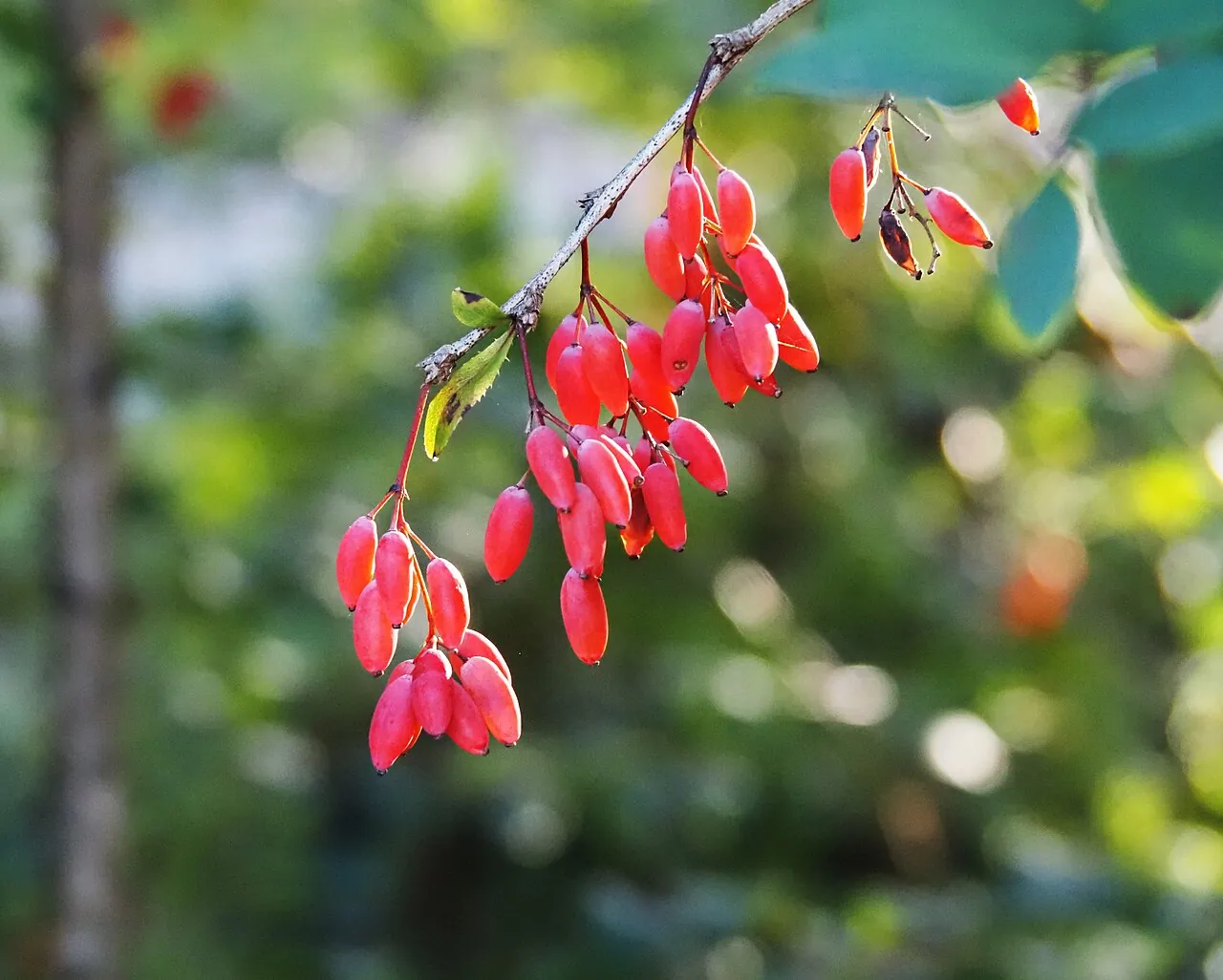
Small red berries on a spiny shrub, with important boundaries between fruit and other plant parts.
Find it near DetroitGet to know it
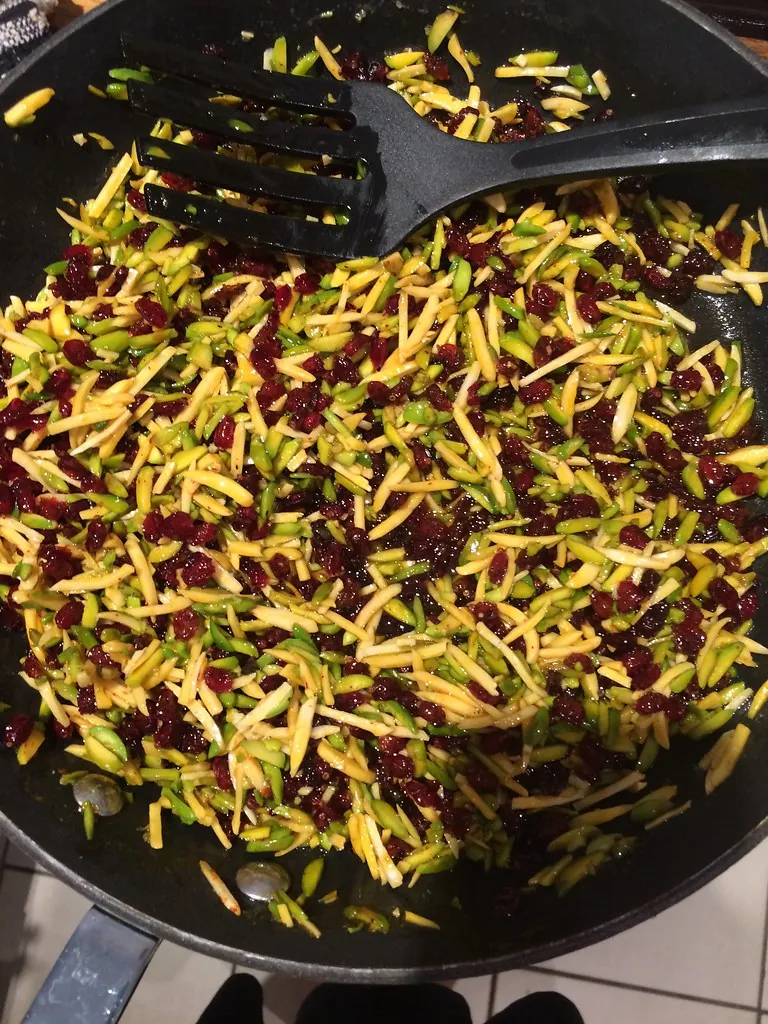
Barberries are tiny red berries with a sharp, sour bite. Dried cooking barberries, called zereshk in Persian, turn plump and sweet-sour after a brief sauté with sugar—the bright red topping on a plate of saffron rice.
What it is
Common barberry, Berberis vulgaris, grows on a spiny shrub that loses its leaves in winter. Its oval red berries are about 0.8 cm (⅓ in) long, holding one to three small seeds. The berries are the food part; the bark, leaves, roots and sap are not edible. Iran's seedless cooking barberries sit closest to a related species, Berberis integerrima, rather than to common barberry.
Where it comes from
Common barberry grows wild across Europe and Asia, and in parts of Africa. Early New England settlers brought it to North America in the 1600s; by the 1700s and 1800s it was a common hedge plant and a source of jam and yellow dye. Iran grows seedless barberries in South Khorasan province, around the city of Ghaenat.
How it's eaten where it grows
In Iran, zereshk polo pairs the berries with saffron rice, often alongside saffron chicken. A short sauté with sugar turns the dried berries juicy while keeping their tartness. Slivered almonds and pistachios add crunch; tahdig is the crisp rice crust from the bottom of the pot.
In Isfahan, khoresh morgh ba aloo va zereshk combines chicken with dried plums. Tomato, cinnamon and lemon or lime flavour the sauce, and sweetened barberries finish the stew.
How it's grown
Common barberry grows along roadsides, in hedges and in open woodland. It likes sun but also grows in partial shade, and tolerates clay and poor soil. In North America and western Europe, its small yellow flowers usually appear in May or June, followed by the red fruit.
When and where you'll find it
In North America and western Europe, common barberries are usually ripe by August or September. The kitchen form travels dried: Persian and Middle Eastern grocers, along with online food shops, sell the small red berries as zereshk. They are rinsed before their quick turn in the pan with sugar.
Sources · 6
- Ayeh Manfre, Cooking With Ayehcookingwithayeh.com
- Foods (2022), Interaction of Different Drying Methods and Storage on Berberispmc.ncbi.nlm.nih.gov
- Nasim Alikhani, TASTEtastecooking.com
- NC State Extension Gardener Plant Toolboxplants.ces.ncsu.edu
- Scientific Reports (2026), DNA barcodes and diversity in Berberis integerrimapmc.ncbi.nlm.nih.gov
- USDA Forest Service, Fire Effects Information Systemfs.usda.gov
Get it near Detroit
What it tastes like
Dried culinary barberries start distinctly tart and sour; a brief sauté with sugar makes them plump and sweet-sour, as in a rice topping.
Fresh, unprocessed barberries are generally considered unpalatable; the dried culinary product is a different experience.
Choose, eat
1ChooseLook for dried culinary barberries at a Persian or Middle Eastern grocer
Look for dried culinary barberries at a Persian or Middle Eastern grocer; soak and drain them before a short sauté.
2EatBerries · not bark, leaves, roots, sap
Eat
BerriesNot eaten
BarkLeavesRootsSapThe berries are edible; the bark, leaves, roots and sap are not.
Detroit, Michigan
When it’s good hereUsual monthsJust arrivedAt their bestLast chanceAll yearWhere it is in its usual monthsToday, Oct 22Grown hereIn season in your stateShips fromIn season where it grows
93 names in 10 languages
- شجيرة البرباريسArabic
Cook it
Strange but trueHistoryScienceNatureFood and drink
Sources
Sources
Barberry · Fruitopia · checked Oct 2, 2026