Bambangan
Mangifera pajang · Anacardiaceae family
A large Bornean mango relative with a tough brown rind and strongly aromatic pulp.
Find it near DetroitGet to know it
Bambangan is Borneo’s brown-skinned mango relative, with golden flesh, coarse fibres and a powerful aroma. Its sweet-sour bite suits a chilli sambal or a pickle served with plain rice. A large fruit can span 20 cm (8 in).
What it is
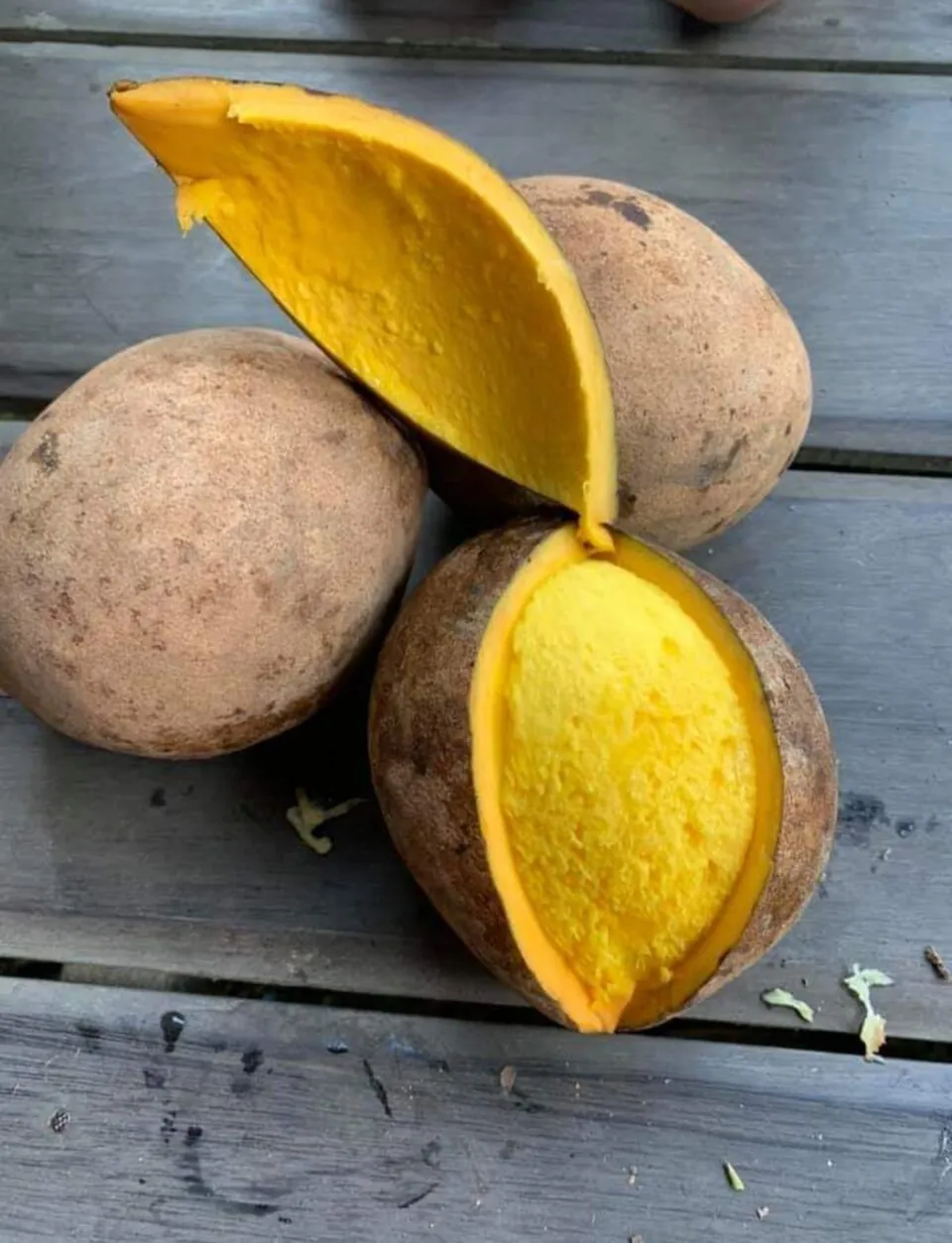
The fruit is Mangifera pajang, a round or oval wild mango. Typical fruits weigh 500 g to 1 kg (1.1–2.2 lb). Their thick skin changes from green to brown as they ripen; the flesh beneath is yellow-gold.
The thick pulp is strongly scented and fibrous. The rind has a corrosive latex layer, so it is peeled away from the edible flesh. Its aroma is also used locally to judge when the fruit is ripe.
Where it comes from
Bambangan belongs to the whole island of Borneo: Sabah and Sarawak in Malaysia, Brunei, and Indonesian Kalimantan. It grows in lowland forest and in Dayak orchards. For much of its history it stayed within this native range; fruit-tree collections outside Borneo began receiving it in the 1980s.
How it's eaten where it grows
In Sarawak, where the fruit is also called embang, sambal bambangan combines grated flesh with chillies, sugar, salt and belacan, a shrimp paste. It goes beside rice and grilled fish or meat. The fruit supplies the sour-sweet part of the condiment.
Jeruk bambangan is the pickle. The flesh and its grated seed kernel are pickled together, kept for a long time and eaten with plain rice or other side dishes.
How it's grown
The tree can reach 33 m (108 ft) and sheds its leaves. It grows in the wet tropics with plentiful rain through the year, but avoids swampy ground. Seedlings need moisture and light shade. Growers raise it from seed or attach buds from a chosen tree to young rootstocks.
When and where you'll find it
August and September usually fall within Sabah’s fresh-fruit season. Whole bambangan reaches local markets, shops and roadside stalls, including the market at Tamparuli. Preserved fruit is another form to meet: jeruk bambangan is a local grocery product in Kota Kinabalu, eaten as a condiment alongside a meal.
Get it near Detroit
What it tastes like
The flesh is yellow-gold, both sour and sweet; larger, thicker-fleshed fruit is often used for pickling.
The pulp is yellow, juicy and fibrous, with a strong aroma and a sweet-sour taste; sweeter forms are eaten fresh, while more acidic fruit is used as a cooking ingredient.
Choose, eat
1ChooseBrown, tough rind
Look for
- Brown, tough rind
- Aroma
The skin turns from green to a brown, tough rind as the fruit matures; brown skin is normal here, and aroma is also used locally as a ripeness cue.
2EatPulp · not tough rind, latex layer
Eat
PulpNot eaten
Tough rindLatex layerThe edible pulp lies beneath a tough rind and a latex-bearing layer; the latex is corrosive, so peel carefully.
Detroit, Michigan
When it’s good hereUsual monthsJust arrivedAt their bestLast chanceAll yearWhere it is in its usual monthsToday, Oct 22Grown hereIn season in your stateShips fromIn season where it grows
7 names in 5 languages
Cook it
Strange but trueFood and drink
Sources
Photos · 1
Sources
Bambangan · Fruitopia · checked Sep 22, 2026