Baccaurea dulcis fruit
Also called KetupaBaccaurea dulcis · Phyllanthaceae family
A Sumatran fruit best identified by its scientific name, since several other fruits share its common name.
Find it near DetroitGet to know it
Baccaurea dulcis, also called ketupa, is a small Indonesian fruit with yellow-to-orange skin and soft flesh wrapped around its seeds. The menteng manis grown at Mekarsari fruit garden has soft, milky-white flesh and a sweet taste. Its flowers and fruit grow directly along the branches.
What it is
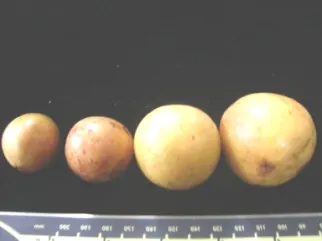
A fruit is about 3.5–4 cm (1.4–1.6 in) across, with a yellow-to-orange peel around a few seeds, each wrapped in soft flesh. In West Java, its shape ranges from round to slightly oval, sometimes flattened at one end.
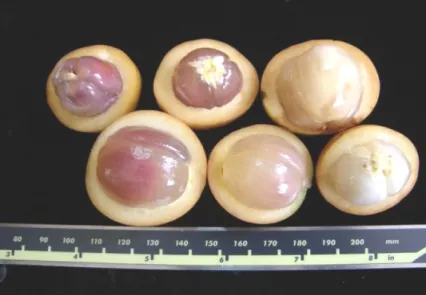
The sweet, white-fleshed fruit at Mekarsari is one form. Other West Java trees bear cream or pink flesh, sometimes streaked with purple, and the taste runs from sour to fairly sweet. The eating part is the fleshy covering around each seed.
Where it comes from
Ketupa comes from southern Sumatra and is grown locally in Sumatra and a few parts of western Java. In West Java it grows in home gardens, small plots and botanic gardens, and much of the fruit stays with the household that grows it.
The names overlap with those of its relatives. Baccaurea dulcis goes by ketupa, cupa and menteng besar, while menteng also names Baccaurea racemosa. Mekarsari uses menteng manis for its Baccaurea dulcis trees.
How it's eaten where it grows
At Mekarsari, ripe menteng manis is eaten fresh or made into setup and asinan, two Indonesian ways with fruit. The fruit is also pickled, cooked in stews or fermented into wine. In West Java gardens, eating the harvest at home is more common than taking it to market.
How it's grown
Ketupa is a tree of the humid tropical lowlands. Male and female flowers grow on separate trees, with the flowers appearing along the branches. Growers mainly raise it from seed, and less often by grafting or air-layering. Air-layering roots a branch while it is still attached to the tree.
At Mekarsari, trees grown from seed begin fruiting at about seven to eight years; those raised by air-layering begin at about three to four years.
When and where you'll find it
West Java’s home gardens are the heart of its local harvest, with occasional fruit reaching local markets. In 2008, fruit was harvested there from February through April.
Taman Buah Mekarsari grows menteng manis in its Biosari area and fruit-garden blocks B and D, a place to see the tree with its crop growing along the branches.
Get it near Detroit
What it tastes like
Menteng manis (Baccaurea dulcis) is milky-white, soft-fleshed and sweet — distinct from sourer fruits also called menteng.
Choose, eat
1ChooseShape
Ignore
- Shape
- Peel color
- Pulp color
Fruit shape, peel color and pulp color vary a lot between trees — from rounded to oval, yellow-to-orange peel, and pulp from white or translucent cream to pink or purple-streaked.
2EatSoft white flesh
Eat
Soft white fleshThe soft white flesh inside the yellow-to-orange fruit is eaten fresh.
More tips
Worth knowing
- Sweetness varies widely from tree to tree and batch to batch.
Detroit, Michigan
When it’s good hereUsual monthsJust arrivedAt their bestLast chanceAll yearWhere it is in its usual monthsToday, Oct 22Grown hereIn season in your stateShips fromIn season where it grows
Sources
Sources
Baccaurea dulcis fruit · Fruitopia · checked Sep 23, 2026